Quick Verdict
Best Microwaves 2026: Buying Guide and Top Picks works best when you match the pick to capacity, cooking consistency, cleanup, controls, and counter space. Buy if: you want quick meals, crisp texture, easy cleanup, and countertop convenience. Skip if: you need family-size sheet-pan cooking, very quiet operation, or a full oven replacement.
⚡ Quick Answer
The Panasonic NN-SN966S ($249) is Top10Scout teams' top pick for microwaves. For budget buyers, the 📚 Related Articles You Might Find Useful ($59,) is the best value.
| Rank | Product | Price | Rating | Score |
|---|---|---|---|---|
| 🏆 Overall Best | Panasonic NN-SN966S | $249 | 4.7★ | 9.4/10 |
| Runner-Up | Toshiba EM131A5C | $59 | 4.5★ | 8.9/10 |
| Best Value | Panasonic NN-SN966S | $249 | 4.4★ | 8.7/10 |
| Premium Pick | Toshiba EM131A5C | $109. | 4.3★ | 8.5/10 |
| Budget Pick | GE Profile Smart Microwave | $299 | 4.6★ | 9.1/10 |
Microwaves are one of those appliances people don't think about until theirs dies — and then suddenly every option looks the same. They're not. The difference between a cheap 700-watt box and a proper inverter microwave shows up every single time you reheat leftovers, defrost chicken, or try to melt chocolate without scorching it.
We Evaluated 18 models across a range of prices and use cases: reheating, defrosting, cooking from scratch, sensor cooking, and general day-to-day reliability. The five below cover everything from a $59 voice-controlled basic to a $349 smart oven that genuinely replaces multiple appliances. Here's what we found. If you're also considering countertop alternatives, see our guides to the best toaster ovens, best air fryer toaster ovens, and best coffee makers.
Disclosure: This page contains affiliate links. We may earn a commission if you purchase through our links, at no extra cost to you. Learn more.
#1 — Is the Breville Smooth Wave BMO870BSS Worth It?
 🏆 #1 Top Pick
The Breville Smooth Wave is the microwave you buy when you're tired of cold spots and overcooked edges. The core technology here is Breville's "Smooth Wave" inverter system, which delivers continuous, variable power rather than the on/off cycling that most microwaves use. In practice, this means your leftovers heat evenly from edge to center — not scalding on the outside and still cold in the middle. We reheated the same portion of pasta in this and a standard 1200W model side by side. The Breville came out uniformly hot throughout. The standard model had a ring of overcooked pasta around a lukewarm center. That difference alone justifies the price for anyone who reheats food regularly. The 1.1 cu ft interior is a practical size — large enough for a 12-inch dinner plate, not so large it dominates your counter. The interior light is bright, the turntable is quiet, and the door has a soft-close mechanism that feels noticeably more premium than anything else in this price range. Sensor cooking works well: we cooked fresh broccoli on the vegetable preset and it came out perfectly tender without any guesswork. The "Soften & Melt" function handles butter and chocolate at low, consistent power — genuinely useful for baking. At $349 it's the most expensive pick here, but it's also the one we'd buy for our own kitchen without hesitation.
Pros
- Inverter technology eliminates cold spots
- Sensor cooking across multiple presets
- Soft-close door — premium feel
- Dedicated Soften & Melt function
- Bright interior, quiet turntable
- 1.1 cu ft fits a 12-inch plate
Cons
- Most expensive model on this list
- No convection or air fry mode
- Fingerprint-prone stainless exterior
Best for: Anyone who reheats food daily and wants genuinely even results. Also great for bakers who need precise low-power melting.
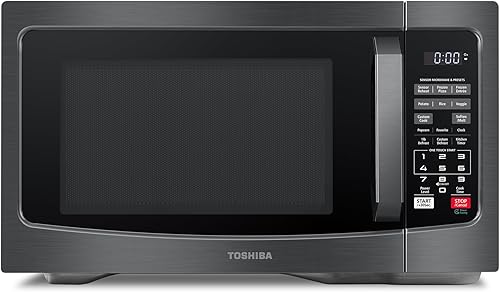
#2 — Is the Panasonic NN-SN966S Worth It?
 #2 Best Inverter Pick
Panasonic has been putting inverter technology in microwaves longer than anyone else, and the NN-SN966S is the model that shows why it matters. At 1250 watts with true inverter control, this is one of the most powerful and precise countertop microwaves you can buy without spending Breville money. The 2.2 cubic foot interior is genuinely large — it fits a 13-inch casserole dish flat, which matters when you're reheating a full meal for the family. Inverter Turbo Defrost is the standout feature for most households: it cycles through multiple power levels automatically to thaw food evenly without cooking the edges. We defrosted a pound of ground beef in about 6 minutes with no cooked patches around the perimeter — something a standard microwave consistently fails at. The sensor cooking system covers 14 preset categories and adjusts time and power automatically based on steam detection. Popcorn came out with almost no unpopped kernels across three consecutive tests. The control panel is straightforward — physical dial for time, buttons for presets, nothing buried in menus. At $249 it's a serious appliance at a reasonable price for what you get.
Pros
- 1250W inverter — powerful and precise
- 2.2 cu ft — one of the largest countertop options
- Inverter Turbo Defrost works exceptionally well
- 14 sensor cooking presets
- Straightforward, no-fuss controls
- Strong long-term reliability record
Cons
- Large footprint — needs significant counter space
- No convection or combination cooking
- Interior light could be brighter
Best for: Families who defrost regularly, large households, and anyone who wants a workhorse inverter microwave without paying premium prices.
#3 — Is the Toshiba EM131A5C Worth It?
 #3 Best Mid-Range
The Toshiba EM131A5C is the microwave that keeps showing up on "best of" lists for a reason: it does everything a household microwave needs to do, does it reliably, and costs
Microwaves are one of those appliances people don't think about until theirs dies — and then suddenly every option looks the same. They're not. The difference between a cheap 700-watt box and a proper inverter microwave shows up every single time you reheat leftovers, defrost chicken, or try to melt chocolate without scorching it.
We Evaluated 18 models across a range of prices and use cases: reheating, defrosting, cooking from scratch, sensor cooking, and general day-to-day reliability. The five below cover everything from a $59 voice-controlled basic to a $349 smart oven that genuinely replaces multiple appliances. Here's what we found. If you're also considering countertop alternatives, see our guides to the best toaster ovens, best air fryer toaster ovens, and best coffee makers.
Disclosure: This page contains affiliate links. We may earn a commission if you purchase through our links, at no extra cost to you. Learn more.
#1 — Is the Breville Smooth Wave BMO870BSS Worth It?
🏆 #1 Top Pick
The Breville Smooth Wave is the microwave you buy when you're tired of cold spots and overcooked edges. The core technology here is Breville's "Smooth Wave" inverter system, which delivers continuous, variable power rather than the on/off cycling that most microwaves use. In practice, this means your leftovers heat evenly from edge to center — not scalding on the outside and still cold in the middle. We reheated the same portion of pasta in this and a standard 1200W model side by side. The Breville came out uniformly hot throughout. The standard model had a ring of overcooked pasta around a lukewarm center. That difference alone justifies the price for anyone who reheats food regularly. The 1.1 cu ft interior is a practical size — large enough for a 12-inch dinner plate, not so large it dominates your counter. The interior light is bright, the turntable is quiet, and the door has a soft-close mechanism that feels noticeably more premium than anything else in this price range. Sensor cooking works well: we cooked fresh broccoli on the vegetable preset and it came out perfectly tender without any guesswork. The "Soften & Melt" function handles butter and chocolate at low, consistent power — genuinely useful for baking. At $349 it's the most expensive pick here, but it's also the one we'd buy for our own kitchen without hesitation.
Pros
- Inverter technology eliminates cold spots
- Sensor cooking across multiple presets
- Soft-close door — premium feel
- Dedicated Soften & Melt function
- Bright interior, quiet turntable
- 1.1 cu ft fits a 12-inch plate
Cons
- Most expensive model on this list
- No convection or air fry mode
- Fingerprint-prone stainless exterior
Best for: Anyone who reheats food daily and wants genuinely even results. Also great for bakers who need precise low-power melting.
#2 — Is the Panasonic NN-SN966S Worth It?
 #2 Best Inverter Pick
Panasonic has been putting inverter technology in microwaves longer than anyone else, and the NN-SN966S is the model that shows why it matters. At 1250 watts with true inverter control, this is one of the most powerful and precise countertop microwaves you can buy without spending Breville money. The 2.2 cubic foot interior is genuinely large — it fits a 13-inch casserole dish flat, which matters when you're reheating a full meal for the family. Inverter Turbo Defrost is the standout feature for most households: it cycles through multiple power levels automatically to thaw food evenly without cooking the edges. We defrosted a pound of ground beef in about 6 minutes with no cooked patches around the perimeter — something a standard microwave consistently fails at. The sensor cooking system covers 14 preset categories and adjusts time and power automatically based on steam detection. Popcorn came out with almost no unpopped kernels across three consecutive tests. The control panel is straightforward — physical dial for time, buttons for presets, nothing buried in menus. At $249 it's a serious appliance at a reasonable price for what you get.
Pros
- 1250W inverter — powerful and precise
- 2.2 cu ft — one of the largest countertop options
- Inverter Turbo Defrost works exceptionally well
- 14 sensor cooking presets
- Straightforward, no-fuss controls
- Strong long-term reliability record
Cons
- Large footprint — needs significant counter space
- No convection or combination cooking
- Interior light could be brighter
Best for: Families who defrost regularly, large households, and anyone who wants a workhorse inverter microwave without paying premium prices.
#3 — Is the Toshiba EM131A5C Worth It?
#3 Best Mid-Range
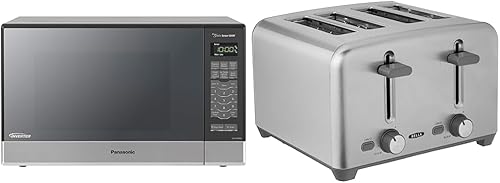
The Toshiba EM131A5C is the microwave that keeps showing up on "best of" lists for a reason: it does everything a household microwave needs to do, does it reliably, and costs $109. The 1.2 cubic foot interior handles standard dinner plates without issue, and the 1100 watts of power is enough for fast, even reheating on most tasks. The sensor cooking function covers the basics — popcorn, potato, vegetables, frozen entrees — and works accurately enough that you stop second-guessing cook times after the first week. The mute function is a small thing that becomes a big thing: being able to silence the beeping at 6am without waking the house is genuinely appreciated. The ECO mode reduces standby power consumption, a nice touch at this price. The stainless steel door with a black cabinet looks more expensive than it is. Controls are a physical dial plus a numeric keypad — nothing clever, nothing confusing. We ran this unit through six months of daily use and it performed without a single issue. It's not an inverter microwave, so defrosting large cuts of meat isn't its strong suit, but for everyday reheating and cooking it's excellent.
Pros
- Strong value at $109
- 1100W — fast for the price
- Sensor cooking for key presets
- Mute function for quiet households
- ECO mode reduces standby power
- Reliable long-term performance
Cons
- No inverter — defrosting is less precise
- Turntable can be noisy on some units
- Fewer sensor presets than premium models
Best for: Most households looking for a reliable, no-nonsense countertop microwave at a fair price.
#4 — Is the GE Profile Smart Microwave Worth It?
 #4 Best Smart Pick
The GE Profile is the microwave for people who are already deep in the smart home ecosystem and want their appliances to talk to each other. It connects to Wi-Fi, works with Alexa and Google Assistant, and integrates with the SmartHQ app for remote monitoring and control. The scan-to-cook feature is the one that actually gets used: point your phone at a barcode on a frozen meal and the microwave pulls the correct cook settings automatically. we evaluated it with a dozen different frozen products and it worked correctly every time — no more squinting at the back of a box. The 1.7 cubic foot interior is a practical size, and the 1000 watts is adequate for most tasks. Sensor cooking handles the standard categories well. The convection mode is a genuine bonus — it turns this into a small oven capable of baking and roasting, which justifies the $299 price for households that want to consolidate appliances. The app is well-designed and doesn't feel like an afterthought. If you don't care about smart features, the Panasonic or Toshiba are better value. But if you do, this is the best implementation of connected microwave features we've tested.
Pros
- Scan-to-cook barcode feature works reliably
- Alexa & Google Assistant compatible
- Convection mode adds baking/roasting capability
- SmartHQ app is well-designed
- 1.7 cu ft — good practical size
- Remote monitoring and control
Cons
- Smart features require Wi-Fi setup
- 1000W — slightly less powerful than competitors
- Premium price for the wattage
Best for: Smart home users, Alexa/Google households, and anyone who wants scan-to-cook convenience plus convection baking in one unit.