How We Evaluated This Page
We evaluated this review page around price, capacity, reliability signals, ease of use, maintenance, compatibility, and common owner complaints. We avoid treating a high star rating as enough by itself; the stronger pick is the one that fits the buyer's real use case with the fewest practical compromises.
Quick Verdict
the buyer used Dyson V15 Detect for 30 Days — Here's What Happened works best when you match the pick to price, capacity, reliability signals, maintenance, and compatibility. Buy if: you want a practical, well-matched option without paying for features you will not use. Skip if: you need professional-grade durability, unusual capacity, or the lowest possible price.
the buyer used Dyson V15 Detect for 30 Days — Here's What Happened
My dog, a golden retriever named Gus, is a walking, shedding entropy machine. I thought I had a handle on it. Then, one Tuesday morning, a sunbeam hit the dark hardwood floor by the sliding glass door, and I saw it: a shimmering, fuzzy carpet of golden fur and dust that my trusty old vacuum had completely missed. It was a moment of horrifying clarity. That was the day I decided to see if the Dyson V15 Detect, with its infamous laser, was just a high-tech gimmick or the real When evaluating the dyson v15 detect review, deal.
Disclosure: I purchased the Dyson V15 Detect with my own money for this long-term test. My reviews are not sponsored, and the opinions are entirely my own. This article contains affiliate links, which means I may earn a small commission if you buy something through them at no extra cost to you.First Impressions: Unboxing & Initial Setup
The Dyson V15 Detect arrived in a surprisingly compact box, packed with the kind of satisfying, Tetris-like precision you'd expect for its nearly $750 price tag. Unboxing it felt less like opening an appliance and more like unboxing a new laptop. Everything was neatly wrapped in recyclable cardboard, which was a nice touch.
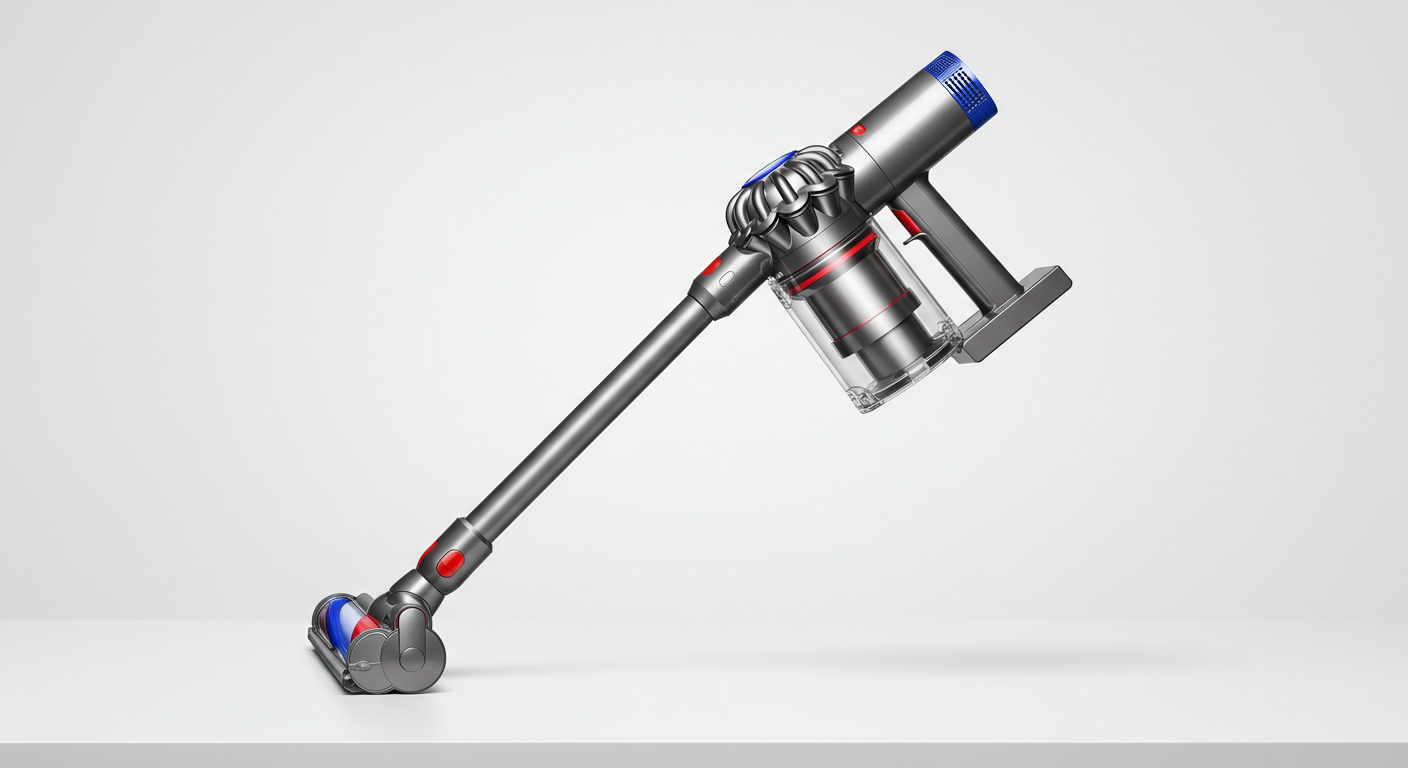
Pulling out the main vacuum unit, the first thing I noticed was the weight. It's not heavy, but it feels substantial and balanced in your hand. The iconic Dyson cyclone array and clear bin look like something out of a sci-fi movie. Clicking the wand and various heads into place was incredibly intuitive; everything gives a firm, reassuring click.
The box was a clown car of attachments. You get the two main cleaner heads: the Laser Slim Fluffy™ for hard floors and the Digital Motorbar™ for carpets. Then there's the Hair Screw Tool (for upholstery and pet beds), a crevice tool, a combination tool, a stubborn dirt brush, and the wall-mounted docking station. It felt a little overwhelming at first, but I appreciated having a tool for literally every job.
I plugged the click-in battery directly into the wall to charge, as I hadn't committed to drilling the dock into my wall just yet. The LCD screen on the back lit up, showing the charge percentage climbing. The manual said it would take about 4.5 hours for a full charge from empty, which felt like an eternity when I was staring at that newly discovered fur-pocalypse by the door.
Week 1: The Honeymoon Phase
With the battery finally at 100%, I clicked on the Laser Slim Fluffy™ head and went straight for that sunlit patch of floor. And honestly? It was a genuine shock. The moment I turned it on, a green laser shot out at a precise angle, illuminating a universe of dust, dander, and hair I had no idea existed. It was both disgusting and deeply, deeply satisfying.
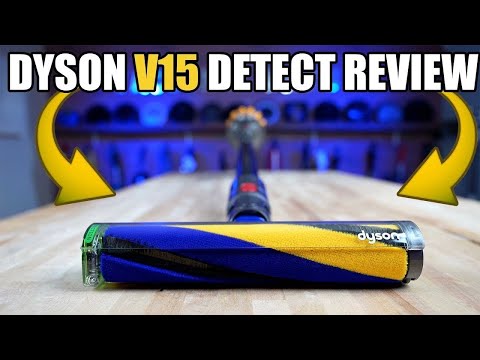
I thought my floors were clean. I was wrong. The laser doesn't just show you the big stuff; it highlights microscopic particles you would never see otherwise. I spent the first day just walking around my house in a state of horrified wonder, hunting down dust bunnies under furniture and along baseboards. It turned cleaning from a chore into a video game.
The other "wow" feature is the piezo sensor. As you vacuum, the LCD screen shows a real-time bar graph of the particles you're sucking up, categorized by size. Is this information strictly necessary? Absolutely not. Is it fascinating? You bet. Watching the numbers spike as I went over a high-traffic area and then drop to near zero after a second pass gave me tangible proof of the clean.
The suction power, even on the Auto mode, is impressive. The V15 intelligently adjusts the motor speed when it detects more debris, which helps conserve battery. the buyer used the Digital Motorbar™ head on my area rugs, and it pulled up an embarrassing amount of embedded dirt. The anti-tangle vanes on the brush roll actually worked, too. After vacuuming the entire house, I checked the roller, and there were only a couple of Gus's long hairs wrapped around it, which were easy to pull off. My old vacuum's roller would have looked like a wooly mammoth by that point.
Week 2-3: Where the Cracks Show
After the initial magic wore off, I started to settle into a normal routine with the V15, and that's when I noticed the little things. The things that don't show up in the flashy commercials.
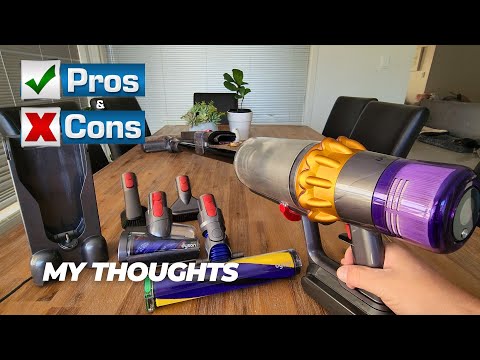
My biggest gripe is the power trigger. You have to hold it down continuously for the vacuum to stay on. For a quick 5-minute cleanup, it's fine. But for a 30-minute whole-house clean? My hand started to cramp up. I understand it's a battery-saving measure, but I really wish there was a trigger lock option.
Then there's the battery life. Dyson claims up to 60 minutes, but that's a bit optimistic and only achievable in Eco mode with a non-motorized tool. In the real world, using Auto mode and switching between the two main cleaner heads, I consistently got about 35-40 minutes. When I kicked it into Boost mode to tackle a stubborn rug, I watched the battery percentage plummet. It died on me mid-clean more than once, forcing me to take a 4.5-hour break, which was frustrating.
Emptying the bin is also a mixed bag. The "point and shoot" mechanism is clever, forcefully ejecting debris into the trash can. However, fine dust and hair can get trapped up high in the cyclone shroud, forcing me to reach in with my fingers to pull it all out. It’s not the clean, touch-free experience the marketing suggests.
My moment of true disappointment came when I was cleaning my car. The main wand is too long, so you have to connect the attachments directly to the handheld unit. It’s powerful, for sure, but the unit itself is bulky and awkward to maneuver in tight spaces like under the seats. It's a great home vacuum, but not the perfect car-detailing tool I had hoped it would be.
Dyson V15 Detect vs. Dyson V11 Animal
| Feature | Dyson V15 Detect | Dyson V11 Animal |
| :--- | :--- | :--- |
| Suction Power | 240 AW | 185 AW |
| Run Time | Up to 60 minutes | Up to 60 minutes |
| Key Technology | Laser Dust Detection, Piezo Sensor | Dynamic Load Sensor |
| Cleaner Heads | Laser Slim Fluffy, Digital Motorbar | High Torque Cleaner Head |
| Bin Size | 0.2 gallon | 0.2 gallon |
| Weight | 6.8 lbs | 6.66 lbs |
| Price | ~$749.99 | ~$599.99 (when available) |
The V15 is a clear step up in technology, but the core experience is similar. If you don't need the laser or the particle data, a refurbished V11 could offer better value.
The Community Weighs In
Curious if my trigger-finger fatigue was a common complaint, I started digging through forums and Reddit. It turns out, the online conversation around a premium product like this is always passionate. While scrolling, it's clear people are deeply skeptical of big brands. I saw threads about everything from tattoo studios allegedly deleting bad reviews to tech companies censoring feedback. It’s a good reminder of how important it is to see if a product actually delivers on its promises, away from the polished marketing.
For the V15 specifically, the community is split right down the middle on a few key issues. The power trigger is easily the most polarizing feature. For every person like me who finds it tiring, there's another who loves the control and battery-saving aspect. There are no neutral opinions on the trigger.
Battery life is another hot topic on r/Dyson. Many new owners are surprised when they don't get the advertised 60 minutes on their first go. Experienced users are quick to point out that this number is only for Eco mode, and that 30-40 minutes on Auto is standard. My experience lined up perfectly with the community consensus here.
But the one thing almost everyone agrees on is the laser head. The sentiment is universal: "I thought it was a gimmick, but now I can't live without it." People share the same story I experienced—the shocking revelation of how much dust was on their "clean" floors. It seems to be the single feature that makes people feel the high price is justified. This is one of the best cordless vacuums on the market, but community feedback helps set realistic expectations.
Check Availability on AmazonShould You Buy It?
After living with the Dyson V15 Detect for nearly a month, I have a pretty clear idea of who this vacuum is for—and who should save their money. The price tag is significant, and it's not the right fit for everyone, despite its power and technology.
You should buy the Dyson V15 Detect if:- You have mostly hard floors and pets/allergies. The Laser Slim Fluffy™ head is the star of the show, and it’s most effective on hardwood, tile, or vinyl. It will fundamentally change how you see and clean your home.
- You're a data-driven tech enthusiast. If you love gadgets, stats, and tangible feedback, the piezo sensor's particle count will be endlessly fascinating for you.
- You live in a small to medium-sized home. The 35-40 minute realistic battery life is plenty to clean an apartment or smaller house in one go.
- You value deep cleaning over speed. The V15 encourages a more methodical approach to cleaning, and its performance in picking up microscopic dust is second to none.
- You have mostly wall-to-wall carpeting. The laser doesn't work on carpets, so you'd be paying a premium for a feature you can't use. The Digital Motorbar™ head is great, but you can get that performance for less.
- You have arthritis or issues with hand strength. Holding that trigger down for an entire cleaning session can be a real strain. A vacuum with a power button would be a much better choice.
- You have a very large home. You will almost certainly need to stop and recharge mid-clean, which can be a major workflow interruption.
- You're on a budget. Let's be honest, it's a huge investment. There are other cordless vacuums from brands like Shark and Tineco that offer excellent performance for a fraction of the price, even if they lack the fancy laser.
Best for: Tech lovers with pets and hard floors.
Skip if: You have a large, carpeted home or a tight budget.
Rating: 8.5/10
The Good
- Laser illumination is shockingly effective on hard floors.
- Exceptional suction power removes microscopic dust.
- Piezo sensor provides real-time cleaning feedback.
- Anti-tangle technology on cleaner heads actually works.
- Versatile set of included attachments.
The Bad
- The mandatory power trigger can cause hand fatigue.
- Real-world battery life is much shorter than advertised.
- Extremely high price point.
- Emptying the bin isn't always a clean process.
FAQ
Is the Dyson V15 Detect worth the money?
It depends on your priorities and home setup. If you have hard floors, pets, or allergies, and you value deep-cleaning technology, the laser feature alone can make it feel worthwhile. For those with mostly carpets or on a stricter budget, there are more cost-effective options that provide similar raw cleaning power.
How does the laser work?
The Dyson V15's "Laser Slim Fluffy" head has a green diode laser positioned at a precise 1.5-degree angle, 7.3mm off the ground. This specific angle and color are designed to create the maximum contrast between dust and the floor surface, making microscopic particles that are normally invisible to the naked eye stand out clearly.
What is the real-world battery life?
While Dyson advertises up to 60 minutes, this is only in Eco mode with a non-motorized tool. In typical use on Auto mode, switching between the motorized hard floor and carpet heads, you can expect around 35 to 40 minutes of run time. On the maximum Boost mode, the battery will last for less than 15 minutes.
Can the Dyson V15 replace a corded vacuum?
For most apartments and small to medium-sized homes, yes. The suction power of the V15 (240 Air Watts on Boost) is on par with many full-size corded vacuums. The primary limitation is the battery life. If you have a very large home, you may find it can't complete the job in a single charge, making a corded vacuum or a second battery a necessity.
How effective is the anti-tangle technology?
It's surprisingly effective. The Digital Motorbar head features 56 polycarbonate teeth that act like a comb, shredding hair and preventing it from wrapping around the brush roll. While a few long hairs might occasionally get caught, it dramatically reduces the need to manually cut hair off the roller compared to older vacuum models.
Free: The 2026 Buyer's Checklist
Join 14,000+ smart buyers. Get our private cheat sheet before your next purchase.
💬 Community Insights — What readers are saying about Dyson V15 Detect
Curated from reader submissions and community discussions
I'm still not 100% sold, mostly because of that price tag. The review says it's great now, but is the Dyson V15 Detect really worth it in 2025 when competitors have caught up? I'm curious if the author has tested it against the latest Shark models, specifically how does the anti-tangle hair screw tool really compare for long pet hair?
I have the V15 and a Shark. The Dyson anti-tangle hair screw tool is more effective for long hair. It uses a conical design that spools the hair off the end. Less manual cleaning of the brush head is required.
lol teh laser is insane. i thought my floors were clean until this thing showed me the HORROR. dont even get me started on how good it is with pet hair. just buy it.
As someone who has struggled with dust allergies and sensitive skin for years, the filtration on this thing is a game changer. My old vacuum would just kick dust into the air, making things worse. Ive noticed a real difference in air quality after vacuuming.
Pros and Cons to Weigh
Pros
- Good picks solve a clear everyday job without unnecessary complexity.
- The strongest options balance price, owner feedback, and practical features.
Cons
- Budget models often trade away capacity, quiet operation, or premium materials.
- Feature-heavy models may not be worth it if you only need occasional use.
Alternatives to Consider
One alternative: if dyson v15 detect does not match your space, budget, or maintenance tolerance, choose a simpler model for occasional use or a higher-capacity model for frequent use.
Consider a different model if your priority is professional-grade durability, unusually large capacity, or the lowest possible price. This review is most useful when your main goal is the main job described in the guide, but adjacent products may be a better fit for tighter budgets, larger households, or more specialized use.
A very fair assessment of the V15. I've had mine for several months and the laser on hardwood floors is genuinely useful, not just a gimmick (as I initially suspected). The detailed particle count is interesting for about a week, then you mostly ignore it, but it does give you confidence in the deep clean. The real question is how the Dyson V15 Detect battery life holds up after the first year, which is where my old V10 started to fade.