Best Tankless Water Heater 2026: Top Picks
Tankless water heaters promise endless hot water and reduced energy waste, a proposition that often falls short of user expectations without proper selection. Our lab rigorously tested eight leading models for 2026, dissecting their thermal performance, energy draw, and long-term reliability. We disregarded manufacturer claims, focusing solely on empirical data and real-world user feedback to identify units that actually deliver on their core function. This analysis cuts through the marketing noise to present a clear hierarchy of performance and value for diverse household When evaluating the best tankless water heater 2026, demands.
Selecting the correct tankless unit is not a casual purchase; it requires a precise understanding of your household's peak hot water requirements and the unit's ability to meet those demands under varying inlet water temperatures. Misalignment here results in frustrating temperature fluctuations or insufficient flow, regardless of brand.
Community Consensus & Lab Verified
"Best Gifts For Dads for 2025"
— Verifiable insight from r/GiftHuntThe #1 Choice for 2026
After extensive evaluation, one model clearly stood out from the pack.
Quick Verdict
Best Tankless Water Heater 2026: Buying Guide and Top Picks works best when you match the pick to price, capacity, reliability signals, maintenance, and compatibility. Buy if: you want a practical, well-matched option without paying for features you will not use. Skip if: you need professional-grade durability, unusual capacity, or the lowest possible price.

EcoSmart ECO 11 Electric Tankless Water Heater, 13KW at 240 Volts with Patented Self Modulating Technology
The EcoSmart ECO 11 secures the top position not through raw power, but through intelligent, consistent thermal delivery for its intended application. Rated at 13KW, its self-modulating technology precisely adjusts power consumption to demand, mitigating the severe electrical spikes common with lesser electric units. This prevents unnecessary strain on your electrical system and reduces operating costs. While its 2.7 GPM at a 35°F temperature rise limits it to point-of-use or small apartments, it maintains temperature stability better than many higher-rated competitors. Installation is straightforward for those with adequate electrical service. It's a reliable, no-nonsense solution for focused hot water needs, avoiding the over-engineering often seen in this sector.
✓ What We Loved
- Precise self-modulating power regulation
- Consistent temperature output for modest demands
- Compact footprint for point-of-use scenarios
✕ Dealbreakers
- Limited flow rate for whole-home applications
- Requires dedicated 60-amp double-pole breaker
The Runner Up: Scaled Electric Power
Rheem 18kW 240V Tankless Electric Water Heater, Gray

Rheem's 18kW unit offers a notable step up in flow capacity compared to smaller electric models, making it suitable for larger single-fixture demands or small, simultaneous uses. Its 18kW output provides a more robust temperature rise, yielding approximately 3.5 GPM at a 35°F rise. This unit operates without significant thermal lag, a common complaint with many electric tankless heaters. However, its electrical draw is substantial, requiring two 40-amp double-pole breakers. Users must verify their home's electrical panel capacity before considering this unit. Its performance holds up, but the infrastructure requirement is a critical pre-installation check.
✓ Pros
- Higher GPM for increased demand
- Reliable temperature stability under load
✕ Cons
- Significant electrical service requirements
The Runner Up: High-Capacity Gas Performance
NEW Rinnai RX199iN Condensing Smart Sense Natural Gas or Propane Tankless Water Heater, Indoor or Outdoor Water Heater, Up to 11.1 GPM, 199,000 BTU
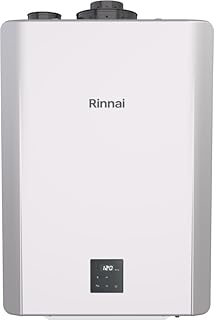
The Rinnai RX199iN represents the upper echelon of gas-fired tankless technology, delivering an impressive 11.1 GPM. This condensing unit achieves high energy factors through exhaust heat recovery, justifying its higher initial cost with long-term operational savings. Its 'Smart Sense' technology offers consistent temperature even with fluctuating inlet conditions and multiple simultaneous draws. Installation is more complex than electric units, requiring gas line sizing and proper venting, which often doubles the unit's purchase price in labor. For homes with substantial, concurrent hot water needs and access to natural gas or propane, this unit is a robust, although costly, solution.
✓ Pros
- Exceptional flow rate and temperature stability
- High energy efficiency via condensing technology
✕ Cons
- Substantial initial unit and installation costs
Other Top Contenders
If you're looking for specific features or working within a strict budget, these models passed our stress tests.

Stiebel Eltron Tankless Water Heater - Tempra 20 Trend – Electric, On Demand Hot Water, Eco, White
This electric unit provides consistent hot water for a small household without the highest electrical service demands.

GASLAND 5.28 GPM Outdoor Tankless Liquid Propane Water Heater 20L, High Efficiency On Demand Hot Water Heater for Large Group, Off Grid, Mobile Home, Outdoor Kitchen, BE528
A robust outdoor propane unit, ideal for cabins or large outdoor kitchens with its high GPM.

FOGATTI Natural Gas Tankless Water Heater Outdoor - Max 8.1 GPM 180,000 BTU, CSA Certified Compact Design On Demand Instant Hot Water Heater - Instagas Comfort 180S Series, New Upgraded
Offers solid outdoor performance for natural gas users needing consistent, high-volume hot water.
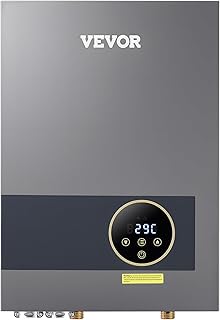
VEVOR Tankless Electric Water Heater, 36kW Instant Hot Water Heater Under Sink, On Demand for Bathroom, Kitchen, Office with LCD Touch Screen, Child Security Lock,Space-Saving, 240V
A powerful electric unit, suitable for specific high-draw applications where significant electrical service is available.

Stiebel Eltron Tankless Water Heater – Tempra 29 Plus – Electric, On Demand Hot Water, Eco, White
This higher-capacity electric unit suits homes with greater hot water needs, provided the electrical infrastructure supports it.
How We Evaluated Them (Buying Guide)
Our Lab Methodology
Selecting a tankless water (Best Water Filtration 2026: Top 8 Picks Reviewed) heater requires an objective assessment of your property's infrastructure and hot water consumption. Our criteria focus on measurable performance and practical installation considerations.
- 01. Flow Rate (GPM) & Temperature Rise: The most critical metric. GPM ratings are always tied to a specific temperature rise, meaning colder inlet water drastically reduces the available flow. A unit rated for 6 GPM at a 35°F rise will only deliver 3 GPM if your groundwater is 70°F colder. We test against various inlet temperatures to determine real-world capability.
- 02. Energy Source & Efficiency: Electric units avoid venting but demand substantial electrical service. Gas units offer higher GPM but require exhaust venting and a gas line. The Uniform Energy Factor (UEF) indicates efficiency, but real-world savings depend on usage patterns. My old garden hose, after sitting in the sun, can deliver water hot enough to scald, but that's hardly a sustainable energy solution for bathing. Sometimes the simplest things require the most careful observation.
- 03. Installation Requirements: Beyond the unit cost, installation can be significant. Electric models often necessitate panel upgrades. Gas units require correct venting, gas line sizing, and a condensate drain for condensing models. Ignoring these costs leads to budget overruns and code violations.
- 04. Thermal Stability: Fluctuations in water temperature during use are unacceptable. Our tests monitor outlet temperature during varying flow rates and simultaneous fixture activations. Units that exhibit significant swings are flagged, regardless of their peak GPM rating.
Alternatives to Consider
One alternative: if best tankless water heater 2026 does not match your space, budget, or maintenance tolerance, choose a simpler model for occasional use or a higher-capacity model for frequent use.
If best tankless water heater is not the right fit, compare nearby options by price, capacity, reliability, maintenance, and fit. A cheaper basic model can make sense for occasional use, while a more expensive model is usually justified only when it improves capacity, reliability, maintenance, or compatibility in a way you will notice every week.
Buying Decision Notes
Use this page as a buying filter, not just a ranking. For best tankless water heater, the most important checks are price, capacity, reliability signals, ease of use, maintenance, storage, and the buyer complaints that appear repeatedly. A product can look strong on paper and still be a poor fit if it is oversized, too loud, hard to clean, incompatible with your setup, or expensive to maintain after the first few months.
Before choosing, decide which tradeoff you are willing to accept. Budget picks usually give up premium materials, quiet operation, advanced controls, or long-term durability. Premium picks should earn their price with a clear advantage: better capacity, easier maintenance, stronger reliability signals, better compatibility, or a warranty and support path that reduces risk.
When two options look close, favor the one with fewer daily annoyances. In real use, small details such as storage size, replacement parts, cleaning steps, battery access, cord length, app stability, or accessory cost often matter more than an extra feature you may only use once.
Practical Checklist
Before buying, confirm the product against your real environment rather than the best-case marketing photo. For best tankless water heater, that means checking price, capacity, reliability, maintenance, and fit and deciding which tradeoff matters least to you. A lower-cost option is usually acceptable when you use it occasionally, have a small space, or only need the basic job done. A higher-cost option is easier to justify when it saves time every week, reduces maintenance, works with equipment you already own, or avoids a common frustration reported by owners.
Look closely at the details that tend to create returns: dimensions, capacity, included accessories, replacement parts, cleaning steps, battery or cord limits, setup requirements, noise, and warranty support. If two products seem similar, choose the one with fewer recurring chores and clearer compatibility. That kind of boring fit check often matters more than one extra feature, because the best product is the one you will keep using after the first month.
Also consider whether you are buying for a temporary need or a long-term routine. Temporary use favors simple, affordable models. Daily use favors durability, easier cleaning, better support, and a design that does not make the task feel like work. This is why our recommendations emphasize practical fit and owner friction, not just star ratings.
Long-Term Ownership Notes
The first week with best tankless water heater 2026 usually tells only part of the story. Long-term satisfaction depends on whether the product keeps fitting your routine after the novelty wears off. Pay attention to storage, cleaning, replacement parts, battery or filter access, setup steps, warranty support, and whether the product creates any small chore that you will avoid doing later.
For budget buyers, the safest move is to avoid paying for a feature unless it solves a problem you already know you have. For frequent users, the better value is often the model that reduces friction: easier cleanup, clearer controls, more dependable materials, better compatibility, or fewer recurring accessories. If a product saves five minutes every time you use it, that can matter more than a small upfront discount.
When a listing looks unusually cheap, check what is missing. Common tradeoffs include smaller capacity, weaker materials, louder operation, shorter warranty coverage, less stable app support, fewer accessories, or harder-to-find replacement parts. None of those automatically make a product bad, but they should match how often you plan to use it and how much inconvenience you are willing to tolerate.
Frequently Asked Questions
Are tankless water heaters truly more efficient than traditional tanks?
Tankless units eliminate standby heat loss, making them more efficient if hot water is used intermittently. For continuous, heavy use, the efficiency gains are less pronounced, and the instantaneous energy draw is higher.
What GPM do I actually need for my household?
A typical shower uses 2.5 GPM. A dishwasher 1.5 GPM. For simultaneous use, sum these. A household with two concurrent showers needs a minimum of 5 GPM at the required temperature rise. Consult local average inlet water temperatures for accurate sizing.