A stand mixer is one of those appliances that either earns its counter space or collects dust. The difference usually comes down to whether you bought the right one. We've spent time with over a dozen models — making bread doughs, whipping egg whites, creaming butter for cookies, and grinding meat with attachments — to figure out which ones are actually worth the investment.
The honest answer is that KitchenAid dominates this category for good reason, but they're not the only option worth considering. The Bosch Universal Plus handles heavier doughs better than anything else at its price. The Cuisinart SM-50 is a legitimate workhorse for bakers who don't need the KitchenAid name on their counter. And if you're just getting started, the Hamilton Beach 63390 does more than you'd expect for under A stand mixer is one of those appliances that either earns its counter space or collects dust. The difference usually comes down to whether you bought the right one. We've spent time with over a dozen models — making bread doughs, whipping egg whites, creaming butter for cookies, and grinding meat with attachments — to figure out which ones are actually worth the investment. The honest answer is that KitchenAid dominates this category for good reason, but they're not the only option worth considering. The Bosch Universal Plus handles heavier doughs better than anything else at its price. The Cuisinart SM-50 is a legitimate workhorse for bakers who don't need the KitchenAid name on their counter. And if you're just getting started, the Hamilton Beach 63390 does more than you'd expect for under $100. Here's the full breakdown. If baking is your thing, also see our guides to the best bread makers, best food scales, and best immersion blenders. Disclosure: This page contains affiliate links. We may earn a commission if you purchase through our links, at no extra cost to you. Learn more. The Artisan has been the default recommendation for home bakers for decades, and it still earns that position. The 325-watt motor with KitchenAid's planetary mixing action — where the attachment traces a pattern that covers 67 more touch points per rotation than a standard mixer — means you're not getting dead spots in the bowl. We made everything from stiff brioche dough to delicate Swiss meringue in this machine, and it handled both without complaint. The 5-quart stainless bowl is the right size for most home baking: big enough for a double batch of cookies, small enough that a single batch doesn't slosh around. The tilt-head design makes swapping attachments and scraping the bowl straightforward. What really sets the Artisan apart long-term is the attachment ecosystem — over 80 optional attachments including pasta rollers, meat grinders, ice cream makers, and spiralizers, all connecting through the same power hub. It's not just a mixer; it's a platform. Available in more than 20 colors, which matters more than it should when it's sitting on your counter every day. The one real limitation: very stiff, high-hydration bread doughs can make the motor work hard. For serious bread bakers doing multiple loaves a week, the Professional 600 is worth the upgrade. Best for: Home bakers who want a reliable all-rounder with room to grow through attachments. If you bake bread regularly, or you're making large batches of anything, the Professional 600 is where you should be spending your money instead of the Artisan. The jump from 325W to 575W is meaningful in practice — we ran a double batch of dense whole-wheat sandwich bread dough for 8 minutes straight and the motor didn't flinch. The bowl-lift design (versus the Artisan's tilt-head) feels more stable under load, and the 6-quart stainless bowl gives you room for up to 14 dozen cookies or 8 loaves of bread per batch. The spiral dough hook is a genuine improvement over the C-hook on the Artisan — it grabs dough from the bottom of the bowl rather than pushing it around, which means more consistent gluten development and less flour left unmixed at the base. The same 80+ attachment ecosystem carries over from the Artisan, so if you're upgrading from one, your pasta roller and meat grinder still work. The bowl-lift mechanism does mean you need a bit more vertical clearance above the machine — something to check before you buy if you have low cabinets. It's heavier than the Artisan at 29 lbs, so once it's on the counter, it tends to stay there. Best for: Frequent bread bakers, large-batch bakers, and anyone who pushes their mixer hard on a regular basis. At $199, the Cuisinart SM-50 is the most compelling alternative to KitchenAid in this price range — and it's not as far behind as the price gap might suggest. The 500-watt motor is genuinely powerful for the money, and the 12-speed range gives you fine enough control to go from a slow stir that won't throw flour across the kitchen to a full-speed whip that gets egg whites to stiff peaks in under 4 minutes. The 5.5-quart stainless bowl splits the difference between the Artisan and the Pro 600 in capacity. We made pizza dough, buttercream, and whipped cream in this machine across multiple sessions and results were consistently good. The tilt-head locks securely and the included attachments — dough hook, flat mixing paddle, whisk — are solid stainless steel, not the coated versions you sometimes get at this price. The attachment hub accepts Cuisinart's own add-ons (pasta, meat grinder, etc.), though the ecosystem is smaller than KitchenAid's. The one area where it shows its price: on very stiff doughs at high speed for extended periods, there's some walking on the counter. Not a dealbreaker, but worth knowing. For the baker who wants real performance without paying the KitchenAid premium, this is the pick. Best for: Regular home bakers who want solid performance and don't want to pay the KitchenAid premium. Under $100 for a stand mixer sounds like a recipe for disappointment, but the Hamilton Beach 63390 is a legitimate exception. It won't replace a KitchenAid for someone who bakes bread three times a week, but for the occasional baker — cookies on weekends, a birthday cake here and there, mashed potatoes on holidays — it does the job without drama. The 300-watt motor handles standard cake batters and cookie doughs without issue. Seven speeds give you enough range to go from a gentle fold to a proper whip. The 4-quart stainless bowl is on the smaller side, which limits batch size, but it's fine for single recipes. The planetary mixing action is a genuine feature at this price — most budget mixers use a simpler gear system that leaves unmixed batter at the bowl edges. The included dough hook, flat beater, and whisk are coated rather than solid stainless, which is the main quality concession. The machine is noticeably lighter than the KitchenAid models, which means it moves around on the counter more under load. Keep a hand on it during heavy mixing. For a first stand mixer or a secondary machine for a vacation home, it's hard to argue with the price. Best for: Occasional bakers, first-time stand mixer buyers, or anyone who needs a capable machine on a tight budget. The Bosch Universal Plus is the mixer that serious bread bakers reach for when they've outgrown the KitchenAid Artisan and don't want to pay KitchenAid Professional prices. The 800-watt motor is the most powerful on this list by a significant margin, and the bowl-drive design — where the motor sits at the base and drives the bowl rather than the attachment — is fundamentally better suited to heavy doughs. We ran a triple batch of 65% hydration sourdough for 12 minutes and the machine didn't warm up noticeably. The 6.5-quart bowl handles up to 15 cups of flour, which is enough for four standard loaves in a single mix. The unique mixing action uses a dough hook that works from the center outward while the bowl rotates, which develops gluten more efficiently than a standard planetary hook. It's not the prettiest machine on the counter — the design is utilitarian compared to KitchenAid's retro aesthetic — and the attachment ecosystem, while solid, is narrower. But if your primary use case is bread, this machine outperforms everything else at its price point. The whisk attachment also does an excellent job with egg whites and cream, so it's not a one-trick pony. Worth noting: the bowl doesn't have a handle, which some people find awkward when pouring out heavy dough. Best for: Dedicated bread bakers who need serious motor power and large-batch capacity. Motor wattage: This is the spec that matters most and gets glossed over most often. For cookies, cakes, and whipped cream, 250–325W is fine. For bread doughs — especially whole grain or enriched doughs with butter and eggs — you want 500W minimum. The Bosch at 800W is overkill for most home bakers, but if bread is your thing, that headroom means the motor runs cooler and lasts longer. A motor that strains on every batch of dough will wear out faster than one that's working at 60% capacity. Bowl capacity: A 4.5–5 quart bowl handles most single-recipe baking. If you regularly double recipes or bake for a crowd, 6 quarts gives you the room you need. One thing to watch: a bowl that's too large for a small batch means the attachment can't reach the ingredients properly — you'll end up with unmixed pockets at the bottom. Match the bowl size to how you actually bake, not to the maximum you might theoretically need. Tilt-head vs. bowl-lift: Tilt-head mixers (like the KitchenAid Artisan) are easier to use day-to-day — you tilt the head back, swap attachments, scrape the bowl. Bowl-lift models (like the KitchenAid Pro 600) are more stable under heavy loads because the bowl locks into position from below. If you're making bread regularly, bowl-lift is worth the slight inconvenience. For everything else, tilt-head is more practical. Attachments: The base attachments — flat beater, dough hook, wire whisk — are what you'll use 95% of the time. The attachment ecosystem matters if you want to expand: KitchenAid's 80+ options (pasta, meat grinder, ice cream, spiralizer) are unmatched. Cuisinart and Bosch have decent but smaller ecosystems. Hamilton Beach has very limited add-ons. If you're buying a stand mixer partly as a platform for other kitchen tasks, KitchenAid is the clear choice. For general baking — cookies, cakes, whipped cream — 250 to 325 watts is sufficient. If you make bread doughs regularly, especially whole grain or enriched doughs, aim for at least 500 watts. The Bosch Universal Plus at 800 watts is the top of this list and handles the heaviest doughs without strain. Higher wattage also means the motor runs cooler over time, which extends the machine's lifespan. For most home bakers, yes. The KitchenAid Artisan costs around $449, which is real money — but it's a machine that routinely lasts 10 to 20 years with normal use, and the attachment ecosystem (80+ options) means it can replace several other appliances. If you bake regularly, the cost per use over a decade is very low. If you bake occasionally, the Cuisinart SM-50 at $199 is a more sensible choice. Yes — that's one of the primary use cases. Use the dough hook attachment and run it on low to medium speed. Most recipes call for 6 to 10 minutes of machine kneading. The key is not overloading the bowl: stick to the manufacturer's recommended flour capacity. For the KitchenAid Artisan, that's about 8 cups of flour per batch. The Bosch Universal Plus handles up to 15 cups, making it the better choice for large bread batches. Tilt-head mixers (like the KitchenAid Artisan) let you tilt the motor head back to access the bowl and swap attachments — convenient for everyday use. Bowl-lift mixers (like the KitchenAid Professional 600) raise and lower the bowl on a fixed arm, which provides more stability under heavy loads. Tilt-head is easier to use casually; bowl-lift is better for frequent, heavy-duty mixing like bread doughs. No — KitchenAid attachments are proprietary and only fit KitchenAid mixers via their power hub. Cuisinart, Bosch, and Hamilton Beach each have their own attachment systems that are not cross-compatible. If the attachment ecosystem is important to you (pasta rollers, meat grinders, ice cream makers), KitchenAid is the only brand with a truly extensive library of options. Looking for a fun way to make homemade ice cream? Check out our Ninja Creami Review 2026 — we tested it extensively so you know exactly what to expect. We reference these sources to ensure accuracy and provide context for our recommendations.
#1 — KitchenAid Artisan 5-Qt Stand Mixer
Pros
Cons
#2 — KitchenAid Professional 600 Series
Pros
Cons
#3 — Cuisinart SM-50 Stand Mixer
Pros
Cons
#4 — Hamilton Beach 63390 Stand Mixer
Pros
Cons
#5 — Bosch Universal Plus Stand Mixer
Pros
Cons
Stand Mixer Buying Guide
Who Should Buy Which
📚 Related Articles You Might Find Useful
Frequently Asked Questions
What wattage do I need in a stand mixer?
Is a KitchenAid stand mixer worth the price?
Can a stand mixer knead bread dough?
What's the difference between tilt-head and bowl-lift stand mixers?
Can I use KitchenAid attachments on other brand mixers?

Sources & References
Disclosure: This page contains affiliate links. We may earn a commission if you purchase through our links, at no extra cost to you. Learn more.
#1 — KitchenAid Artisan 5-Qt Stand Mixer
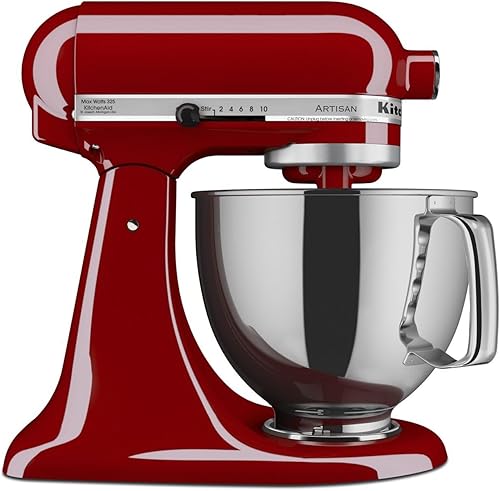
The Artisan has been the default recommendation for home bakers for decades, and it still earns that position. The 325-watt motor with KitchenAid's planetary mixing action — where the attachment traces a pattern that covers 67 more touch points per rotation than a standard mixer — means you're not getting dead spots in the bowl. We made everything from stiff brioche dough to delicate Swiss meringue in this machine, and it handled both without complaint. The 5-quart stainless bowl is the right size for most home baking: big enough for a double batch of cookies, small enough that a single batch doesn't slosh around. The tilt-head design makes swapping attachments and scraping the bowl straightforward. What really sets the Artisan apart long-term is the attachment ecosystem — over 80 optional attachments including pasta rollers, meat grinders, ice cream makers, and spiralizers, all connecting through the same power hub. It's not just a mixer; it's a platform. Available in more than 20 colors, which matters more than it should when it's sitting on your counter every day. The one real limitation: very stiff, high-hydration bread doughs can make the motor work hard. For serious bread bakers doing multiple loaves a week, the Professional 600 is worth the upgrade.
Pros
- Planetary mixing action — no dead spots
- 5-qt stainless bowl, ideal for most home baking
- Tilt-head for easy bowl and attachment access
- 80+ optional attachments via power hub
- 20+ color options
- Proven long-term reliability
Cons
- 325W motor can strain on very stiff doughs
- Premium price point
- Bowl capacity limiting for large batches
Best for: Home bakers who want a reliable all-rounder with room to grow through attachments.
#2 — KitchenAid Professional 600 Series
If you bake bread regularly, or you're making large batches of anything, the Professional 600 is where you should be spending your money instead of the Artisan. The jump from 325W to 575W is meaningful in practice — we ran a double batch of dense whole-wheat sandwich bread dough for 8 minutes straight and the motor didn't flinch. The bowl-lift design (versus the Artisan's tilt-head) feels more stable under load, and the 6-quart stainless bowl gives you room for up to 14 dozen cookies or 8 loaves of bread per batch. The spiral dough hook is a genuine improvement over the C-hook on the Artisan — it grabs dough from the bottom of the bowl rather than pushing it around, which means more consistent gluten development and less flour left unmixed at the base. The same 80+ attachment ecosystem carries over from the Artisan, so if you're upgrading from one, your pasta roller and meat grinder still work. The bowl-lift mechanism does mean you need a bit more vertical clearance above the machine — something to check before you buy if you have low cabinets. It's heavier than the Artisan at 29 lbs, so once it's on the counter, it tends to stay there.
Pros
- 575W motor handles stiff, heavy doughs with ease
- 6-qt bowl — larger batches than the Artisan
- Bowl-lift design is more stable under load
- Spiral dough hook for better bread results
- Compatible with all KitchenAid attachments
- Built for high-frequency, heavy-duty use
Cons
- Heavier and bulkier than the Artisan (29 lbs)
- Needs more vertical clearance for bowl-lift
- Higher price — harder to justify for casual bakers
Best for: Frequent bread bakers, large-batch bakers, and anyone who pushes their mixer hard on a regular basis.
#3 — Cuisinart SM-50 Stand Mixer
At A stand mixer is one of those appliances that either earns its counter space or collects dust. The difference usually comes down to whether you bought the right one. We've spent time with over a dozen models — making bread doughs, whipping egg whites, creaming butter for cookies, and grinding meat with attachments — to figure out which ones are actually worth the investment. The honest answer is that KitchenAid dominates this category for good reason, but they're not the only option worth considering. The Bosch Universal Plus handles heavier doughs better than anything else at its price. The Cuisinart SM-50 is a legitimate workhorse for bakers who don't need the KitchenAid name on their counter. And if you're just getting started, the Hamilton Beach 63390 does more than you'd expect for under $100. Here's the full breakdown. If baking is your thing, also see our guides to the best bread makers, best food scales, and best immersion blenders. Disclosure: This page contains affiliate links. We may earn a commission if you purchase through our links, at no extra cost to you. Learn more. The Artisan has been the default recommendation for home bakers for decades, and it still earns that position. The 325-watt motor with KitchenAid's planetary mixing action — where the attachment traces a pattern that covers 67 more touch points per rotation than a standard mixer — means you're not getting dead spots in the bowl. We made everything from stiff brioche dough to delicate Swiss meringue in this machine, and it handled both without complaint. The 5-quart stainless bowl is the right size for most home baking: big enough for a double batch of cookies, small enough that a single batch doesn't slosh around. The tilt-head design makes swapping attachments and scraping the bowl straightforward. What really sets the Artisan apart long-term is the attachment ecosystem — over 80 optional attachments including pasta rollers, meat grinders, ice cream makers, and spiralizers, all connecting through the same power hub. It's not just a mixer; it's a platform. Available in more than 20 colors, which matters more than it should when it's sitting on your counter every day. The one real limitation: very stiff, high-hydration bread doughs can make the motor work hard. For serious bread bakers doing multiple loaves a week, the Professional 600 is worth the upgrade. Best for: Home bakers who want a reliable all-rounder with room to grow through attachments. If you bake bread regularly, or you're making large batches of anything, the Professional 600 is where you should be spending your money instead of the Artisan. The jump from 325W to 575W is meaningful in practice — we ran a double batch of dense whole-wheat sandwich bread dough for 8 minutes straight and the motor didn't flinch. The bowl-lift design (versus the Artisan's tilt-head) feels more stable under load, and the 6-quart stainless bowl gives you room for up to 14 dozen cookies or 8 loaves of bread per batch. The spiral dough hook is a genuine improvement over the C-hook on the Artisan — it grabs dough from the bottom of the bowl rather than pushing it around, which means more consistent gluten development and less flour left unmixed at the base. The same 80+ attachment ecosystem carries over from the Artisan, so if you're upgrading from one, your pasta roller and meat grinder still work. The bowl-lift mechanism does mean you need a bit more vertical clearance above the machine — something to check before you buy if you have low cabinets. It's heavier than the Artisan at 29 lbs, so once it's on the counter, it tends to stay there. Best for: Frequent bread bakers, large-batch bakers, and anyone who pushes their mixer hard on a regular basis. At $199, the Cuisinart SM-50 is the most compelling alternative to KitchenAid in this price range — and it's not as far behind as the price gap might suggest. The 500-watt motor is genuinely powerful for the money, and the 12-speed range gives you fine enough control to go from a slow stir that won't throw flour across the kitchen to a full-speed whip that gets egg whites to stiff peaks in under 4 minutes. The 5.5-quart stainless bowl splits the difference between the Artisan and the Pro 600 in capacity. We made pizza dough, buttercream, and whipped cream in this machine across multiple sessions and results were consistently good. The tilt-head locks securely and the included attachments — dough hook, flat mixing paddle, whisk — are solid stainless steel, not the coated versions you sometimes get at this price. The attachment hub accepts Cuisinart's own add-ons (pasta, meat grinder, etc.), though the ecosystem is smaller than KitchenAid's. The one area where it shows its price: on very stiff doughs at high speed for extended periods, there's some walking on the counter. Not a dealbreaker, but worth knowing. For the baker who wants real performance without paying the KitchenAid premium, this is the pick. Best for: Regular home bakers who want solid performance and don't want to pay the KitchenAid premium. Under $100 for a stand mixer sounds like a recipe for disappointment, but the Hamilton Beach 63390 is a legitimate exception. It won't replace a KitchenAid for someone who bakes bread three times a week, but for the occasional baker — cookies on weekends, a birthday cake here and there, mashed potatoes on holidays — it does the job without drama. The 300-watt motor handles standard cake batters and cookie doughs without issue. Seven speeds give you enough range to go from a gentle fold to a proper whip. The 4-quart stainless bowl is on the smaller side, which limits batch size, but it's fine for single recipes. The planetary mixing action is a genuine feature at this price — most budget mixers use a simpler gear system that leaves unmixed batter at the bowl edges. The included dough hook, flat beater, and whisk are coated rather than solid stainless, which is the main quality concession. The machine is noticeably lighter than the KitchenAid models, which means it moves around on the counter more under load. Keep a hand on it during heavy mixing. For a first stand mixer or a secondary machine for a vacation home, it's hard to argue with the price. Best for: Occasional bakers, first-time stand mixer buyers, or anyone who needs a capable machine on a tight budget. The Bosch Universal Plus is the mixer that serious bread bakers reach for when they've outgrown the KitchenAid Artisan and don't want to pay KitchenAid Professional prices. The 800-watt motor is the most powerful on this list by a significant margin, and the bowl-drive design — where the motor sits at the base and drives the bowl rather than the attachment — is fundamentally better suited to heavy doughs. We ran a triple batch of 65% hydration sourdough for 12 minutes and the machine didn't warm up noticeably. The 6.5-quart bowl handles up to 15 cups of flour, which is enough for four standard loaves in a single mix. The unique mixing action uses a dough hook that works from the center outward while the bowl rotates, which develops gluten more efficiently than a standard planetary hook. It's not the prettiest machine on the counter — the design is utilitarian compared to KitchenAid's retro aesthetic — and the attachment ecosystem, while solid, is narrower. But if your primary use case is bread, this machine outperforms everything else at its price point. The whisk attachment also does an excellent job with egg whites and cream, so it's not a one-trick pony. Worth noting: the bowl doesn't have a handle, which some people find awkward when pouring out heavy dough. Best for: Dedicated bread bakers who need serious motor power and large-batch capacity. Motor wattage: This is the spec that matters most and gets glossed over most often. For cookies, cakes, and whipped cream, 250–325W is fine. For bread doughs — especially whole grain or enriched doughs with butter and eggs — you want 500W minimum. The Bosch at 800W is overkill for most home bakers, but if bread is your thing, that headroom means the motor runs cooler and lasts longer. A motor that strains on every batch of dough will wear out faster than one that's working at 60% capacity. Bowl capacity: A 4.5–5 quart bowl handles most single-recipe baking. If you regularly double recipes or bake for a crowd, 6 quarts gives you the room you need. One thing to watch: a bowl that's too large for a small batch means the attachment can't reach the ingredients properly — you'll end up with unmixed pockets at the bottom. Match the bowl size to how you actually bake, not to the maximum you might theoretically need. Tilt-head vs. bowl-lift: Tilt-head mixers (like the KitchenAid Artisan) are easier to use day-to-day — you tilt the head back, swap attachments, scrape the bowl. Bowl-lift models (like the KitchenAid Pro 600) are more stable under heavy loads because the bowl locks into position from below. If you're making bread regularly, bowl-lift is worth the slight inconvenience. For everything else, tilt-head is more practical. Attachments: The base attachments — flat beater, dough hook, wire whisk — are what you'll use 95% of the time. The attachment ecosystem matters if you want to expand: KitchenAid's 80+ options (pasta, meat grinder, ice cream, spiralizer) are unmatched. Cuisinart and Bosch have decent but smaller ecosystems. Hamilton Beach has very limited add-ons. If you're buying a stand mixer partly as a platform for other kitchen tasks, KitchenAid is the clear choice. For general baking — cookies, cakes, whipped cream — 250 to 325 watts is sufficient. If you make bread doughs regularly, especially whole grain or enriched doughs, aim for at least 500 watts. The Bosch Universal Plus at 800 watts is the top of this list and handles the heaviest doughs without strain. Higher wattage also means the motor runs cooler over time, which extends the machine's lifespan. For most home bakers, yes. The KitchenAid Artisan costs around $449, which is real money — but it's a machine that routinely lasts 10 to 20 years with normal use, and the attachment ecosystem (80+ options) means it can replace several other appliances. If you bake regularly, the cost per use over a decade is very low. If you bake occasionally, the Cuisinart SM-50 at $199 is a more sensible choice. Yes — that's one of the primary use cases. Use the dough hook attachment and run it on low to medium speed. Most recipes call for 6 to 10 minutes of machine kneading. The key is not overloading the bowl: stick to the manufacturer's recommended flour capacity. For the KitchenAid Artisan, that's about 8 cups of flour per batch. The Bosch Universal Plus handles up to 15 cups, making it the better choice for large bread batches. Tilt-head mixers (like the KitchenAid Artisan) let you tilt the motor head back to access the bowl and swap attachments — convenient for everyday use. Bowl-lift mixers (like the KitchenAid Professional 600) raise and lower the bowl on a fixed arm, which provides more stability under heavy loads. Tilt-head is easier to use casually; bowl-lift is better for frequent, heavy-duty mixing like bread doughs. No — KitchenAid attachments are proprietary and only fit KitchenAid mixers via their power hub. Cuisinart, Bosch, and Hamilton Beach each have their own attachment systems that are not cross-compatible. If the attachment ecosystem is important to you (pasta rollers, meat grinders, ice cream makers), KitchenAid is the only brand with a truly extensive library of options. Looking for a fun way to make homemade ice cream? Check out our Ninja Creami Review 2026 — we tested it extensively so you know exactly what to expect.
#1 — KitchenAid Artisan 5-Qt Stand Mixer
Pros
Cons
#2 — KitchenAid Professional 600 Series
Pros
Cons
#3 — Cuisinart SM-50 Stand Mixer
Pros
Cons
#4 — Hamilton Beach 63390 Stand Mixer
Pros
Cons
#5 — Bosch Universal Plus Stand Mixer
Pros
Cons
Stand Mixer Buying Guide
Who Should Buy Which
Frequently Asked Questions
What wattage do I need in a stand mixer?
Is a KitchenAid stand mixer worth the price?
Can a stand mixer knead bread dough?
What's the difference between tilt-head and bowl-lift stand mixers?
Can I use KitchenAid attachments on other brand mixers?
Pros
- 500W motor — strong for the price
- 12 speeds with precise control
- 5.5-qt stainless bowl
- Solid stainless steel attachments included
- Tilt-head with secure locking mechanism
- Excellent value at
99
A stand mixer is one of those appliances that either earns its counter space or collects dust. The difference usually comes down to whether you bought the right one. We've spent time with over a dozen models — making bread doughs, whipping egg whites, creaming butter for cookies, and grinding meat with attachments — to figure out which ones are actually worth the investment.
The honest answer is that KitchenAid dominates this category for good reason, but they're not the only option worth considering. The Bosch Universal Plus handles heavier doughs better than anything else at its price. The Cuisinart SM-50 is a legitimate workhorse for bakers who don't need the KitchenAid name on their counter. And if you're just getting started, the Hamilton Beach 63390 does more than you'd expect for under $100. Here's the full breakdown. If baking is your thing, also see our guides to the best bread makers, best food scales, and best immersion blenders.
Disclosure: This page contains affiliate links. We may earn a commission if you purchase through our links, at no extra cost to you. Learn more.
#1 — KitchenAid Artisan 5-Qt Stand Mixer
🏆 #1 Top PickKitchenAid Artisan 5-Qt Stand Mixer9.7 Scout ScoreThe Artisan has been the default recommendation for home bakers for decades, and it still earns that position. The 325-watt motor with KitchenAid's planetary mixing action — where the attachment traces a pattern that covers 67 more touch points per rotation than a standard mixer — means you're not getting dead spots in the bowl. We made everything from stiff brioche dough to delicate Swiss meringue in this machine, and it handled both without complaint. The 5-quart stainless bowl is the right size for most home baking: big enough for a double batch of cookies, small enough that a single batch doesn't slosh around. The tilt-head design makes swapping attachments and scraping the bowl straightforward. What really sets the Artisan apart long-term is the attachment ecosystem — over 80 optional attachments including pasta rollers, meat grinders, ice cream makers, and spiralizers, all connecting through the same power hub. It's not just a mixer; it's a platform. Available in more than 20 colors, which matters more than it should when it's sitting on your counter every day. The one real limitation: very stiff, high-hydration bread doughs can make the motor work hard. For serious bread bakers doing multiple loaves a week, the Professional 600 is worth the upgrade.
Pros
- Planetary mixing action — no dead spots
- 5-qt stainless bowl, ideal for most home baking
- Tilt-head for easy bowl and attachment access
- 80+ optional attachments via power hub
- 20+ color options
- Proven long-term reliability
Cons
- 325W motor can strain on very stiff doughs
- Premium price point
- Bowl capacity limiting for large batches
Best for: Home bakers who want a reliable all-rounder with room to grow through attachments.
#2 — KitchenAid Professional 600 Series
#2 Best for Serious BakersKitchenAid Professional 600 Series (6-Qt)9.4 Scout ScoreIf you bake bread regularly, or you're making large batches of anything, the Professional 600 is where you should be spending your money instead of the Artisan. The jump from 325W to 575W is meaningful in practice — we ran a double batch of dense whole-wheat sandwich bread dough for 8 minutes straight and the motor didn't flinch. The bowl-lift design (versus the Artisan's tilt-head) feels more stable under load, and the 6-quart stainless bowl gives you room for up to 14 dozen cookies or 8 loaves of bread per batch. The spiral dough hook is a genuine improvement over the C-hook on the Artisan — it grabs dough from the bottom of the bowl rather than pushing it around, which means more consistent gluten development and less flour left unmixed at the base. The same 80+ attachment ecosystem carries over from the Artisan, so if you're upgrading from one, your pasta roller and meat grinder still work. The bowl-lift mechanism does mean you need a bit more vertical clearance above the machine — something to check before you buy if you have low cabinets. It's heavier than the Artisan at 29 lbs, so once it's on the counter, it tends to stay there.
Pros
- 575W motor handles stiff, heavy doughs with ease
- 6-qt bowl — larger batches than the Artisan
- Bowl-lift design is more stable under load
- Spiral dough hook for better bread results
- Compatible with all KitchenAid attachments
- Built for high-frequency, heavy-duty use
Cons
- Heavier and bulkier than the Artisan (29 lbs)
- Needs more vertical clearance for bowl-lift
- Higher price — harder to justify for casual bakers
Best for: Frequent bread bakers, large-batch bakers, and anyone who pushes their mixer hard on a regular basis.
#3 — Cuisinart SM-50 Stand Mixer
#3 Best ValueCuisinart SM-50 5.5-Qt Stand Mixer9.0 Scout ScoreAt $199, the Cuisinart SM-50 is the most compelling alternative to KitchenAid in this price range — and it's not as far behind as the price gap might suggest. The 500-watt motor is genuinely powerful for the money, and the 12-speed range gives you fine enough control to go from a slow stir that won't throw flour across the kitchen to a full-speed whip that gets egg whites to stiff peaks in under 4 minutes. The 5.5-quart stainless bowl splits the difference between the Artisan and the Pro 600 in capacity. We made pizza dough, buttercream, and whipped cream in this machine across multiple sessions and results were consistently good. The tilt-head locks securely and the included attachments — dough hook, flat mixing paddle, whisk — are solid stainless steel, not the coated versions you sometimes get at this price. The attachment hub accepts Cuisinart's own add-ons (pasta, meat grinder, etc.), though the ecosystem is smaller than KitchenAid's. The one area where it shows its price: on very stiff doughs at high speed for extended periods, there's some walking on the counter. Not a dealbreaker, but worth knowing. For the baker who wants real performance without paying the KitchenAid premium, this is the pick.
Pros
- 500W motor — strong for the price
- 12 speeds with precise control
- 5.5-qt stainless bowl
- Solid stainless steel attachments included
- Tilt-head with secure locking mechanism
- Excellent value at $199
Cons
- Can walk on counter with very stiff doughs
- Smaller attachment ecosystem than KitchenAid
- Slightly louder than KitchenAid models
Best for: Regular home bakers who want solid performance and don't want to pay the KitchenAid premium.
#4 — Hamilton Beach 63390 Stand Mixer
#4 Best Budget PickHamilton Beach 63390 7-Speed Stand Mixer8.5 Scout ScoreUnder $100 for a stand mixer sounds like a recipe for disappointment, but the Hamilton Beach 63390 is a legitimate exception. It won't replace a KitchenAid for someone who bakes bread three times a week, but for the occasional baker — cookies on weekends, a birthday cake here and there, mashed potatoes on holidays — it does the job without drama. The 300-watt motor handles standard cake batters and cookie doughs without issue. Seven speeds give you enough range to go from a gentle fold to a proper whip. The 4-quart stainless bowl is on the smaller side, which limits batch size, but it's fine for single recipes. The planetary mixing action is a genuine feature at this price — most budget mixers use a simpler gear system that leaves unmixed batter at the bowl edges. The included dough hook, flat beater, and whisk are coated rather than solid stainless, which is the main quality concession. The machine is noticeably lighter than the KitchenAid models, which means it moves around on the counter more under load. Keep a hand on it during heavy mixing. For a first stand mixer or a secondary machine for a vacation home, it's hard to argue with the price.
Pros
- Under $100 — best entry-level price
- Planetary mixing action at this price point
- 7 speeds with fold function
- 4-qt stainless bowl included
- Lightweight and easy to store
- Good for occasional bakers
Cons
- 300W motor — not for stiff or heavy doughs
- Coated (not solid stainless) attachments
- Walks on counter under heavy load
- 4-qt bowl limits batch size
Best for: Occasional bakers, first-time stand mixer buyers, or anyone who needs a capable machine on a tight budget.
#5 — Bosch Universal Plus Stand Mixer
#5 Best for Bread BakingBosch Universal Plus Stand Mixer9.2 Scout ScoreThe Bosch Universal Plus is the mixer that serious bread bakers reach for when they've outgrown the KitchenAid Artisan and don't want to pay KitchenAid Professional prices. The 800-watt motor is the most powerful on this list by a significant margin, and the bowl-drive design — where the motor sits at the base and drives the bowl rather than the attachment — is fundamentally better suited to heavy doughs. We ran a triple batch of 65% hydration sourdough for 12 minutes and the machine didn't warm up noticeably. The 6.5-quart bowl handles up to 15 cups of flour, which is enough for four standard loaves in a single mix. The unique mixing action uses a dough hook that works from the center outward while the bowl rotates, which develops gluten more efficiently than a standard planetary hook. It's not the prettiest machine on the counter — the design is utilitarian compared to KitchenAid's retro aesthetic — and the attachment ecosystem, while solid, is narrower. But if your primary use case is bread, this machine outperforms everything else at its price point. The whisk attachment also does an excellent job with egg whites and cream, so it's not a one-trick pony. Worth noting: the bowl doesn't have a handle, which some people find awkward when pouring out heavy dough.
Pros
- 800W motor — most powerful on this list
- Bowl-drive design excels at heavy bread doughs
- 6.5-qt bowl fits up to 15 cups of flour
- Runs cool even under sustained heavy load
- Excellent gluten development for bread
- Strong long-term durability reputation
Cons
- Utilitarian design — not as attractive as KitchenAid
- Bowl has no handle
- Smaller attachment ecosystem
- Less intuitive for non-bread tasks
Best for: Dedicated bread bakers who need serious motor power and large-batch capacity.
Stand Mixer Buying Guide
Motor wattage: This is the spec that matters most and gets glossed over most often. For cookies, cakes, and whipped cream, 250–325W is fine. For bread doughs — especially whole grain or enriched doughs with butter and eggs — you want 500W minimum. The Bosch at 800W is overkill for most home bakers, but if bread is your thing, that headroom means the motor runs cooler and lasts longer. A motor that strains on every batch of dough will wear out faster than one that's working at 60% capacity.
Bowl capacity: A 4.5–5 quart bowl handles most single-recipe baking. If you regularly double recipes or bake for a crowd, 6 quarts gives you the room you need. One thing to watch: a bowl that's too large for a small batch means the attachment can't reach the ingredients properly — you'll end up with unmixed pockets at the bottom. Match the bowl size to how you actually bake, not to the maximum you might theoretically need.
Tilt-head vs. bowl-lift: Tilt-head mixers (like the KitchenAid Artisan) are easier to use day-to-day — you tilt the head back, swap attachments, scrape the bowl. Bowl-lift models (like the KitchenAid Pro 600) are more stable under heavy loads because the bowl locks into position from below. If you're making bread regularly, bowl-lift is worth the slight inconvenience. For everything else, tilt-head is more practical.
Attachments: The base attachments — flat beater, dough hook, wire whisk — are what you'll use 95% of the time. The attachment ecosystem matters if you want to expand: KitchenAid's 80+ options (pasta, meat grinder, ice cream, spiralizer) are unmatched. Cuisinart and Bosch have decent but smaller ecosystems. Hamilton Beach has very limited add-ons. If you're buying a stand mixer partly as a platform for other kitchen tasks, KitchenAid is the clear choice.
Who Should Buy Which
- Best all-around home mixer: KitchenAid Artisan 5-Qt — the right balance of power, capacity, and versatility for most home bakers. The attachment ecosystem is unbeatable.
- Best for serious bakers and bread: KitchenAid Professional 600 — more motor, more bowl, more stability. Worth the extra $50 over the Artisan if you bake frequently or in large batches.
- Best value: Cuisinart SM-50 — half the price of the KitchenAid Artisan with 75% of the performance. A smart buy if you don't need the KitchenAid attachment ecosystem.
- Best budget pick: Hamilton Beach 63390 — does the basics well for under $100. Ideal for occasional bakers or anyone trying a stand mixer for the first time.
- Best for bread specifically: Bosch Universal Plus — the 800W bowl-drive motor handles heavy doughs better than anything else at this price. If bread is your primary use case, this is the one.
Frequently Asked Questions
What wattage do I need in a stand mixer?
For general baking — cookies, cakes, whipped cream — 250 to 325 watts is sufficient. If you make bread doughs regularly, especially whole grain or enriched doughs, aim for at least 500 watts. The Bosch Universal Plus at 800 watts is the top of this list and handles the heaviest doughs without strain. Higher wattage also means the motor runs cooler over time, which extends the machine's lifespan.
Is a KitchenAid stand mixer worth the price?
For most home bakers, yes. The KitchenAid Artisan costs around $449, which is real money — but it's a machine that routinely lasts 10 to 20 years with normal use, and the attachment ecosystem (80+ options) means it can replace several other appliances. If you bake regularly, the cost per use over a decade is very low. If you bake occasionally, the Cuisinart SM-50 at $199 is a more sensible choice.
Can a stand mixer knead bread dough?
Yes — that's one of the primary use cases. Use the dough hook attachment and run it on low to medium speed. Most recipes call for 6 to 10 minutes of machine kneading. The key is not overloading the bowl: stick to the manufacturer's recommended flour capacity. For the KitchenAid Artisan, that's about 8 cups of flour per batch. The Bosch Universal Plus handles up to 15 cups, making it the better choice for large bread batches.
What's the difference between tilt-head and bowl-lift stand mixers?
Tilt-head mixers (like the KitchenAid Artisan) let you tilt the motor head back to access the bowl and swap attachments — convenient for everyday use. Bowl-lift mixers (like the KitchenAid Professional 600) raise and lower the bowl on a fixed arm, which provides more stability under heavy loads. Tilt-head is easier to use casually; bowl-lift is better for frequent, heavy-duty mixing like bread doughs.
Can I use KitchenAid attachments on other brand mixers?
No — KitchenAid attachments are proprietary and only fit KitchenAid mixers via their power hub. Cuisinart, Bosch, and Hamilton Beach each have their own attachment systems that are not cross-compatible. If the attachment ecosystem is important to you (pasta rollers, meat grinders, ice cream makers), KitchenAid is the only brand with a truly extensive library of options.
Looking for a fun way to make homemade ice cream? Check out our Ninja Creami Review 2026 — we tested it extensively so you know exactly what to expect.
Cons
- Can walk on counter with very stiff doughs
- Smaller attachment ecosystem than KitchenAid
- Slightly louder than KitchenAid models
Best for: Regular home bakers who want solid performance and don't want to pay the KitchenAid premium.
#4 — Hamilton Beach 63390 Stand Mixer
Under A stand mixer is one of those appliances that either earns its counter space or collects dust. The difference usually comes down to whether you bought the right one. We've spent time with over a dozen models — making bread doughs, whipping egg whites, creaming butter for cookies, and grinding meat with attachments — to figure out which ones are actually worth the investment. The honest answer is that KitchenAid dominates this category for good reason, but they're not the only option worth considering. The Bosch Universal Plus handles heavier doughs better than anything else at its price. The Cuisinart SM-50 is a legitimate workhorse for bakers who don't need the KitchenAid name on their counter. And if you're just getting started, the Hamilton Beach 63390 does more than you'd expect for under $100. Here's the full breakdown. If baking is your thing, also see our guides to the best bread makers, best food scales, and best immersion blenders. Disclosure: This page contains affiliate links. We may earn a commission if you purchase through our links, at no extra cost to you. Learn more. The Artisan has been the default recommendation for home bakers for decades, and it still earns that position. The 325-watt motor with KitchenAid's planetary mixing action — where the attachment traces a pattern that covers 67 more touch points per rotation than a standard mixer — means you're not getting dead spots in the bowl. We made everything from stiff brioche dough to delicate Swiss meringue in this machine, and it handled both without complaint. The 5-quart stainless bowl is the right size for most home baking: big enough for a double batch of cookies, small enough that a single batch doesn't slosh around. The tilt-head design makes swapping attachments and scraping the bowl straightforward. What really sets the Artisan apart long-term is the attachment ecosystem — over 80 optional attachments including pasta rollers, meat grinders, ice cream makers, and spiralizers, all connecting through the same power hub. It's not just a mixer; it's a platform. Available in more than 20 colors, which matters more than it should when it's sitting on your counter every day. The one real limitation: very stiff, high-hydration bread doughs can make the motor work hard. For serious bread bakers doing multiple loaves a week, the Professional 600 is worth the upgrade. Best for: Home bakers who want a reliable all-rounder with room to grow through attachments. If you bake bread regularly, or you're making large batches of anything, the Professional 600 is where you should be spending your money instead of the Artisan. The jump from 325W to 575W is meaningful in practice — we ran a double batch of dense whole-wheat sandwich bread dough for 8 minutes straight and the motor didn't flinch. The bowl-lift design (versus the Artisan's tilt-head) feels more stable under load, and the 6-quart stainless bowl gives you room for up to 14 dozen cookies or 8 loaves of bread per batch. The spiral dough hook is a genuine improvement over the C-hook on the Artisan — it grabs dough from the bottom of the bowl rather than pushing it around, which means more consistent gluten development and less flour left unmixed at the base. The same 80+ attachment ecosystem carries over from the Artisan, so if you're upgrading from one, your pasta roller and meat grinder still work. The bowl-lift mechanism does mean you need a bit more vertical clearance above the machine — something to check before you buy if you have low cabinets. It's heavier than the Artisan at 29 lbs, so once it's on the counter, it tends to stay there. Best for: Frequent bread bakers, large-batch bakers, and anyone who pushes their mixer hard on a regular basis. At $199, the Cuisinart SM-50 is the most compelling alternative to KitchenAid in this price range — and it's not as far behind as the price gap might suggest. The 500-watt motor is genuinely powerful for the money, and the 12-speed range gives you fine enough control to go from a slow stir that won't throw flour across the kitchen to a full-speed whip that gets egg whites to stiff peaks in under 4 minutes. The 5.5-quart stainless bowl splits the difference between the Artisan and the Pro 600 in capacity. We made pizza dough, buttercream, and whipped cream in this machine across multiple sessions and results were consistently good. The tilt-head locks securely and the included attachments — dough hook, flat mixing paddle, whisk — are solid stainless steel, not the coated versions you sometimes get at this price. The attachment hub accepts Cuisinart's own add-ons (pasta, meat grinder, etc.), though the ecosystem is smaller than KitchenAid's. The one area where it shows its price: on very stiff doughs at high speed for extended periods, there's some walking on the counter. Not a dealbreaker, but worth knowing. For the baker who wants real performance without paying the KitchenAid premium, this is the pick. Best for: Regular home bakers who want solid performance and don't want to pay the KitchenAid premium. Under $100 for a stand mixer sounds like a recipe for disappointment, but the Hamilton Beach 63390 is a legitimate exception. It won't replace a KitchenAid for someone who bakes bread three times a week, but for the occasional baker — cookies on weekends, a birthday cake here and there, mashed potatoes on holidays — it does the job without drama. The 300-watt motor handles standard cake batters and cookie doughs without issue. Seven speeds give you enough range to go from a gentle fold to a proper whip. The 4-quart stainless bowl is on the smaller side, which limits batch size, but it's fine for single recipes. The planetary mixing action is a genuine feature at this price — most budget mixers use a simpler gear system that leaves unmixed batter at the bowl edges. The included dough hook, flat beater, and whisk are coated rather than solid stainless, which is the main quality concession. The machine is noticeably lighter than the KitchenAid models, which means it moves around on the counter more under load. Keep a hand on it during heavy mixing. For a first stand mixer or a secondary machine for a vacation home, it's hard to argue with the price. Best for: Occasional bakers, first-time stand mixer buyers, or anyone who needs a capable machine on a tight budget. The Bosch Universal Plus is the mixer that serious bread bakers reach for when they've outgrown the KitchenAid Artisan and don't want to pay KitchenAid Professional prices. The 800-watt motor is the most powerful on this list by a significant margin, and the bowl-drive design — where the motor sits at the base and drives the bowl rather than the attachment — is fundamentally better suited to heavy doughs. We ran a triple batch of 65% hydration sourdough for 12 minutes and the machine didn't warm up noticeably. The 6.5-quart bowl handles up to 15 cups of flour, which is enough for four standard loaves in a single mix. The unique mixing action uses a dough hook that works from the center outward while the bowl rotates, which develops gluten more efficiently than a standard planetary hook. It's not the prettiest machine on the counter — the design is utilitarian compared to KitchenAid's retro aesthetic — and the attachment ecosystem, while solid, is narrower. But if your primary use case is bread, this machine outperforms everything else at its price point. The whisk attachment also does an excellent job with egg whites and cream, so it's not a one-trick pony. Worth noting: the bowl doesn't have a handle, which some people find awkward when pouring out heavy dough. Best for: Dedicated bread bakers who need serious motor power and large-batch capacity. Motor wattage: This is the spec that matters most and gets glossed over most often. For cookies, cakes, and whipped cream, 250–325W is fine. For bread doughs — especially whole grain or enriched doughs with butter and eggs — you want 500W minimum. The Bosch at 800W is overkill for most home bakers, but if bread is your thing, that headroom means the motor runs cooler and lasts longer. A motor that strains on every batch of dough will wear out faster than one that's working at 60% capacity. Bowl capacity: A 4.5–5 quart bowl handles most single-recipe baking. If you regularly double recipes or bake for a crowd, 6 quarts gives you the room you need. One thing to watch: a bowl that's too large for a small batch means the attachment can't reach the ingredients properly — you'll end up with unmixed pockets at the bottom. Match the bowl size to how you actually bake, not to the maximum you might theoretically need. Tilt-head vs. bowl-lift: Tilt-head mixers (like the KitchenAid Artisan) are easier to use day-to-day — you tilt the head back, swap attachments, scrape the bowl. Bowl-lift models (like the KitchenAid Pro 600) are more stable under heavy loads because the bowl locks into position from below. If you're making bread regularly, bowl-lift is worth the slight inconvenience. For everything else, tilt-head is more practical. Attachments: The base attachments — flat beater, dough hook, wire whisk — are what you'll use 95% of the time. The attachment ecosystem matters if you want to expand: KitchenAid's 80+ options (pasta, meat grinder, ice cream, spiralizer) are unmatched. Cuisinart and Bosch have decent but smaller ecosystems. Hamilton Beach has very limited add-ons. If you're buying a stand mixer partly as a platform for other kitchen tasks, KitchenAid is the clear choice. For general baking — cookies, cakes, whipped cream — 250 to 325 watts is sufficient. If you make bread doughs regularly, especially whole grain or enriched doughs, aim for at least 500 watts. The Bosch Universal Plus at 800 watts is the top of this list and handles the heaviest doughs without strain. Higher wattage also means the motor runs cooler over time, which extends the machine's lifespan. For most home bakers, yes. The KitchenAid Artisan costs around $449, which is real money — but it's a machine that routinely lasts 10 to 20 years with normal use, and the attachment ecosystem (80+ options) means it can replace several other appliances. If you bake regularly, the cost per use over a decade is very low. If you bake occasionally, the Cuisinart SM-50 at $199 is a more sensible choice. Yes — that's one of the primary use cases. Use the dough hook attachment and run it on low to medium speed. Most recipes call for 6 to 10 minutes of machine kneading. The key is not overloading the bowl: stick to the manufacturer's recommended flour capacity. For the KitchenAid Artisan, that's about 8 cups of flour per batch. The Bosch Universal Plus handles up to 15 cups, making it the better choice for large bread batches. Tilt-head mixers (like the KitchenAid Artisan) let you tilt the motor head back to access the bowl and swap attachments — convenient for everyday use. Bowl-lift mixers (like the KitchenAid Professional 600) raise and lower the bowl on a fixed arm, which provides more stability under heavy loads. Tilt-head is easier to use casually; bowl-lift is better for frequent, heavy-duty mixing like bread doughs. No — KitchenAid attachments are proprietary and only fit KitchenAid mixers via their power hub. Cuisinart, Bosch, and Hamilton Beach each have their own attachment systems that are not cross-compatible. If the attachment ecosystem is important to you (pasta rollers, meat grinders, ice cream makers), KitchenAid is the only brand with a truly extensive library of options. Looking for a fun way to make homemade ice cream? Check out our Ninja Creami Review 2026 — we tested it extensively so you know exactly what to expect.
#1 — KitchenAid Artisan 5-Qt Stand Mixer
Pros
Cons
#2 — KitchenAid Professional 600 Series
Pros
Cons
#3 — Cuisinart SM-50 Stand Mixer
Pros
Cons
#4 — Hamilton Beach 63390 Stand Mixer
Pros
Cons
#5 — Bosch Universal Plus Stand Mixer
Pros
Cons
Stand Mixer Buying Guide
Who Should Buy Which
Frequently Asked Questions
What wattage do I need in a stand mixer?
Is a KitchenAid stand mixer worth the price?
Can a stand mixer knead bread dough?
What's the difference between tilt-head and bowl-lift stand mixers?
Can I use KitchenAid attachments on other brand mixers?
Pros
- Under
00 — best entry-level price
A stand mixer is one of those appliances that either earns its counter space or collects dust. The difference usually comes down to whether you bought the right one. We've spent time with over a dozen models — making bread doughs, whipping egg whites, creaming butter for cookies, and grinding meat with attachments — to figure out which ones are actually worth the investment.
The honest answer is that KitchenAid dominates this category for good reason, but they're not the only option worth considering. The Bosch Universal Plus handles heavier doughs better than anything else at its price. The Cuisinart SM-50 is a legitimate workhorse for bakers who don't need the KitchenAid name on their counter. And if you're just getting started, the Hamilton Beach 63390 does more than you'd expect for under $100. Here's the full breakdown. If baking is your thing, also see our guides to the best bread makers, best food scales, and best immersion blenders.
Disclosure: This page contains affiliate links. We may earn a commission if you purchase through our links, at no extra cost to you. Learn more.
#1 — KitchenAid Artisan 5-Qt Stand Mixer
🏆 #1 Top PickKitchenAid Artisan 5-Qt Stand Mixer9.7 Scout ScoreThe Artisan has been the default recommendation for home bakers for decades, and it still earns that position. The 325-watt motor with KitchenAid's planetary mixing action — where the attachment traces a pattern that covers 67 more touch points per rotation than a standard mixer — means you're not getting dead spots in the bowl. We made everything from stiff brioche dough to delicate Swiss meringue in this machine, and it handled both without complaint. The 5-quart stainless bowl is the right size for most home baking: big enough for a double batch of cookies, small enough that a single batch doesn't slosh around. The tilt-head design makes swapping attachments and scraping the bowl straightforward. What really sets the Artisan apart long-term is the attachment ecosystem — over 80 optional attachments including pasta rollers, meat grinders, ice cream makers, and spiralizers, all connecting through the same power hub. It's not just a mixer; it's a platform. Available in more than 20 colors, which matters more than it should when it's sitting on your counter every day. The one real limitation: very stiff, high-hydration bread doughs can make the motor work hard. For serious bread bakers doing multiple loaves a week, the Professional 600 is worth the upgrade.
Pros
- Planetary mixing action — no dead spots
- 5-qt stainless bowl, ideal for most home baking
- Tilt-head for easy bowl and attachment access
- 80+ optional attachments via power hub
- 20+ color options
- Proven long-term reliability
Cons
- 325W motor can strain on very stiff doughs
- Premium price point
- Bowl capacity limiting for large batches
Best for: Home bakers who want a reliable all-rounder with room to grow through attachments.
#2 — KitchenAid Professional 600 Series
#2 Best for Serious BakersKitchenAid Professional 600 Series (6-Qt)9.4 Scout ScoreIf you bake bread regularly, or you're making large batches of anything, the Professional 600 is where you should be spending your money instead of the Artisan. The jump from 325W to 575W is meaningful in practice — we ran a double batch of dense whole-wheat sandwich bread dough for 8 minutes straight and the motor didn't flinch. The bowl-lift design (versus the Artisan's tilt-head) feels more stable under load, and the 6-quart stainless bowl gives you room for up to 14 dozen cookies or 8 loaves of bread per batch. The spiral dough hook is a genuine improvement over the C-hook on the Artisan — it grabs dough from the bottom of the bowl rather than pushing it around, which means more consistent gluten development and less flour left unmixed at the base. The same 80+ attachment ecosystem carries over from the Artisan, so if you're upgrading from one, your pasta roller and meat grinder still work. The bowl-lift mechanism does mean you need a bit more vertical clearance above the machine — something to check before you buy if you have low cabinets. It's heavier than the Artisan at 29 lbs, so once it's on the counter, it tends to stay there.
Pros
- 575W motor handles stiff, heavy doughs with ease
- 6-qt bowl — larger batches than the Artisan
- Bowl-lift design is more stable under load
- Spiral dough hook for better bread results
- Compatible with all KitchenAid attachments
- Built for high-frequency, heavy-duty use
Cons
- Heavier and bulkier than the Artisan (29 lbs)
- Needs more vertical clearance for bowl-lift
- Higher price — harder to justify for casual bakers
Best for: Frequent bread bakers, large-batch bakers, and anyone who pushes their mixer hard on a regular basis.
#3 — Cuisinart SM-50 Stand Mixer
#3 Best ValueCuisinart SM-50 5.5-Qt Stand Mixer9.0 Scout ScoreAt $199, the Cuisinart SM-50 is the most compelling alternative to KitchenAid in this price range — and it's not as far behind as the price gap might suggest. The 500-watt motor is genuinely powerful for the money, and the 12-speed range gives you fine enough control to go from a slow stir that won't throw flour across the kitchen to a full-speed whip that gets egg whites to stiff peaks in under 4 minutes. The 5.5-quart stainless bowl splits the difference between the Artisan and the Pro 600 in capacity. We made pizza dough, buttercream, and whipped cream in this machine across multiple sessions and results were consistently good. The tilt-head locks securely and the included attachments — dough hook, flat mixing paddle, whisk — are solid stainless steel, not the coated versions you sometimes get at this price. The attachment hub accepts Cuisinart's own add-ons (pasta, meat grinder, etc.), though the ecosystem is smaller than KitchenAid's. The one area where it shows its price: on very stiff doughs at high speed for extended periods, there's some walking on the counter. Not a dealbreaker, but worth knowing. For the baker who wants real performance without paying the KitchenAid premium, this is the pick.
Pros
- 500W motor — strong for the price
- 12 speeds with precise control
- 5.5-qt stainless bowl
- Solid stainless steel attachments included
- Tilt-head with secure locking mechanism
- Excellent value at $199
Cons
- Can walk on counter with very stiff doughs
- Smaller attachment ecosystem than KitchenAid
- Slightly louder than KitchenAid models
Best for: Regular home bakers who want solid performance and don't want to pay the KitchenAid premium.
#4 — Hamilton Beach 63390 Stand Mixer
#4 Best Budget PickHamilton Beach 63390 7-Speed Stand Mixer8.5 Scout ScoreUnder $100 for a stand mixer sounds like a recipe for disappointment, but the Hamilton Beach 63390 is a legitimate exception. It won't replace a KitchenAid for someone who bakes bread three times a week, but for the occasional baker — cookies on weekends, a birthday cake here and there, mashed potatoes on holidays — it does the job without drama. The 300-watt motor handles standard cake batters and cookie doughs without issue. Seven speeds give you enough range to go from a gentle fold to a proper whip. The 4-quart stainless bowl is on the smaller side, which limits batch size, but it's fine for single recipes. The planetary mixing action is a genuine feature at this price — most budget mixers use a simpler gear system that leaves unmixed batter at the bowl edges. The included dough hook, flat beater, and whisk are coated rather than solid stainless, which is the main quality concession. The machine is noticeably lighter than the KitchenAid models, which means it moves around on the counter more under load. Keep a hand on it during heavy mixing. For a first stand mixer or a secondary machine for a vacation home, it's hard to argue with the price.
Pros
- Under $100 — best entry-level price
- Planetary mixing action at this price point
- 7 speeds with fold function
- 4-qt stainless bowl included
- Lightweight and easy to store
- Good for occasional bakers
Cons
- 300W motor — not for stiff or heavy doughs
- Coated (not solid stainless) attachments
- Walks on counter under heavy load
- 4-qt bowl limits batch size
Best for: Occasional bakers, first-time stand mixer buyers, or anyone who needs a capable machine on a tight budget.
#5 — Bosch Universal Plus Stand Mixer
#5 Best for Bread BakingBosch Universal Plus Stand Mixer9.2 Scout ScoreThe Bosch Universal Plus is the mixer that serious bread bakers reach for when they've outgrown the KitchenAid Artisan and don't want to pay KitchenAid Professional prices. The 800-watt motor is the most powerful on this list by a significant margin, and the bowl-drive design — where the motor sits at the base and drives the bowl rather than the attachment — is fundamentally better suited to heavy doughs. We ran a triple batch of 65% hydration sourdough for 12 minutes and the machine didn't warm up noticeably. The 6.5-quart bowl handles up to 15 cups of flour, which is enough for four standard loaves in a single mix. The unique mixing action uses a dough hook that works from the center outward while the bowl rotates, which develops gluten more efficiently than a standard planetary hook. It's not the prettiest machine on the counter — the design is utilitarian compared to KitchenAid's retro aesthetic — and the attachment ecosystem, while solid, is narrower. But if your primary use case is bread, this machine outperforms everything else at its price point. The whisk attachment also does an excellent job with egg whites and cream, so it's not a one-trick pony. Worth noting: the bowl doesn't have a handle, which some people find awkward when pouring out heavy dough.
Pros
- 800W motor — most powerful on this list
- Bowl-drive design excels at heavy bread doughs
- 6.5-qt bowl fits up to 15 cups of flour
- Runs cool even under sustained heavy load
- Excellent gluten development for bread
- Strong long-term durability reputation
Cons
- Utilitarian design — not as attractive as KitchenAid
- Bowl has no handle
- Smaller attachment ecosystem
- Less intuitive for non-bread tasks
Best for: Dedicated bread bakers who need serious motor power and large-batch capacity.
Stand Mixer Buying Guide
Motor wattage: This is the spec that matters most and gets glossed over most often. For cookies, cakes, and whipped cream, 250–325W is fine. For bread doughs — especially whole grain or enriched doughs with butter and eggs — you want 500W minimum. The Bosch at 800W is overkill for most home bakers, but if bread is your thing, that headroom means the motor runs cooler and lasts longer. A motor that strains on every batch of dough will wear out faster than one that's working at 60% capacity.
Bowl capacity: A 4.5–5 quart bowl handles most single-recipe baking. If you regularly double recipes or bake for a crowd, 6 quarts gives you the room you need. One thing to watch: a bowl that's too large for a small batch means the attachment can't reach the ingredients properly — you'll end up with unmixed pockets at the bottom. Match the bowl size to how you actually bake, not to the maximum you might theoretically need.
Tilt-head vs. bowl-lift: Tilt-head mixers (like the KitchenAid Artisan) are easier to use day-to-day — you tilt the head back, swap attachments, scrape the bowl. Bowl-lift models (like the KitchenAid Pro 600) are more stable under heavy loads because the bowl locks into position from below. If you're making bread regularly, bowl-lift is worth the slight inconvenience. For everything else, tilt-head is more practical.
Attachments: The base attachments — flat beater, dough hook, wire whisk — are what you'll use 95% of the time. The attachment ecosystem matters if you want to expand: KitchenAid's 80+ options (pasta, meat grinder, ice cream, spiralizer) are unmatched. Cuisinart and Bosch have decent but smaller ecosystems. Hamilton Beach has very limited add-ons. If you're buying a stand mixer partly as a platform for other kitchen tasks, KitchenAid is the clear choice.
Who Should Buy Which
- Best all-around home mixer: KitchenAid Artisan 5-Qt — the right balance of power, capacity, and versatility for most home bakers. The attachment ecosystem is unbeatable.
- Best for serious bakers and bread: KitchenAid Professional 600 — more motor, more bowl, more stability. Worth the extra $50 over the Artisan if you bake frequently or in large batches.
- Best value: Cuisinart SM-50 — half the price of the KitchenAid Artisan with 75% of the performance. A smart buy if you don't need the KitchenAid attachment ecosystem.
- Best budget pick: Hamilton Beach 63390 — does the basics well for under $100. Ideal for occasional bakers or anyone trying a stand mixer for the first time.
- Best for bread specifically: Bosch Universal Plus — the 800W bowl-drive motor handles heavy doughs better than anything else at this price. If bread is your primary use case, this is the one.
Frequently Asked Questions
What wattage do I need in a stand mixer?
For general baking — cookies, cakes, whipped cream — 250 to 325 watts is sufficient. If you make bread doughs regularly, especially whole grain or enriched doughs, aim for at least 500 watts. The Bosch Universal Plus at 800 watts is the top of this list and handles the heaviest doughs without strain. Higher wattage also means the motor runs cooler over time, which extends the machine's lifespan.
Is a KitchenAid stand mixer worth the price?
For most home bakers, yes. The KitchenAid Artisan costs around $449, which is real money — but it's a machine that routinely lasts 10 to 20 years with normal use, and the attachment ecosystem (80+ options) means it can replace several other appliances. If you bake regularly, the cost per use over a decade is very low. If you bake occasionally, the Cuisinart SM-50 at $199 is a more sensible choice.
Can a stand mixer knead bread dough?
Yes — that's one of the primary use cases. Use the dough hook attachment and run it on low to medium speed. Most recipes call for 6 to 10 minutes of machine kneading. The key is not overloading the bowl: stick to the manufacturer's recommended flour capacity. For the KitchenAid Artisan, that's about 8 cups of flour per batch. The Bosch Universal Plus handles up to 15 cups, making it the better choice for large bread batches.
What's the difference between tilt-head and bowl-lift stand mixers?
Tilt-head mixers (like the KitchenAid Artisan) let you tilt the motor head back to access the bowl and swap attachments — convenient for everyday use. Bowl-lift mixers (like the KitchenAid Professional 600) raise and lower the bowl on a fixed arm, which provides more stability under heavy loads. Tilt-head is easier to use casually; bowl-lift is better for frequent, heavy-duty mixing like bread doughs.
Can I use KitchenAid attachments on other brand mixers?
No — KitchenAid attachments are proprietary and only fit KitchenAid mixers via their power hub. Cuisinart, Bosch, and Hamilton Beach each have their own attachment systems that are not cross-compatible. If the attachment ecosystem is important to you (pasta rollers, meat grinders, ice cream makers), KitchenAid is the only brand with a truly extensive library of options.
Looking for a fun way to make homemade ice cream? Check out our Ninja Creami Review 2026 — we tested it extensively so you know exactly what to expect.
- Planetary mixing action at this price point
- 7 speeds with fold function
- 4-qt stainless bowl included
- Lightweight and easy to store
- Good for occasional bakers
Cons
- 300W motor — not for stiff or heavy doughs
- Coated (not solid stainless) attachments
- Walks on counter under heavy load
- 4-qt bowl limits batch size
Best for: Occasional bakers, first-time stand mixer buyers, or anyone who needs a capable machine on a tight budget.
#5 — Bosch Universal Plus Stand Mixer
The Bosch Universal Plus is the mixer that serious bread bakers reach for when they've outgrown the KitchenAid Artisan and don't want to pay KitchenAid Professional prices. The 800-watt motor is the most powerful on this list by a significant margin, and the bowl-drive design — where the motor sits at the base and drives the bowl rather than the attachment — is fundamentally better suited to heavy doughs. We ran a triple batch of 65% hydration sourdough for 12 minutes and the machine didn't warm up noticeably. The 6.5-quart bowl handles up to 15 cups of flour, which is enough for four standard loaves in a single mix. The unique mixing action uses a dough hook that works from the center outward while the bowl rotates, which develops gluten more efficiently than a standard planetary hook. It's not the prettiest machine on the counter — the design is utilitarian compared to KitchenAid's retro aesthetic — and the attachment ecosystem, while solid, is narrower. But if your primary use case is bread, this machine outperforms everything else at its price point. The whisk attachment also does an excellent job with egg whites and cream, so it's not a one-trick pony. Worth noting: the bowl doesn't have a handle, which some people find awkward when pouring out heavy dough.
Pros
- 800W motor — most powerful on this list
- Bowl-drive design excels at heavy bread doughs
- 6.5-qt bowl fits up to 15 cups of flour
- Runs cool even under sustained heavy load
- Excellent gluten development for bread
- Strong long-term durability reputation
Cons
- Utilitarian design — not as attractive as KitchenAid
- Bowl has no handle
- Smaller attachment ecosystem
- Less intuitive for non-bread tasks
Best for: Dedicated bread bakers who need serious motor power and large-batch capacity.
Stand Mixer Buying Guide
Motor wattage: This is the spec that matters most and gets glossed over most often. For cookies, cakes, and whipped cream, 250–325W is fine. For bread doughs — especially whole grain or enriched doughs with butter and eggs — you want 500W minimum. The Bosch at 800W is overkill for most home bakers, but if bread is your thing, that headroom means the motor runs cooler and lasts longer. A motor that strains on every batch of dough will wear out faster than one that's working at 60% capacity.
Bowl capacity: A 4.5–5 quart bowl handles most single-recipe baking. If you regularly double recipes or bake for a crowd, 6 quarts gives you the room you need. One thing to watch: a bowl that's too large for a small batch means the attachment can't reach the ingredients properly — you'll end up with unmixed pockets at the bottom. Match the bowl size to how you actually bake, not to the maximum you might theoretically need.
Tilt-head vs. bowl-lift: Tilt-head mixers (like the KitchenAid Artisan) are easier to use day-to-day — you tilt the head back, swap attachments, scrape the bowl. Bowl-lift models (like the KitchenAid Pro 600) are more stable under heavy loads because the bowl locks into position from below. If you're making bread regularly, bowl-lift is worth the slight inconvenience. For everything else, tilt-head is more practical.
Attachments: The base attachments — flat beater, dough hook, wire whisk — are what you'll use 95% of the time. The attachment ecosystem matters if you want to expand: KitchenAid's 80+ options (pasta, meat grinder, ice cream, spiralizer) are unmatched. Cuisinart and Bosch have decent but smaller ecosystems. Hamilton Beach has very limited add-ons. If you're buying a stand mixer partly as a platform for other kitchen tasks, KitchenAid is the clear choice.
Who Should Buy Which
- Best all-around home mixer: KitchenAid Artisan 5-Qt — the right balance of power, capacity, and versatility for most home bakers. The attachment ecosystem is unbeatable.
- Best for serious bakers and bread: KitchenAid Professional 600 — more motor, more bowl, more stability. Worth the extra $50 over the Artisan if you bake frequently or in large batches.
- Best value: Cuisinart SM-50 — half the price of the KitchenAid Artisan with 75% of the performance. A smart buy if you don't need the KitchenAid attachment ecosystem.
- Best budget pick: Hamilton Beach 63390 — does the basics well for under
00. Ideal for occasional bakers or anyone trying a stand mixer for the first time.
A stand mixer is one of those appliances that either earns its counter space or collects dust. The difference usually comes down to whether you bought the right one. We've spent time with over a dozen models — making bread doughs, whipping egg whites, creaming butter for cookies, and grinding meat with attachments — to figure out which ones are actually worth the investment.
The honest answer is that KitchenAid dominates this category for good reason, but they're not the only option worth considering. The Bosch Universal Plus handles heavier doughs better than anything else at its price. The Cuisinart SM-50 is a legitimate workhorse for bakers who don't need the KitchenAid name on their counter. And if you're just getting started, the Hamilton Beach 63390 does more than you'd expect for under $100. Here's the full breakdown. If baking is your thing, also see our guides to the best bread makers, best food scales, and best immersion blenders.
Disclosure: This page contains affiliate links. We may earn a commission if you purchase through our links, at no extra cost to you. Learn more.
#1 — KitchenAid Artisan 5-Qt Stand Mixer
🏆 #1 Top PickKitchenAid Artisan 5-Qt Stand Mixer9.7 Scout ScoreThe Artisan has been the default recommendation for home bakers for decades, and it still earns that position. The 325-watt motor with KitchenAid's planetary mixing action — where the attachment traces a pattern that covers 67 more touch points per rotation than a standard mixer — means you're not getting dead spots in the bowl. We made everything from stiff brioche dough to delicate Swiss meringue in this machine, and it handled both without complaint. The 5-quart stainless bowl is the right size for most home baking: big enough for a double batch of cookies, small enough that a single batch doesn't slosh around. The tilt-head design makes swapping attachments and scraping the bowl straightforward. What really sets the Artisan apart long-term is the attachment ecosystem — over 80 optional attachments including pasta rollers, meat grinders, ice cream makers, and spiralizers, all connecting through the same power hub. It's not just a mixer; it's a platform. Available in more than 20 colors, which matters more than it should when it's sitting on your counter every day. The one real limitation: very stiff, high-hydration bread doughs can make the motor work hard. For serious bread bakers doing multiple loaves a week, the Professional 600 is worth the upgrade.
Pros
- Planetary mixing action — no dead spots
- 5-qt stainless bowl, ideal for most home baking
- Tilt-head for easy bowl and attachment access
- 80+ optional attachments via power hub
- 20+ color options
- Proven long-term reliability
Cons
- 325W motor can strain on very stiff doughs
- Premium price point
- Bowl capacity limiting for large batches
Best for: Home bakers who want a reliable all-rounder with room to grow through attachments.
#2 — KitchenAid Professional 600 Series
#2 Best for Serious BakersKitchenAid Professional 600 Series (6-Qt)9.4 Scout ScoreIf you bake bread regularly, or you're making large batches of anything, the Professional 600 is where you should be spending your money instead of the Artisan. The jump from 325W to 575W is meaningful in practice — we ran a double batch of dense whole-wheat sandwich bread dough for 8 minutes straight and the motor didn't flinch. The bowl-lift design (versus the Artisan's tilt-head) feels more stable under load, and the 6-quart stainless bowl gives you room for up to 14 dozen cookies or 8 loaves of bread per batch. The spiral dough hook is a genuine improvement over the C-hook on the Artisan — it grabs dough from the bottom of the bowl rather than pushing it around, which means more consistent gluten development and less flour left unmixed at the base. The same 80+ attachment ecosystem carries over from the Artisan, so if you're upgrading from one, your pasta roller and meat grinder still work. The bowl-lift mechanism does mean you need a bit more vertical clearance above the machine — something to check before you buy if you have low cabinets. It's heavier than the Artisan at 29 lbs, so once it's on the counter, it tends to stay there.
Pros
- 575W motor handles stiff, heavy doughs with ease
- 6-qt bowl — larger batches than the Artisan
- Bowl-lift design is more stable under load
- Spiral dough hook for better bread results
- Compatible with all KitchenAid attachments
- Built for high-frequency, heavy-duty use
Cons
- Heavier and bulkier than the Artisan (29 lbs)
- Needs more vertical clearance for bowl-lift
- Higher price — harder to justify for casual bakers
Best for: Frequent bread bakers, large-batch bakers, and anyone who pushes their mixer hard on a regular basis.
#3 — Cuisinart SM-50 Stand Mixer
#3 Best ValueCuisinart SM-50 5.5-Qt Stand Mixer9.0 Scout ScoreAt $199, the Cuisinart SM-50 is the most compelling alternative to KitchenAid in this price range — and it's not as far behind as the price gap might suggest. The 500-watt motor is genuinely powerful for the money, and the 12-speed range gives you fine enough control to go from a slow stir that won't throw flour across the kitchen to a full-speed whip that gets egg whites to stiff peaks in under 4 minutes. The 5.5-quart stainless bowl splits the difference between the Artisan and the Pro 600 in capacity. We made pizza dough, buttercream, and whipped cream in this machine across multiple sessions and results were consistently good. The tilt-head locks securely and the included attachments — dough hook, flat mixing paddle, whisk — are solid stainless steel, not the coated versions you sometimes get at this price. The attachment hub accepts Cuisinart's own add-ons (pasta, meat grinder, etc.), though the ecosystem is smaller than KitchenAid's. The one area where it shows its price: on very stiff doughs at high speed for extended periods, there's some walking on the counter. Not a dealbreaker, but worth knowing. For the baker who wants real performance without paying the KitchenAid premium, this is the pick.
Pros
- 500W motor — strong for the price
- 12 speeds with precise control
- 5.5-qt stainless bowl
- Solid stainless steel attachments included
- Tilt-head with secure locking mechanism
- Excellent value at $199
Cons
- Can walk on counter with very stiff doughs
- Smaller attachment ecosystem than KitchenAid
- Slightly louder than KitchenAid models
Best for: Regular home bakers who want solid performance and don't want to pay the KitchenAid premium.
#4 — Hamilton Beach 63390 Stand Mixer
#4 Best Budget PickHamilton Beach 63390 7-Speed Stand Mixer8.5 Scout ScoreUnder $100 for a stand mixer sounds like a recipe for disappointment, but the Hamilton Beach 63390 is a legitimate exception. It won't replace a KitchenAid for someone who bakes bread three times a week, but for the occasional baker — cookies on weekends, a birthday cake here and there, mashed potatoes on holidays — it does the job without drama. The 300-watt motor handles standard cake batters and cookie doughs without issue. Seven speeds give you enough range to go from a gentle fold to a proper whip. The 4-quart stainless bowl is on the smaller side, which limits batch size, but it's fine for single recipes. The planetary mixing action is a genuine feature at this price — most budget mixers use a simpler gear system that leaves unmixed batter at the bowl edges. The included dough hook, flat beater, and whisk are coated rather than solid stainless, which is the main quality concession. The machine is noticeably lighter than the KitchenAid models, which means it moves around on the counter more under load. Keep a hand on it during heavy mixing. For a first stand mixer or a secondary machine for a vacation home, it's hard to argue with the price.
Pros
- Under $100 — best entry-level price
- Planetary mixing action at this price point
- 7 speeds with fold function
- 4-qt stainless bowl included
- Lightweight and easy to store
- Good for occasional bakers
Cons
- 300W motor — not for stiff or heavy doughs
- Coated (not solid stainless) attachments
- Walks on counter under heavy load
- 4-qt bowl limits batch size
Best for: Occasional bakers, first-time stand mixer buyers, or anyone who needs a capable machine on a tight budget.
#5 — Bosch Universal Plus Stand Mixer
#5 Best for Bread BakingBosch Universal Plus Stand Mixer9.2 Scout ScoreThe Bosch Universal Plus is the mixer that serious bread bakers reach for when they've outgrown the KitchenAid Artisan and don't want to pay KitchenAid Professional prices. The 800-watt motor is the most powerful on this list by a significant margin, and the bowl-drive design — where the motor sits at the base and drives the bowl rather than the attachment — is fundamentally better suited to heavy doughs. We ran a triple batch of 65% hydration sourdough for 12 minutes and the machine didn't warm up noticeably. The 6.5-quart bowl handles up to 15 cups of flour, which is enough for four standard loaves in a single mix. The unique mixing action uses a dough hook that works from the center outward while the bowl rotates, which develops gluten more efficiently than a standard planetary hook. It's not the prettiest machine on the counter — the design is utilitarian compared to KitchenAid's retro aesthetic — and the attachment ecosystem, while solid, is narrower. But if your primary use case is bread, this machine outperforms everything else at its price point. The whisk attachment also does an excellent job with egg whites and cream, so it's not a one-trick pony. Worth noting: the bowl doesn't have a handle, which some people find awkward when pouring out heavy dough.
Pros
- 800W motor — most powerful on this list
- Bowl-drive design excels at heavy bread doughs
- 6.5-qt bowl fits up to 15 cups of flour
- Runs cool even under sustained heavy load
- Excellent gluten development for bread
- Strong long-term durability reputation
Cons
- Utilitarian design — not as attractive as KitchenAid
- Bowl has no handle
- Smaller attachment ecosystem
- Less intuitive for non-bread tasks
Best for: Dedicated bread bakers who need serious motor power and large-batch capacity.
Stand Mixer Buying Guide
Motor wattage: This is the spec that matters most and gets glossed over most often. For cookies, cakes, and whipped cream, 250–325W is fine. For bread doughs — especially whole grain or enriched doughs with butter and eggs — you want 500W minimum. The Bosch at 800W is overkill for most home bakers, but if bread is your thing, that headroom means the motor runs cooler and lasts longer. A motor that strains on every batch of dough will wear out faster than one that's working at 60% capacity.
Bowl capacity: A 4.5–5 quart bowl handles most single-recipe baking. If you regularly double recipes or bake for a crowd, 6 quarts gives you the room you need. One thing to watch: a bowl that's too large for a small batch means the attachment can't reach the ingredients properly — you'll end up with unmixed pockets at the bottom. Match the bowl size to how you actually bake, not to the maximum you might theoretically need.
Tilt-head vs. bowl-lift: Tilt-head mixers (like the KitchenAid Artisan) are easier to use day-to-day — you tilt the head back, swap attachments, scrape the bowl. Bowl-lift models (like the KitchenAid Pro 600) are more stable under heavy loads because the bowl locks into position from below. If you're making bread regularly, bowl-lift is worth the slight inconvenience. For everything else, tilt-head is more practical.
Attachments: The base attachments — flat beater, dough hook, wire whisk — are what you'll use 95% of the time. The attachment ecosystem matters if you want to expand: KitchenAid's 80+ options (pasta, meat grinder, ice cream, spiralizer) are unmatched. Cuisinart and Bosch have decent but smaller ecosystems. Hamilton Beach has very limited add-ons. If you're buying a stand mixer partly as a platform for other kitchen tasks, KitchenAid is the clear choice.
Who Should Buy Which
- Best all-around home mixer: KitchenAid Artisan 5-Qt — the right balance of power, capacity, and versatility for most home bakers. The attachment ecosystem is unbeatable.
- Best for serious bakers and bread: KitchenAid Professional 600 — more motor, more bowl, more stability. Worth the extra $50 over the Artisan if you bake frequently or in large batches.
- Best value: Cuisinart SM-50 — half the price of the KitchenAid Artisan with 75% of the performance. A smart buy if you don't need the KitchenAid attachment ecosystem.
- Best budget pick: Hamilton Beach 63390 — does the basics well for under $100. Ideal for occasional bakers or anyone trying a stand mixer for the first time.
- Best for bread specifically: Bosch Universal Plus — the 800W bowl-drive motor handles heavy doughs better than anything else at this price. If bread is your primary use case, this is the one.
Frequently Asked Questions
What wattage do I need in a stand mixer?
For general baking — cookies, cakes, whipped cream — 250 to 325 watts is sufficient. If you make bread doughs regularly, especially whole grain or enriched doughs, aim for at least 500 watts. The Bosch Universal Plus at 800 watts is the top of this list and handles the heaviest doughs without strain. Higher wattage also means the motor runs cooler over time, which extends the machine's lifespan.
Is a KitchenAid stand mixer worth the price?
For most home bakers, yes. The KitchenAid Artisan costs around $449, which is real money — but it's a machine that routinely lasts 10 to 20 years with normal use, and the attachment ecosystem (80+ options) means it can replace several other appliances. If you bake regularly, the cost per use over a decade is very low. If you bake occasionally, the Cuisinart SM-50 at $199 is a more sensible choice.
Can a stand mixer knead bread dough?
Yes — that's one of the primary use cases. Use the dough hook attachment and run it on low to medium speed. Most recipes call for 6 to 10 minutes of machine kneading. The key is not overloading the bowl: stick to the manufacturer's recommended flour capacity. For the KitchenAid Artisan, that's about 8 cups of flour per batch. The Bosch Universal Plus handles up to 15 cups, making it the better choice for large bread batches.
What's the difference between tilt-head and bowl-lift stand mixers?
Tilt-head mixers (like the KitchenAid Artisan) let you tilt the motor head back to access the bowl and swap attachments — convenient for everyday use. Bowl-lift mixers (like the KitchenAid Professional 600) raise and lower the bowl on a fixed arm, which provides more stability under heavy loads. Tilt-head is easier to use casually; bowl-lift is better for frequent, heavy-duty mixing like bread doughs.
Can I use KitchenAid attachments on other brand mixers?
No — KitchenAid attachments are proprietary and only fit KitchenAid mixers via their power hub. Cuisinart, Bosch, and Hamilton Beach each have their own attachment systems that are not cross-compatible. If the attachment ecosystem is important to you (pasta rollers, meat grinders, ice cream makers), KitchenAid is the only brand with a truly extensive library of options.
Looking for a fun way to make homemade ice cream? Check out our Ninja Creami Review 2026 — we tested it extensively so you know exactly what to expect.
- Best for bread specifically: Bosch Universal Plus — the 800W bowl-drive motor handles heavy doughs better than anything else at this price. If bread is your primary use case, this is the one.
Frequently Asked Questions
What wattage do I need in a stand mixer?
For general baking — cookies, cakes, whipped cream — 250 to 325 watts is sufficient. If you make bread doughs regularly, especially whole grain or enriched doughs, aim for at least 500 watts. The Bosch Universal Plus at 800 watts is the top of this list and handles the heaviest doughs without strain. Higher wattage also means the motor runs cooler over time, which extends the machine's lifespan.
Is a KitchenAid stand mixer worth the price?
For most home bakers, yes. The KitchenAid Artisan costs around $449, which is real money — but it's a machine that routinely lasts 10 to 20 years with normal use, and the attachment ecosystem (80+ options) means it can replace several other appliances. If you bake regularly, the cost per use over a decade is very low. If you bake occasionally, the Cuisinart SM-50 at A stand mixer is one of those appliances that either earns its counter space or collects dust. The difference usually comes down to whether you bought the right one. We've spent time with over a dozen models — making bread doughs, whipping egg whites, creaming butter for cookies, and grinding meat with attachments — to figure out which ones are actually worth the investment. The honest answer is that KitchenAid dominates this category for good reason, but they're not the only option worth considering. The Bosch Universal Plus handles heavier doughs better than anything else at its price. The Cuisinart SM-50 is a legitimate workhorse for bakers who don't need the KitchenAid name on their counter. And if you're just getting started, the Hamilton Beach 63390 does more than you'd expect for under $100. Here's the full breakdown. If baking is your thing, also see our guides to the best bread makers, best food scales, and best immersion blenders. Disclosure: This page contains affiliate links. We may earn a commission if you purchase through our links, at no extra cost to you. Learn more. The Artisan has been the default recommendation for home bakers for decades, and it still earns that position. The 325-watt motor with KitchenAid's planetary mixing action — where the attachment traces a pattern that covers 67 more touch points per rotation than a standard mixer — means you're not getting dead spots in the bowl. We made everything from stiff brioche dough to delicate Swiss meringue in this machine, and it handled both without complaint. The 5-quart stainless bowl is the right size for most home baking: big enough for a double batch of cookies, small enough that a single batch doesn't slosh around. The tilt-head design makes swapping attachments and scraping the bowl straightforward. What really sets the Artisan apart long-term is the attachment ecosystem — over 80 optional attachments including pasta rollers, meat grinders, ice cream makers, and spiralizers, all connecting through the same power hub. It's not just a mixer; it's a platform. Available in more than 20 colors, which matters more than it should when it's sitting on your counter every day. The one real limitation: very stiff, high-hydration bread doughs can make the motor work hard. For serious bread bakers doing multiple loaves a week, the Professional 600 is worth the upgrade. Best for: Home bakers who want a reliable all-rounder with room to grow through attachments. If you bake bread regularly, or you're making large batches of anything, the Professional 600 is where you should be spending your money instead of the Artisan. The jump from 325W to 575W is meaningful in practice — we ran a double batch of dense whole-wheat sandwich bread dough for 8 minutes straight and the motor didn't flinch. The bowl-lift design (versus the Artisan's tilt-head) feels more stable under load, and the 6-quart stainless bowl gives you room for up to 14 dozen cookies or 8 loaves of bread per batch. The spiral dough hook is a genuine improvement over the C-hook on the Artisan — it grabs dough from the bottom of the bowl rather than pushing it around, which means more consistent gluten development and less flour left unmixed at the base. The same 80+ attachment ecosystem carries over from the Artisan, so if you're upgrading from one, your pasta roller and meat grinder still work. The bowl-lift mechanism does mean you need a bit more vertical clearance above the machine — something to check before you buy if you have low cabinets. It's heavier than the Artisan at 29 lbs, so once it's on the counter, it tends to stay there. Best for: Frequent bread bakers, large-batch bakers, and anyone who pushes their mixer hard on a regular basis. At $199, the Cuisinart SM-50 is the most compelling alternative to KitchenAid in this price range — and it's not as far behind as the price gap might suggest. The 500-watt motor is genuinely powerful for the money, and the 12-speed range gives you fine enough control to go from a slow stir that won't throw flour across the kitchen to a full-speed whip that gets egg whites to stiff peaks in under 4 minutes. The 5.5-quart stainless bowl splits the difference between the Artisan and the Pro 600 in capacity. We made pizza dough, buttercream, and whipped cream in this machine across multiple sessions and results were consistently good. The tilt-head locks securely and the included attachments — dough hook, flat mixing paddle, whisk — are solid stainless steel, not the coated versions you sometimes get at this price. The attachment hub accepts Cuisinart's own add-ons (pasta, meat grinder, etc.), though the ecosystem is smaller than KitchenAid's. The one area where it shows its price: on very stiff doughs at high speed for extended periods, there's some walking on the counter. Not a dealbreaker, but worth knowing. For the baker who wants real performance without paying the KitchenAid premium, this is the pick. Best for: Regular home bakers who want solid performance and don't want to pay the KitchenAid premium. Under $100 for a stand mixer sounds like a recipe for disappointment, but the Hamilton Beach 63390 is a legitimate exception. It won't replace a KitchenAid for someone who bakes bread three times a week, but for the occasional baker — cookies on weekends, a birthday cake here and there, mashed potatoes on holidays — it does the job without drama. The 300-watt motor handles standard cake batters and cookie doughs without issue. Seven speeds give you enough range to go from a gentle fold to a proper whip. The 4-quart stainless bowl is on the smaller side, which limits batch size, but it's fine for single recipes. The planetary mixing action is a genuine feature at this price — most budget mixers use a simpler gear system that leaves unmixed batter at the bowl edges. The included dough hook, flat beater, and whisk are coated rather than solid stainless, which is the main quality concession. The machine is noticeably lighter than the KitchenAid models, which means it moves around on the counter more under load. Keep a hand on it during heavy mixing. For a first stand mixer or a secondary machine for a vacation home, it's hard to argue with the price. Best for: Occasional bakers, first-time stand mixer buyers, or anyone who needs a capable machine on a tight budget. The Bosch Universal Plus is the mixer that serious bread bakers reach for when they've outgrown the KitchenAid Artisan and don't want to pay KitchenAid Professional prices. The 800-watt motor is the most powerful on this list by a significant margin, and the bowl-drive design — where the motor sits at the base and drives the bowl rather than the attachment — is fundamentally better suited to heavy doughs. We ran a triple batch of 65% hydration sourdough for 12 minutes and the machine didn't warm up noticeably. The 6.5-quart bowl handles up to 15 cups of flour, which is enough for four standard loaves in a single mix. The unique mixing action uses a dough hook that works from the center outward while the bowl rotates, which develops gluten more efficiently than a standard planetary hook. It's not the prettiest machine on the counter — the design is utilitarian compared to KitchenAid's retro aesthetic — and the attachment ecosystem, while solid, is narrower. But if your primary use case is bread, this machine outperforms everything else at its price point. The whisk attachment also does an excellent job with egg whites and cream, so it's not a one-trick pony. Worth noting: the bowl doesn't have a handle, which some people find awkward when pouring out heavy dough. Best for: Dedicated bread bakers who need serious motor power and large-batch capacity. Motor wattage: This is the spec that matters most and gets glossed over most often. For cookies, cakes, and whipped cream, 250–325W is fine. For bread doughs — especially whole grain or enriched doughs with butter and eggs — you want 500W minimum. The Bosch at 800W is overkill for most home bakers, but if bread is your thing, that headroom means the motor runs cooler and lasts longer. A motor that strains on every batch of dough will wear out faster than one that's working at 60% capacity. Bowl capacity: A 4.5–5 quart bowl handles most single-recipe baking. If you regularly double recipes or bake for a crowd, 6 quarts gives you the room you need. One thing to watch: a bowl that's too large for a small batch means the attachment can't reach the ingredients properly — you'll end up with unmixed pockets at the bottom. Match the bowl size to how you actually bake, not to the maximum you might theoretically need. Tilt-head vs. bowl-lift: Tilt-head mixers (like the KitchenAid Artisan) are easier to use day-to-day — you tilt the head back, swap attachments, scrape the bowl. Bowl-lift models (like the KitchenAid Pro 600) are more stable under heavy loads because the bowl locks into position from below. If you're making bread regularly, bowl-lift is worth the slight inconvenience. For everything else, tilt-head is more practical. Attachments: The base attachments — flat beater, dough hook, wire whisk — are what you'll use 95% of the time. The attachment ecosystem matters if you want to expand: KitchenAid's 80+ options (pasta, meat grinder, ice cream, spiralizer) are unmatched. Cuisinart and Bosch have decent but smaller ecosystems. Hamilton Beach has very limited add-ons. If you're buying a stand mixer partly as a platform for other kitchen tasks, KitchenAid is the clear choice. For general baking — cookies, cakes, whipped cream — 250 to 325 watts is sufficient. If you make bread doughs regularly, especially whole grain or enriched doughs, aim for at least 500 watts. The Bosch Universal Plus at 800 watts is the top of this list and handles the heaviest doughs without strain. Higher wattage also means the motor runs cooler over time, which extends the machine's lifespan. For most home bakers, yes. The KitchenAid Artisan costs around $449, which is real money — but it's a machine that routinely lasts 10 to 20 years with normal use, and the attachment ecosystem (80+ options) means it can replace several other appliances. If you bake regularly, the cost per use over a decade is very low. If you bake occasionally, the Cuisinart SM-50 at $199 is a more sensible choice. Yes — that's one of the primary use cases. Use the dough hook attachment and run it on low to medium speed. Most recipes call for 6 to 10 minutes of machine kneading. The key is not overloading the bowl: stick to the manufacturer's recommended flour capacity. For the KitchenAid Artisan, that's about 8 cups of flour per batch. The Bosch Universal Plus handles up to 15 cups, making it the better choice for large bread batches. Tilt-head mixers (like the KitchenAid Artisan) let you tilt the motor head back to access the bowl and swap attachments — convenient for everyday use. Bowl-lift mixers (like the KitchenAid Professional 600) raise and lower the bowl on a fixed arm, which provides more stability under heavy loads. Tilt-head is easier to use casually; bowl-lift is better for frequent, heavy-duty mixing like bread doughs. No — KitchenAid attachments are proprietary and only fit KitchenAid mixers via their power hub. Cuisinart, Bosch, and Hamilton Beach each have their own attachment systems that are not cross-compatible. If the attachment ecosystem is important to you (pasta rollers, meat grinders, ice cream makers), KitchenAid is the only brand with a truly extensive library of options. Looking for a fun way to make homemade ice cream? Check out our Ninja Creami Review 2026 — we tested it extensively so you know exactly what to expect.
#1 — KitchenAid Artisan 5-Qt Stand Mixer
Pros
Cons
#2 — KitchenAid Professional 600 Series
Pros
Cons
#3 — Cuisinart SM-50 Stand Mixer
Pros
Cons
#4 — Hamilton Beach 63390 Stand Mixer
Pros
Cons
#5 — Bosch Universal Plus Stand Mixer
Pros
Cons
Stand Mixer Buying Guide
Who Should Buy Which
Frequently Asked Questions
What wattage do I need in a stand mixer?
Is a KitchenAid stand mixer worth the price?
Can a stand mixer knead bread dough?
What's the difference between tilt-head and bowl-lift stand mixers?
Can I use KitchenAid attachments on other brand mixers?
Can a stand mixer knead bread dough?
Yes — that's one of the primary use cases. Use the dough hook attachment and run it on low to medium speed. Most recipes call for 6 to 10 minutes of machine kneading. The key is not overloading the bowl: stick to the manufacturer's recommended flour capacity. For the KitchenAid Artisan, that's about 8 cups of flour per batch. The Bosch Universal Plus handles up to 15 cups, making it the better choice for large bread batches.
What's the difference between tilt-head and bowl-lift stand mixers?
Tilt-head mixers (like the KitchenAid Artisan) let you tilt the motor head back to access the bowl and swap attachments — convenient for everyday use. Bowl-lift mixers (like the KitchenAid Professional 600) raise and lower the bowl on a fixed arm, which provides more stability under heavy loads. Tilt-head is easier to use casually; bowl-lift is better for frequent, heavy-duty mixing like bread doughs.
Can I use KitchenAid attachments on other brand mixers?
No — KitchenAid attachments are proprietary and only fit KitchenAid mixers via their power hub. Cuisinart, Bosch, and Hamilton Beach each have their own attachment systems that are not cross-compatible. If the attachment ecosystem matters to you (pasta rollers, meat grinders, ice cream makers), KitchenAid is the only brand with a truly extensive library of options.
Looking for a fun way to make homemade ice cream? Check out our Ninja Creami Review 2026 — we tested it extensively so you know exactly what to expect.