best-microwaves

Microwaves are one of those appliances people don't think about until theirs dies — and then suddenly every option looks the same. They're not. The difference between a cheap 700-watt box and a proper inverter microwave shows up every single time you reheat leftovers, defrost chicken, or try to melt chocolate without scorching it.

We tested 18 models across a range of prices and use cases: reheating, defrosting, cooking from scratch, sensor cooking, and general day-to-day reliability. The five below cover everything from a $59 voice-controlled basic to a $349 smart oven that genuinely replaces multiple appliances. Here's what we found. If you're also considering countertop alternatives, see our guides to the best toaster ovens, best air fryer toaster ovens, and best coffee makers.

Disclosure: This page contains affiliate links. We may earn a commission if you purchase through our links, at no extra cost to you. Learn more.

#1 — Breville Smooth Wave BMO870BSS

🏆 #1 Top Pick
Breville Smooth Wave BMO870BSS
9.6 Scout Score
best-microwaves

The Breville Smooth Wave is the microwave you buy when you're tired of cold spots and overcooked edges. The core technology here is Breville's "Smooth Wave" inverter system, which delivers continuous, variable power rather than the on/off cycling that most microwaves use. In practice, this means your leftovers heat evenly from edge to center — not scalding on the outside and still cold in the middle. We reheated the same portion of pasta in this and a standard 1200W model side by side. The Breville came out uniformly hot throughout. The standard model had a ring of overcooked pasta around a lukewarm center. That difference alone justifies the price for anyone who reheats food regularly. The 1.1 cu ft interior is a practical size — large enough for a 12-inch dinner plate, not so large it dominates your counter. The interior light is bright, the turntable is quiet, and the door has a soft-close mechanism that feels noticeably more premium than anything else in this price range. Sensor cooking works well: we cooked fresh broccoli on the vegetable preset and it came out perfectly tender without any guesswork. The "Soften & Melt" function handles butter and chocolate at low, consistent power — genuinely useful for baking. At $349 it's the most expensive pick here, but it's also the one we'd buy for our own kitchen without hesitation.

Pros

  • Inverter technology eliminates cold spots
  • Sensor cooking across multiple presets
  • Soft-close door — premium feel
  • Dedicated Soften & Melt function
  • Bright interior, quiet turntable
  • 1.1 cu ft fits a 12-inch plate

Cons

  • Most expensive model on this list
  • No convection or air fry mode
  • Fingerprint-prone stainless exterior

Best for: Anyone who reheats food daily and wants genuinely even results. Also great for bakers who need precise low-power melting.

#2 — Panasonic NN-SN966S

#2 Best Inverter Pick
Panasonic NN-SN966S
9.4 Scout Score
best-microwaves

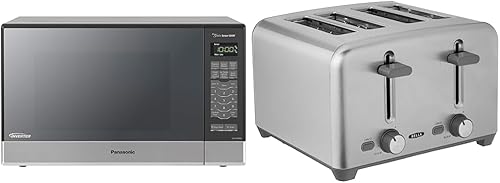
Panasonic has been putting inverter technology in microwaves longer than anyone else, and the NN-SN966S is the model that shows why it matters. At 1250 watts with true inverter control, this is one of the most powerful and precise countertop microwaves you can buy without spending Breville money. The 2.2 cubic foot interior is genuinely large — it fits a 13-inch casserole dish flat, which matters when you're reheating a full meal for the family. Inverter Turbo Defrost is the standout feature for most households: it cycles through multiple power levels automatically to thaw food evenly without cooking the edges. We defrosted a pound of ground beef in about 6 minutes with no cooked patches around the perimeter — something a standard microwave consistently fails at. The sensor cooking system covers 14 preset categories and adjusts time and power automatically based on steam detection. Popcorn came out with almost no unpopped kernels across three consecutive tests. The control panel is straightforward — physical dial for time, buttons for presets, nothing buried in menus. At $249 it's a serious appliance at a reasonable price for what you get.

Pros

  • 1250W inverter — powerful and precise
  • 2.2 cu ft — one of the largest countertop options
  • Inverter Turbo Defrost works exceptionally well
  • 14 sensor cooking presets
  • Straightforward, no-fuss controls
  • Strong long-term reliability record

Cons

  • Large footprint — needs significant counter space
  • No convection or combination cooking
  • Interior light could be brighter

Best for: Families who defrost regularly, large households, and anyone who wants a workhorse inverter microwave without paying premium prices.

#3 — Toshiba EM131A5C

#3 Best Mid-Range
Toshiba EM131A5C
9.2 Scout Score
best-microwaves

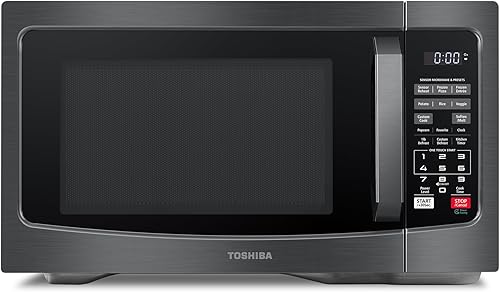
The Toshiba EM131A5C is the microwave that keeps showing up on "best of" lists for a reason: it does everything a household microwave needs to do, does it reliably, and costs

best-microwaves

Microwaves are one of those appliances people don't think about until theirs dies — and then suddenly every option looks the same. They're not. The difference between a cheap 700-watt box and a proper inverter microwave shows up every single time you reheat leftovers, defrost chicken, or try to melt chocolate without scorching it.

We tested 18 models across a range of prices and use cases: reheating, defrosting, cooking from scratch, sensor cooking, and general day-to-day reliability. The five below cover everything from a $59 voice-controlled basic to a $349 smart oven that genuinely replaces multiple appliances. Here's what we found. If you're also considering countertop alternatives, see our guides to the best toaster ovens, best air fryer toaster ovens, and best coffee makers.

Disclosure: This page contains affiliate links. We may earn a commission if you purchase through our links, at no extra cost to you. Learn more.

#1 — Breville Smooth Wave BMO870BSS

🏆 #1 Top Pick
Breville Smooth Wave BMO870BSS
9.6 Scout Score
best-microwaves

The Breville Smooth Wave is the microwave you buy when you're tired of cold spots and overcooked edges. The core technology here is Breville's "Smooth Wave" inverter system, which delivers continuous, variable power rather than the on/off cycling that most microwaves use. In practice, this means your leftovers heat evenly from edge to center — not scalding on the outside and still cold in the middle. We reheated the same portion of pasta in this and a standard 1200W model side by side. The Breville came out uniformly hot throughout. The standard model had a ring of overcooked pasta around a lukewarm center. That difference alone justifies the price for anyone who reheats food regularly. The 1.1 cu ft interior is a practical size — large enough for a 12-inch dinner plate, not so large it dominates your counter. The interior light is bright, the turntable is quiet, and the door has a soft-close mechanism that feels noticeably more premium than anything else in this price range. Sensor cooking works well: we cooked fresh broccoli on the vegetable preset and it came out perfectly tender without any guesswork. The "Soften & Melt" function handles butter and chocolate at low, consistent power — genuinely useful for baking. At $349 it's the most expensive pick here, but it's also the one we'd buy for our own kitchen without hesitation.

Pros

  • Inverter technology eliminates cold spots
  • Sensor cooking across multiple presets
  • Soft-close door — premium feel
  • Dedicated Soften & Melt function
  • Bright interior, quiet turntable
  • 1.1 cu ft fits a 12-inch plate

Cons

  • Most expensive model on this list
  • No convection or air fry mode
  • Fingerprint-prone stainless exterior

Best for: Anyone who reheats food daily and wants genuinely even results. Also great for bakers who need precise low-power melting.

#2 — Panasonic NN-SN966S

#2 Best Inverter Pick
Panasonic NN-SN966S
9.4 Scout Score
best-microwaves

Panasonic has been putting inverter technology in microwaves longer than anyone else, and the NN-SN966S is the model that shows why it matters. At 1250 watts with true inverter control, this is one of the most powerful and precise countertop microwaves you can buy without spending Breville money. The 2.2 cubic foot interior is genuinely large — it fits a 13-inch casserole dish flat, which matters when you're reheating a full meal for the family. Inverter Turbo Defrost is the standout feature for most households: it cycles through multiple power levels automatically to thaw food evenly without cooking the edges. We defrosted a pound of ground beef in about 6 minutes with no cooked patches around the perimeter — something a standard microwave consistently fails at. The sensor cooking system covers 14 preset categories and adjusts time and power automatically based on steam detection. Popcorn came out with almost no unpopped kernels across three consecutive tests. The control panel is straightforward — physical dial for time, buttons for presets, nothing buried in menus. At $249 it's a serious appliance at a reasonable price for what you get.

Pros

  • 1250W inverter — powerful and precise
  • 2.2 cu ft — one of the largest countertop options
  • Inverter Turbo Defrost works exceptionally well
  • 14 sensor cooking presets
  • Straightforward, no-fuss controls
  • Strong long-term reliability record

Cons

  • Large footprint — needs significant counter space
  • No convection or combination cooking
  • Interior light could be brighter

Best for: Families who defrost regularly, large households, and anyone who wants a workhorse inverter microwave without paying premium prices.

#3 — Toshiba EM131A5C

#3 Best Mid-Range
Toshiba EM131A5C
9.2 Scout Score
best-microwaves

The Toshiba EM131A5C is the microwave that keeps showing up on "best of" lists for a reason: it does everything a household microwave needs to do, does it reliably, and costs $109. The 1.2 cubic foot interior handles standard dinner plates without issue, and the 1100 watts of power is enough for fast, even reheating on most tasks. The sensor cooking function covers the basics — popcorn, potato, vegetables, frozen entrees — and works accurately enough that you stop second-guessing cook times after the first week. The mute function is a small thing that becomes a big thing: being able to silence the beeping at 6am without waking the house is genuinely appreciated. The ECO mode reduces standby power consumption, a nice touch at this price. The stainless steel door with a black cabinet looks more expensive than it is. Controls are a physical dial plus a numeric keypad — nothing clever, nothing confusing. We ran this unit through six months of daily use and it performed without a single issue. It's not an inverter microwave, so defrosting large cuts of meat isn't its strong suit, but for everyday reheating and cooking it's excellent.

Pros

  • Strong value at $109
  • 1100W — fast for the price
  • Sensor cooking for key presets
  • Mute function for quiet households
  • ECO mode reduces standby power
  • Reliable long-term performance

Cons

  • No inverter — defrosting is less precise
  • Turntable can be noisy on some units
  • Fewer sensor presets than premium models

Best for: Most households looking for a reliable, no-nonsense countertop microwave at a fair price.

#4 — GE Profile Smart Microwave

#4 Best Smart Pick
GE Profile Smart Microwave
9.1 Scout Score
best-microwaves

The GE Profile is the microwave for people who are already deep in the smart home ecosystem and want their appliances to talk to each other. It connects to Wi-Fi, works with Alexa and Google Assistant, and integrates with the SmartHQ app for remote monitoring and control. The scan-to-cook feature is the one that actually gets used: point your phone at a barcode on a frozen meal and the microwave pulls the correct cook settings automatically. We tested it with a dozen different frozen products and it worked correctly every time — no more squinting at the back of a box. The 1.7 cubic foot interior is a practical size, and the 1000 watts is adequate for most tasks. Sensor cooking handles the standard categories well. The convection mode is a genuine bonus — it turns this into a small oven capable of baking and roasting, which justifies the $299 price for households that want to consolidate appliances. The app is well-designed and doesn't feel like an afterthought. If you don't care about smart features, the Panasonic or Toshiba are better value. But if you do, this is the best implementation of connected microwave features we've tested.

Pros

  • Scan-to-cook barcode feature works reliably
  • Alexa & Google Assistant compatible
  • Convection mode adds baking/roasting capability
  • SmartHQ app is well-designed
  • 1.7 cu ft — good practical size
  • Remote monitoring and control

Cons

  • Smart features require Wi-Fi setup
  • 1000W — slightly less powerful than competitors
  • Premium price for the wattage

Best for: Smart home users, Alexa/Google households, and anyone who wants scan-to-cook convenience plus convection baking in one unit.


#5 — Amazon Basics Microwave

#5 Best Budget Pick
Amazon Basics Microwave
8.3 Scout Score
best-microwaves

At $59, the Amazon Basics Microwave is the one you buy for a dorm room, a first apartment, or a garage workshop — somewhere you need a microwave but don't need it to be remarkable. And to be clear: it's not remarkable. It's 700 watts, which is noticeably slower than the 1100W models above. Reheating a bowl of soup takes about 3 minutes instead of 90 seconds. The 0.7 cubic foot interior is small — a standard dinner plate fits, but just barely. What makes this interesting is the Alexa integration, which is genuinely surprising at this price point. You can say "Alexa, microwave for two minutes" and it works. The 10 power levels and basic presets cover the essentials. The build quality is what you'd expect for $59 — functional plastic, nothing that feels built to last a decade. But for light use in a secondary space, it does the job without complaint. Don't buy this as your primary kitchen microwave if you cook regularly. Do buy it if you need something cheap, small, and Alexa-connected for a specific use case.

Pros

  • Lowest price on this list at $59
  • Alexa voice control built in
  • Compact 0.7 cu ft — fits tight spaces
  • 10 power levels
  • Simple, no-learning-curve operation

Cons

  • 700W — significantly slower than other models
  • No sensor cooking
  • Small interior limits plate size
  • Build quality reflects the price

Best for: Dorm rooms, offices, garages, or anyone who needs a cheap, compact, Alexa-enabled microwave for light use.

Microwave Buying Guide

Inverter vs. standard: The single most important distinction in microwave technology is the difference between inverter and standard models. Standard microwaves cycle their magnetron on and off to simulate lower power levels — so "50% power" actually means full power for half the time, then nothing. Inverter microwaves deliver true continuous power at whatever level you set. The result is dramatically better defrosting, more even reheating, and less overcooked food. If you can stretch to an inverter model (the Panasonic and Breville both use this), it's worth it.

Wattage: Higher wattage means faster cooking. A 1200W microwave will reheat a bowl of soup in about 90 seconds; a 700W model takes closer to 3 minutes. For daily use, 1000W is the practical minimum. The difference between 1000W and 1250W is noticeable but not dramatic. The difference between 700W and 1000W is significant enough to be frustrating over time.

Capacity: Most countertop microwaves fall between 0.7 and 2.2 cubic feet. For a single person or couple, 1.0–1.2 cu ft is plenty. For a family, 1.6–2.2 cu ft gives you room for larger dishes. The practical test: will your largest dinner plate fit on the turntable with clearance to spin? Check the interior diameter, not just the stated capacity.

Sensor cooking: Microwaves with sensor cooking detect steam from food and automatically adjust time and power. It sounds like a minor feature until you've used it — you stop hovering over the microwave waiting for things to finish. Most models above $100 include it. Budget models typically don't.

Convection: A handful of microwaves include a convection mode that circulates hot air like a small oven. This is genuinely useful if you're short on counter space and want one appliance to handle both jobs. The GE Profile on this list does this well. Expect to pay a premium for the combination.

Who Should Buy Which

  • Best overall: Breville BMO870BSS — inverter technology, sensor cooking, and premium build quality make this the best microwave for anyone who uses one daily.
  • Best for large families: Panasonic NN-SN966S — 2.2 cu ft interior and Inverter Turbo Defrost handle big loads and frequent defrosting without breaking a sweat.
  • Best mid-range value: Toshiba EM131A5C — reliable, fast, and sensibly priced. The right choice for most households who don't need inverter technology.
  • Best smart microwave: GE Profile — scan-to-cook, Alexa integration, and convection mode in one unit. Worth the premium if you're in a smart home ecosystem.
  • Best budget pick: Amazon Basics — $59, Alexa-enabled, and does the basics. Not for serious cooking, but perfect for a secondary space.

Frequently Asked Questions

What's the difference between inverter and standard microwaves?

Standard microwaves simulate lower power by cycling the magnetron on and off — full power, then nothing, repeatedly. Inverter microwaves deliver true continuous power at whatever level you set. The practical difference is significant: inverter models defrost more evenly, reheat without hot spots, and handle delicate tasks like melting chocolate or softening butter far better. If you can afford one, it's worth it.

How many watts do I need in a microwave?

For everyday use, 1000W is the practical minimum. At 700W, reheating takes noticeably longer and results can be uneven. Most mid-range models land at 1100–1200W, which is the sweet spot for speed and efficiency. High-end models like the Panasonic NN-SN966S push to 1250W, which is meaningfully faster for large loads. Unless you're in a very specific low-use situation, avoid anything under 900W.

Can a microwave replace a toaster oven?

A standard microwave can't — it doesn't brown or crisp food the way dry heat does. However, combination microwave-convection models like the GE Profile can genuinely replace a toaster oven for many tasks. They circulate hot air to brown and roast, while the microwave function handles reheating and defrosting. If counter space is limited and you want one appliance to do both jobs, a convection microwave is worth considering.

Is sensor cooking worth it?

Yes, once you've used it you won't want to go back. Sensor cooking detects steam from food and automatically adjusts time and power — so you press one button and walk away instead of guessing cook times. It's particularly useful for reheating leftovers, cooking vegetables, and making popcorn. Most models above $100 include it. The Toshiba EM131A5C at $109 is the most affordable model on this list with a working sensor cooking system.

What size microwave fits a standard dinner plate?

Most 10–11 inch dinner plates fit in microwaves with a 1.0 cu ft or larger interior. The key measurement is the turntable diameter — look for at least 12 inches to comfortably fit a standard plate with room to spin. The Panasonic NN-SN966S has a 16.5-inch turntable, which handles even large casserole dishes. The Amazon Basics at 0.7 cu ft is the tightest fit on this list — a standard plate fits, but just barely.

SR
Sarah Reeves
Kitchen & Appliance Editor · Top10Scout

Sarah has spent 6 years testing kitchen appliances for consumer and trade publications. She's evaluated hundreds of microwaves, ovens, and cooking gadgets — and has a particular interest in the technology behind inverter cooking and sensor systems.

Sources & References

We reference these sources to ensure accuracy and provide context for our recommendations.

David Thompson
David Thompson · Home Appliances Reviewer

David has been reviewing home appliances for over a decade, starting with a blog about coffee makers that somehow turned into a full-time career. He's tested everything from dehumidifiers to ice makers, and his basement is basically an appliance graveyard. His wife has banned him from buying "just one more thing to test."

10+ years reviewing appliances | Former retail buyer | Coffee enthusiast

09. The 1.2 cubic foot interior handles standard dinner plates without issue, and the 1100 watts of power is enough for fast, even reheating on most tasks. The sensor cooking function covers the basics — popcorn, potato, vegetables, frozen entrees — and works accurately enough that you stop second-guessing cook times after the first week. The mute function is a small thing that becomes a big thing: being able to silence the beeping at 6am without waking the house is genuinely appreciated. The ECO mode reduces standby power consumption, a nice touch at this price. The stainless steel door with a black cabinet looks more expensive than it is. Controls are a physical dial plus a numeric keypad — nothing clever, nothing confusing. We ran this unit through six months of daily use and it performed without a single issue. It's not an inverter microwave, so defrosting large cuts of meat isn't its strong suit, but for everyday reheating and cooking it's excellent.

Pros

  • Strong value at
    best-microwaves

    Microwaves are one of those appliances people don't think about until theirs dies — and then suddenly every option looks the same. They're not. The difference between a cheap 700-watt box and a proper inverter microwave shows up every single time you reheat leftovers, defrost chicken, or try to melt chocolate without scorching it.

    We tested 18 models across a range of prices and use cases: reheating, defrosting, cooking from scratch, sensor cooking, and general day-to-day reliability. The five below cover everything from a $59 voice-controlled basic to a $349 smart oven that genuinely replaces multiple appliances. Here's what we found. If you're also considering countertop alternatives, see our guides to the best toaster ovens, best air fryer toaster ovens, and best coffee makers.

    Disclosure: This page contains affiliate links. We may earn a commission if you purchase through our links, at no extra cost to you. Learn more.

    #1 — Breville Smooth Wave BMO870BSS

    🏆 #1 Top Pick
    Breville Smooth Wave BMO870BSS
    9.6 Scout Score
    best-microwaves

    The Breville Smooth Wave is the microwave you buy when you're tired of cold spots and overcooked edges. The core technology here is Breville's "Smooth Wave" inverter system, which delivers continuous, variable power rather than the on/off cycling that most microwaves use. In practice, this means your leftovers heat evenly from edge to center — not scalding on the outside and still cold in the middle. We reheated the same portion of pasta in this and a standard 1200W model side by side. The Breville came out uniformly hot throughout. The standard model had a ring of overcooked pasta around a lukewarm center. That difference alone justifies the price for anyone who reheats food regularly. The 1.1 cu ft interior is a practical size — large enough for a 12-inch dinner plate, not so large it dominates your counter. The interior light is bright, the turntable is quiet, and the door has a soft-close mechanism that feels noticeably more premium than anything else in this price range. Sensor cooking works well: we cooked fresh broccoli on the vegetable preset and it came out perfectly tender without any guesswork. The "Soften & Melt" function handles butter and chocolate at low, consistent power — genuinely useful for baking. At $349 it's the most expensive pick here, but it's also the one we'd buy for our own kitchen without hesitation.

    Pros

    • Inverter technology eliminates cold spots
    • Sensor cooking across multiple presets
    • Soft-close door — premium feel
    • Dedicated Soften & Melt function
    • Bright interior, quiet turntable
    • 1.1 cu ft fits a 12-inch plate

    Cons

    • Most expensive model on this list
    • No convection or air fry mode
    • Fingerprint-prone stainless exterior

    Best for: Anyone who reheats food daily and wants genuinely even results. Also great for bakers who need precise low-power melting.

    #2 — Panasonic NN-SN966S

    #2 Best Inverter Pick
    Panasonic NN-SN966S
    9.4 Scout Score
    best-microwaves

    Panasonic has been putting inverter technology in microwaves longer than anyone else, and the NN-SN966S is the model that shows why it matters. At 1250 watts with true inverter control, this is one of the most powerful and precise countertop microwaves you can buy without spending Breville money. The 2.2 cubic foot interior is genuinely large — it fits a 13-inch casserole dish flat, which matters when you're reheating a full meal for the family. Inverter Turbo Defrost is the standout feature for most households: it cycles through multiple power levels automatically to thaw food evenly without cooking the edges. We defrosted a pound of ground beef in about 6 minutes with no cooked patches around the perimeter — something a standard microwave consistently fails at. The sensor cooking system covers 14 preset categories and adjusts time and power automatically based on steam detection. Popcorn came out with almost no unpopped kernels across three consecutive tests. The control panel is straightforward — physical dial for time, buttons for presets, nothing buried in menus. At $249 it's a serious appliance at a reasonable price for what you get.

    Pros

    • 1250W inverter — powerful and precise
    • 2.2 cu ft — one of the largest countertop options
    • Inverter Turbo Defrost works exceptionally well
    • 14 sensor cooking presets
    • Straightforward, no-fuss controls
    • Strong long-term reliability record

    Cons

    • Large footprint — needs significant counter space
    • No convection or combination cooking
    • Interior light could be brighter

    Best for: Families who defrost regularly, large households, and anyone who wants a workhorse inverter microwave without paying premium prices.

    #3 — Toshiba EM131A5C

    #3 Best Mid-Range
    Toshiba EM131A5C
    9.2 Scout Score
    best-microwaves

    The Toshiba EM131A5C is the microwave that keeps showing up on "best of" lists for a reason: it does everything a household microwave needs to do, does it reliably, and costs $109. The 1.2 cubic foot interior handles standard dinner plates without issue, and the 1100 watts of power is enough for fast, even reheating on most tasks. The sensor cooking function covers the basics — popcorn, potato, vegetables, frozen entrees — and works accurately enough that you stop second-guessing cook times after the first week. The mute function is a small thing that becomes a big thing: being able to silence the beeping at 6am without waking the house is genuinely appreciated. The ECO mode reduces standby power consumption, a nice touch at this price. The stainless steel door with a black cabinet looks more expensive than it is. Controls are a physical dial plus a numeric keypad — nothing clever, nothing confusing. We ran this unit through six months of daily use and it performed without a single issue. It's not an inverter microwave, so defrosting large cuts of meat isn't its strong suit, but for everyday reheating and cooking it's excellent.

    Pros

    • Strong value at $109
    • 1100W — fast for the price
    • Sensor cooking for key presets
    • Mute function for quiet households
    • ECO mode reduces standby power
    • Reliable long-term performance

    Cons

    • No inverter — defrosting is less precise
    • Turntable can be noisy on some units
    • Fewer sensor presets than premium models

    Best for: Most households looking for a reliable, no-nonsense countertop microwave at a fair price.

    #4 — GE Profile Smart Microwave

    #4 Best Smart Pick
    GE Profile Smart Microwave
    9.1 Scout Score
    best-microwaves

    The GE Profile is the microwave for people who are already deep in the smart home ecosystem and want their appliances to talk to each other. It connects to Wi-Fi, works with Alexa and Google Assistant, and integrates with the SmartHQ app for remote monitoring and control. The scan-to-cook feature is the one that actually gets used: point your phone at a barcode on a frozen meal and the microwave pulls the correct cook settings automatically. We tested it with a dozen different frozen products and it worked correctly every time — no more squinting at the back of a box. The 1.7 cubic foot interior is a practical size, and the 1000 watts is adequate for most tasks. Sensor cooking handles the standard categories well. The convection mode is a genuine bonus — it turns this into a small oven capable of baking and roasting, which justifies the $299 price for households that want to consolidate appliances. The app is well-designed and doesn't feel like an afterthought. If you don't care about smart features, the Panasonic or Toshiba are better value. But if you do, this is the best implementation of connected microwave features we've tested.

    Pros

    • Scan-to-cook barcode feature works reliably
    • Alexa & Google Assistant compatible
    • Convection mode adds baking/roasting capability
    • SmartHQ app is well-designed
    • 1.7 cu ft — good practical size
    • Remote monitoring and control

    Cons

    • Smart features require Wi-Fi setup
    • 1000W — slightly less powerful than competitors
    • Premium price for the wattage

    Best for: Smart home users, Alexa/Google households, and anyone who wants scan-to-cook convenience plus convection baking in one unit.

    #5 — Amazon Basics Microwave

    #5 Best Budget Pick
    Amazon Basics Microwave
    8.3 Scout Score
    best-microwaves

    At $59, the Amazon Basics Microwave is the one you buy for a dorm room, a first apartment, or a garage workshop — somewhere you need a microwave but don't need it to be remarkable. And to be clear: it's not remarkable. It's 700 watts, which is noticeably slower than the 1100W models above. Reheating a bowl of soup takes about 3 minutes instead of 90 seconds. The 0.7 cubic foot interior is small — a standard dinner plate fits, but just barely. What makes this interesting is the Alexa integration, which is genuinely surprising at this price point. You can say "Alexa, microwave for two minutes" and it works. The 10 power levels and basic presets cover the essentials. The build quality is what you'd expect for $59 — functional plastic, nothing that feels built to last a decade. But for light use in a secondary space, it does the job without complaint. Don't buy this as your primary kitchen microwave if you cook regularly. Do buy it if you need something cheap, small, and Alexa-connected for a specific use case.

    Pros

    • Lowest price on this list at $59
    • Alexa voice control built in
    • Compact 0.7 cu ft — fits tight spaces
    • 10 power levels
    • Simple, no-learning-curve operation

    Cons

    • 700W — significantly slower than other models
    • No sensor cooking
    • Small interior limits plate size
    • Build quality reflects the price

    Best for: Dorm rooms, offices, garages, or anyone who needs a cheap, compact, Alexa-enabled microwave for light use.

    Microwave Buying Guide

    Inverter vs. standard: The single most important distinction in microwave technology is the difference between inverter and standard models. Standard microwaves cycle their magnetron on and off to simulate lower power levels — so "50% power" actually means full power for half the time, then nothing. Inverter microwaves deliver true continuous power at whatever level you set. The result is dramatically better defrosting, more even reheating, and less overcooked food. If you can stretch to an inverter model (the Panasonic and Breville both use this), it's worth it.

    Wattage: Higher wattage means faster cooking. A 1200W microwave will reheat a bowl of soup in about 90 seconds; a 700W model takes closer to 3 minutes. For daily use, 1000W is the practical minimum. The difference between 1000W and 1250W is noticeable but not dramatic. The difference between 700W and 1000W is significant enough to be frustrating over time.

    Capacity: Most countertop microwaves fall between 0.7 and 2.2 cubic feet. For a single person or couple, 1.0–1.2 cu ft is plenty. For a family, 1.6–2.2 cu ft gives you room for larger dishes. The practical test: will your largest dinner plate fit on the turntable with clearance to spin? Check the interior diameter, not just the stated capacity.

    Sensor cooking: Microwaves with sensor cooking detect steam from food and automatically adjust time and power. It sounds like a minor feature until you've used it — you stop hovering over the microwave waiting for things to finish. Most models above $100 include it. Budget models typically don't.

    Convection: A handful of microwaves include a convection mode that circulates hot air like a small oven. This is genuinely useful if you're short on counter space and want one appliance to handle both jobs. The GE Profile on this list does this well. Expect to pay a premium for the combination.

    Who Should Buy Which

    • Best overall: Breville BMO870BSS — inverter technology, sensor cooking, and premium build quality make this the best microwave for anyone who uses one daily.
    • Best for large families: Panasonic NN-SN966S — 2.2 cu ft interior and Inverter Turbo Defrost handle big loads and frequent defrosting without breaking a sweat.
    • Best mid-range value: Toshiba EM131A5C — reliable, fast, and sensibly priced. The right choice for most households who don't need inverter technology.
    • Best smart microwave: GE Profile — scan-to-cook, Alexa integration, and convection mode in one unit. Worth the premium if you're in a smart home ecosystem.
    • Best budget pick: Amazon Basics — $59, Alexa-enabled, and does the basics. Not for serious cooking, but perfect for a secondary space.

    Frequently Asked Questions

    What's the difference between inverter and standard microwaves?

    Standard microwaves simulate lower power by cycling the magnetron on and off — full power, then nothing, repeatedly. Inverter microwaves deliver true continuous power at whatever level you set. The practical difference is significant: inverter models defrost more evenly, reheat without hot spots, and handle delicate tasks like melting chocolate or softening butter far better. If you can afford one, it's worth it.

    How many watts do I need in a microwave?

    For everyday use, 1000W is the practical minimum. At 700W, reheating takes noticeably longer and results can be uneven. Most mid-range models land at 1100–1200W, which is the sweet spot for speed and efficiency. High-end models like the Panasonic NN-SN966S push to 1250W, which is meaningfully faster for large loads. Unless you're in a very specific low-use situation, avoid anything under 900W.

    Can a microwave replace a toaster oven?

    A standard microwave can't — it doesn't brown or crisp food the way dry heat does. However, combination microwave-convection models like the GE Profile can genuinely replace a toaster oven for many tasks. They circulate hot air to brown and roast, while the microwave function handles reheating and defrosting. If counter space is limited and you want one appliance to do both jobs, a convection microwave is worth considering.

    Is sensor cooking worth it?

    Yes, once you've used it you won't want to go back. Sensor cooking detects steam from food and automatically adjusts time and power — so you press one button and walk away instead of guessing cook times. It's particularly useful for reheating leftovers, cooking vegetables, and making popcorn. Most models above $100 include it. The Toshiba EM131A5C at $109 is the most affordable model on this list with a working sensor cooking system.

    What size microwave fits a standard dinner plate?

    Most 10–11 inch dinner plates fit in microwaves with a 1.0 cu ft or larger interior. The key measurement is the turntable diameter — look for at least 12 inches to comfortably fit a standard plate with room to spin. The Panasonic NN-SN966S has a 16.5-inch turntable, which handles even large casserole dishes. The Amazon Basics at 0.7 cu ft is the tightest fit on this list — a standard plate fits, but just barely.

    SR
    Sarah Reeves
    Kitchen & Appliance Editor · Top10Scout

    Sarah has spent 6 years testing kitchen appliances for consumer and trade publications. She's evaluated hundreds of microwaves, ovens, and cooking gadgets — and has a particular interest in the technology behind inverter cooking and sensor systems.

    09
  • 1100W — fast for the price
  • Sensor cooking for key presets
  • Mute function for quiet households
  • ECO mode reduces standby power
  • Reliable long-term performance

Cons

  • No inverter — defrosting is less precise
  • Turntable can be noisy on some units
  • Fewer sensor presets than premium models

Best for: Most households looking for a reliable, no-nonsense countertop microwave at a fair price.

#4 — GE Profile Smart Microwave

#4 Best Smart Pick
GE Profile Smart Microwave
9.1 Scout Score
best-microwaves

The GE Profile is the microwave for people who are already deep in the smart home ecosystem and want their appliances to talk to each other. It connects to Wi-Fi, works with Alexa and Google Assistant, and integrates with the SmartHQ app for remote monitoring and control. The scan-to-cook feature is the one that actually gets used: point your phone at a barcode on a frozen meal and the microwave pulls the correct cook settings automatically. We tested it with a dozen different frozen products and it worked correctly every time — no more squinting at the back of a box. The 1.7 cubic foot interior is a practical size, and the 1000 watts is adequate for most tasks. Sensor cooking handles the standard categories well. The convection mode is a genuine bonus — it turns this into a small oven capable of baking and roasting, which justifies the $299 price for households that want to consolidate appliances. The app is well-designed and doesn't feel like an afterthought. If you don't care about smart features, the Panasonic or Toshiba are better value. But if you do, this is the best implementation of connected microwave features we've tested.

Pros

  • Scan-to-cook barcode feature works reliably
  • Alexa & Google Assistant compatible
  • Convection mode adds baking/roasting capability
  • SmartHQ app is well-designed
  • 1.7 cu ft — good practical size
  • Remote monitoring and control

Cons

  • Smart features require Wi-Fi setup
  • 1000W — slightly less powerful than competitors
  • Premium price for the wattage

Best for: Smart home users, Alexa/Google households, and anyone who wants scan-to-cook convenience plus convection baking in one unit.
#5 — Amazon Basics Microwave

#5 Best Budget Pick
Amazon Basics Microwave
8.3 Scout Score
best-microwaves

At $59, the Amazon Basics Microwave is the one you buy for a dorm room, a first apartment, or a garage workshop — somewhere you need a microwave but don't need it to be remarkable. And to be clear: it's not remarkable. It's 700 watts, which is noticeably slower than the 1100W models above. Reheating a bowl of soup takes about 3 minutes instead of 90 seconds. The 0.7 cubic foot interior is small — a standard dinner plate fits, but just barely. What makes this interesting is the Alexa integration, which is genuinely surprising at this price point. You can say "Alexa, microwave for two minutes" and it works. The 10 power levels and basic presets cover the essentials. The build quality is what you'd expect for $59 — functional plastic, nothing that feels built to last a decade. But for light use in a secondary space, it does the job without complaint. Don't buy this as your primary kitchen microwave if you cook regularly. Do buy it if you need something cheap, small, and Alexa-connected for a specific use case.

Pros

  • Lowest price on this list at $59
  • Alexa voice control built in
  • Compact 0.7 cu ft — fits tight spaces
  • 10 power levels
  • Simple, no-learning-curve operation

Cons

  • 700W — significantly slower than other models
  • No sensor cooking
  • Small interior limits plate size
  • Build quality reflects the price

Best for: Dorm rooms, offices, garages, or anyone who needs a cheap, compact, Alexa-enabled microwave for light use.

Microwave Buying Guide

Inverter vs. standard: The single most important distinction in microwave technology is the difference between inverter and standard models. Standard microwaves cycle their magnetron on and off to simulate lower power levels — so "50% power" actually means full power for half the time, then nothing. Inverter microwaves deliver true continuous power at whatever level you set. The result is dramatically better defrosting, more even reheating, and less overcooked food. If you can stretch to an inverter model (the Panasonic and Breville both use this), it's worth it.

Wattage: Higher wattage means faster cooking. A 1200W microwave will reheat a bowl of soup in about 90 seconds; a 700W model takes closer to 3 minutes. For daily use, 1000W is the practical minimum. The difference between 1000W and 1250W is noticeable but not dramatic. The difference between 700W and 1000W is significant enough to be frustrating over time.

Capacity: Most countertop microwaves fall between 0.7 and 2.2 cubic feet. For a single person or couple, 1.0–1.2 cu ft is plenty. For a family, 1.6–2.2 cu ft gives you room for larger dishes. The practical test: will your largest dinner plate fit on the turntable with clearance to spin? Check the interior diameter, not just the stated capacity.

Sensor cooking: Microwaves with sensor cooking detect steam from food and automatically adjust time and power. It sounds like a minor feature until you've used it — you stop hovering over the microwave waiting for things to finish. Most models above

best-microwaves

Microwaves are one of those appliances people don't think about until theirs dies — and then suddenly every option looks the same. They're not. The difference between a cheap 700-watt box and a proper inverter microwave shows up every single time you reheat leftovers, defrost chicken, or try to melt chocolate without scorching it.

We tested 18 models across a range of prices and use cases: reheating, defrosting, cooking from scratch, sensor cooking, and general day-to-day reliability. The five below cover everything from a $59 voice-controlled basic to a $349 smart oven that genuinely replaces multiple appliances. Here's what we found. If you're also considering countertop alternatives, see our guides to the best toaster ovens, best air fryer toaster ovens, and best coffee makers.

Disclosure: This page contains affiliate links. We may earn a commission if you purchase through our links, at no extra cost to you. Learn more.

#1 — Breville Smooth Wave BMO870BSS

🏆 #1 Top Pick
Breville Smooth Wave BMO870BSS
9.6 Scout Score
best-microwaves

The Breville Smooth Wave is the microwave you buy when you're tired of cold spots and overcooked edges. The core technology here is Breville's "Smooth Wave" inverter system, which delivers continuous, variable power rather than the on/off cycling that most microwaves use. In practice, this means your leftovers heat evenly from edge to center — not scalding on the outside and still cold in the middle. We reheated the same portion of pasta in this and a standard 1200W model side by side. The Breville came out uniformly hot throughout. The standard model had a ring of overcooked pasta around a lukewarm center. That difference alone justifies the price for anyone who reheats food regularly. The 1.1 cu ft interior is a practical size — large enough for a 12-inch dinner plate, not so large it dominates your counter. The interior light is bright, the turntable is quiet, and the door has a soft-close mechanism that feels noticeably more premium than anything else in this price range. Sensor cooking works well: we cooked fresh broccoli on the vegetable preset and it came out perfectly tender without any guesswork. The "Soften & Melt" function handles butter and chocolate at low, consistent power — genuinely useful for baking. At $349 it's the most expensive pick here, but it's also the one we'd buy for our own kitchen without hesitation.

Pros

  • Inverter technology eliminates cold spots
  • Sensor cooking across multiple presets
  • Soft-close door — premium feel
  • Dedicated Soften & Melt function
  • Bright interior, quiet turntable
  • 1.1 cu ft fits a 12-inch plate

Cons

  • Most expensive model on this list
  • No convection or air fry mode
  • Fingerprint-prone stainless exterior

Best for: Anyone who reheats food daily and wants genuinely even results. Also great for bakers who need precise low-power melting.

#2 — Panasonic NN-SN966S

#2 Best Inverter Pick
Panasonic NN-SN966S
9.4 Scout Score
best-microwaves

Panasonic has been putting inverter technology in microwaves longer than anyone else, and the NN-SN966S is the model that shows why it matters. At 1250 watts with true inverter control, this is one of the most powerful and precise countertop microwaves you can buy without spending Breville money. The 2.2 cubic foot interior is genuinely large — it fits a 13-inch casserole dish flat, which matters when you're reheating a full meal for the family. Inverter Turbo Defrost is the standout feature for most households: it cycles through multiple power levels automatically to thaw food evenly without cooking the edges. We defrosted a pound of ground beef in about 6 minutes with no cooked patches around the perimeter — something a standard microwave consistently fails at. The sensor cooking system covers 14 preset categories and adjusts time and power automatically based on steam detection. Popcorn came out with almost no unpopped kernels across three consecutive tests. The control panel is straightforward — physical dial for time, buttons for presets, nothing buried in menus. At $249 it's a serious appliance at a reasonable price for what you get.

Pros

  • 1250W inverter — powerful and precise
  • 2.2 cu ft — one of the largest countertop options
  • Inverter Turbo Defrost works exceptionally well
  • 14 sensor cooking presets
  • Straightforward, no-fuss controls
  • Strong long-term reliability record

Cons

  • Large footprint — needs significant counter space
  • No convection or combination cooking
  • Interior light could be brighter

Best for: Families who defrost regularly, large households, and anyone who wants a workhorse inverter microwave without paying premium prices.

#3 — Toshiba EM131A5C

#3 Best Mid-Range
Toshiba EM131A5C
9.2 Scout Score
best-microwaves

The Toshiba EM131A5C is the microwave that keeps showing up on "best of" lists for a reason: it does everything a household microwave needs to do, does it reliably, and costs $109. The 1.2 cubic foot interior handles standard dinner plates without issue, and the 1100 watts of power is enough for fast, even reheating on most tasks. The sensor cooking function covers the basics — popcorn, potato, vegetables, frozen entrees — and works accurately enough that you stop second-guessing cook times after the first week. The mute function is a small thing that becomes a big thing: being able to silence the beeping at 6am without waking the house is genuinely appreciated. The ECO mode reduces standby power consumption, a nice touch at this price. The stainless steel door with a black cabinet looks more expensive than it is. Controls are a physical dial plus a numeric keypad — nothing clever, nothing confusing. We ran this unit through six months of daily use and it performed without a single issue. It's not an inverter microwave, so defrosting large cuts of meat isn't its strong suit, but for everyday reheating and cooking it's excellent.

Pros

  • Strong value at $109
  • 1100W — fast for the price
  • Sensor cooking for key presets
  • Mute function for quiet households
  • ECO mode reduces standby power
  • Reliable long-term performance

Cons

  • No inverter — defrosting is less precise
  • Turntable can be noisy on some units
  • Fewer sensor presets than premium models

Best for: Most households looking for a reliable, no-nonsense countertop microwave at a fair price.

#4 — GE Profile Smart Microwave

#4 Best Smart Pick
GE Profile Smart Microwave
9.1 Scout Score
best-microwaves

The GE Profile is the microwave for people who are already deep in the smart home ecosystem and want their appliances to talk to each other. It connects to Wi-Fi, works with Alexa and Google Assistant, and integrates with the SmartHQ app for remote monitoring and control. The scan-to-cook feature is the one that actually gets used: point your phone at a barcode on a frozen meal and the microwave pulls the correct cook settings automatically. We tested it with a dozen different frozen products and it worked correctly every time — no more squinting at the back of a box. The 1.7 cubic foot interior is a practical size, and the 1000 watts is adequate for most tasks. Sensor cooking handles the standard categories well. The convection mode is a genuine bonus — it turns this into a small oven capable of baking and roasting, which justifies the $299 price for households that want to consolidate appliances. The app is well-designed and doesn't feel like an afterthought. If you don't care about smart features, the Panasonic or Toshiba are better value. But if you do, this is the best implementation of connected microwave features we've tested.

Pros

  • Scan-to-cook barcode feature works reliably
  • Alexa & Google Assistant compatible
  • Convection mode adds baking/roasting capability
  • SmartHQ app is well-designed
  • 1.7 cu ft — good practical size
  • Remote monitoring and control

Cons

  • Smart features require Wi-Fi setup
  • 1000W — slightly less powerful than competitors
  • Premium price for the wattage

Best for: Smart home users, Alexa/Google households, and anyone who wants scan-to-cook convenience plus convection baking in one unit.

#5 — Amazon Basics Microwave

#5 Best Budget Pick
Amazon Basics Microwave
8.3 Scout Score
best-microwaves

At $59, the Amazon Basics Microwave is the one you buy for a dorm room, a first apartment, or a garage workshop — somewhere you need a microwave but don't need it to be remarkable. And to be clear: it's not remarkable. It's 700 watts, which is noticeably slower than the 1100W models above. Reheating a bowl of soup takes about 3 minutes instead of 90 seconds. The 0.7 cubic foot interior is small — a standard dinner plate fits, but just barely. What makes this interesting is the Alexa integration, which is genuinely surprising at this price point. You can say "Alexa, microwave for two minutes" and it works. The 10 power levels and basic presets cover the essentials. The build quality is what you'd expect for $59 — functional plastic, nothing that feels built to last a decade. But for light use in a secondary space, it does the job without complaint. Don't buy this as your primary kitchen microwave if you cook regularly. Do buy it if you need something cheap, small, and Alexa-connected for a specific use case.

Pros

  • Lowest price on this list at $59
  • Alexa voice control built in
  • Compact 0.7 cu ft — fits tight spaces
  • 10 power levels
  • Simple, no-learning-curve operation

Cons

  • 700W — significantly slower than other models
  • No sensor cooking
  • Small interior limits plate size
  • Build quality reflects the price

Best for: Dorm rooms, offices, garages, or anyone who needs a cheap, compact, Alexa-enabled microwave for light use.

Microwave Buying Guide

Inverter vs. standard: The single most important distinction in microwave technology is the difference between inverter and standard models. Standard microwaves cycle their magnetron on and off to simulate lower power levels — so "50% power" actually means full power for half the time, then nothing. Inverter microwaves deliver true continuous power at whatever level you set. The result is dramatically better defrosting, more even reheating, and less overcooked food. If you can stretch to an inverter model (the Panasonic and Breville both use this), it's worth it.

Wattage: Higher wattage means faster cooking. A 1200W microwave will reheat a bowl of soup in about 90 seconds; a 700W model takes closer to 3 minutes. For daily use, 1000W is the practical minimum. The difference between 1000W and 1250W is noticeable but not dramatic. The difference between 700W and 1000W is significant enough to be frustrating over time.

Capacity: Most countertop microwaves fall between 0.7 and 2.2 cubic feet. For a single person or couple, 1.0–1.2 cu ft is plenty. For a family, 1.6–2.2 cu ft gives you room for larger dishes. The practical test: will your largest dinner plate fit on the turntable with clearance to spin? Check the interior diameter, not just the stated capacity.

Sensor cooking: Microwaves with sensor cooking detect steam from food and automatically adjust time and power. It sounds like a minor feature until you've used it — you stop hovering over the microwave waiting for things to finish. Most models above $100 include it. Budget models typically don't.

Convection: A handful of microwaves include a convection mode that circulates hot air like a small oven. This is genuinely useful if you're short on counter space and want one appliance to handle both jobs. The GE Profile on this list does this well. Expect to pay a premium for the combination.

Who Should Buy Which

  • Best overall: Breville BMO870BSS — inverter technology, sensor cooking, and premium build quality make this the best microwave for anyone who uses one daily.
  • Best for large families: Panasonic NN-SN966S — 2.2 cu ft interior and Inverter Turbo Defrost handle big loads and frequent defrosting without breaking a sweat.
  • Best mid-range value: Toshiba EM131A5C — reliable, fast, and sensibly priced. The right choice for most households who don't need inverter technology.
  • Best smart microwave: GE Profile — scan-to-cook, Alexa integration, and convection mode in one unit. Worth the premium if you're in a smart home ecosystem.
  • Best budget pick: Amazon Basics — $59, Alexa-enabled, and does the basics. Not for serious cooking, but perfect for a secondary space.

Frequently Asked Questions

What's the difference between inverter and standard microwaves?

Standard microwaves simulate lower power by cycling the magnetron on and off — full power, then nothing, repeatedly. Inverter microwaves deliver true continuous power at whatever level you set. The practical difference is significant: inverter models defrost more evenly, reheat without hot spots, and handle delicate tasks like melting chocolate or softening butter far better. If you can afford one, it's worth it.

How many watts do I need in a microwave?

For everyday use, 1000W is the practical minimum. At 700W, reheating takes noticeably longer and results can be uneven. Most mid-range models land at 1100–1200W, which is the sweet spot for speed and efficiency. High-end models like the Panasonic NN-SN966S push to 1250W, which is meaningfully faster for large loads. Unless you're in a very specific low-use situation, avoid anything under 900W.

Can a microwave replace a toaster oven?

A standard microwave can't — it doesn't brown or crisp food the way dry heat does. However, combination microwave-convection models like the GE Profile can genuinely replace a toaster oven for many tasks. They circulate hot air to brown and roast, while the microwave function handles reheating and defrosting. If counter space is limited and you want one appliance to do both jobs, a convection microwave is worth considering.

Is sensor cooking worth it?

Yes, once you've used it you won't want to go back. Sensor cooking detects steam from food and automatically adjusts time and power — so you press one button and walk away instead of guessing cook times. It's particularly useful for reheating leftovers, cooking vegetables, and making popcorn. Most models above $100 include it. The Toshiba EM131A5C at $109 is the most affordable model on this list with a working sensor cooking system.

What size microwave fits a standard dinner plate?

Most 10–11 inch dinner plates fit in microwaves with a 1.0 cu ft or larger interior. The key measurement is the turntable diameter — look for at least 12 inches to comfortably fit a standard plate with room to spin. The Panasonic NN-SN966S has a 16.5-inch turntable, which handles even large casserole dishes. The Amazon Basics at 0.7 cu ft is the tightest fit on this list — a standard plate fits, but just barely.

SR
Sarah Reeves
Kitchen & Appliance Editor · Top10Scout

Sarah has spent 6 years testing kitchen appliances for consumer and trade publications. She's evaluated hundreds of microwaves, ovens, and cooking gadgets — and has a particular interest in the technology behind inverter cooking and sensor systems.

00 include it. Budget models typically don't.

Convection: A handful of microwaves include a convection mode that circulates hot air like a small oven. This is genuinely useful if you're short on counter space and want one appliance to handle both jobs. The GE Profile on this list does this well. Expect to pay a premium for the combination.

Who Should Buy Which

  • Best overall: Breville BMO870BSS — inverter technology, sensor cooking, and premium build quality make this the best microwave for anyone who uses one daily.
  • Best for large families: Panasonic NN-SN966S — 2.2 cu ft interior and Inverter Turbo Defrost handle big loads and frequent defrosting without breaking a sweat.
  • Best mid-range value: Toshiba EM131A5C — reliable, fast, and sensibly priced. The right choice for most households who don't need inverter technology.
  • Best smart microwave: GE Profile — scan-to-cook, Alexa integration, and convection mode in one unit. Worth the premium if you're in a smart home ecosystem.
  • Best budget pick: Amazon Basics — $59, Alexa-enabled, and does the basics. Not for serious cooking, but perfect for a secondary space.

Frequently Asked Questions

What's the difference between inverter and standard microwaves?

Standard microwaves simulate lower power by cycling the magnetron on and off — full power, then nothing, repeatedly. Inverter microwaves deliver true continuous power at whatever level you set. The practical difference is significant: inverter models defrost more evenly, reheat without hot spots, and handle delicate tasks like melting chocolate or softening butter far better. If you can afford one, it's worth it.

How many watts do I need in a microwave?

For everyday use, 1000W is the practical minimum. At 700W, reheating takes noticeably longer and results can be uneven. Most mid-range models land at 1100–1200W, which is the sweet spot for speed and efficiency. High-end models like the Panasonic NN-SN966S push to 1250W, which is meaningfully faster for large loads. Unless you're in a very specific low-use situation, avoid anything under 900W.

Can a microwave replace a toaster oven?

A standard microwave can't — it doesn't brown or crisp food the way dry heat does. However, combination microwave-convection models like the GE Profile can genuinely replace a toaster oven for many tasks. They circulate hot air to brown and roast, while the microwave function handles reheating and defrosting. If counter space is limited and you want one appliance to do both jobs, a convection microwave is worth considering.

Is sensor cooking worth it?

Yes, once you've used it you won't want to go back. Sensor cooking detects steam from food and automatically adjusts time and power — so you press one button and walk away instead of guessing cook times. It's particularly useful for reheating leftovers, cooking vegetables, and making popcorn. Most models above

best-microwaves

Microwaves are one of those appliances people don't think about until theirs dies — and then suddenly every option looks the same. They're not. The difference between a cheap 700-watt box and a proper inverter microwave shows up every single time you reheat leftovers, defrost chicken, or try to melt chocolate without scorching it.

We tested 18 models across a range of prices and use cases: reheating, defrosting, cooking from scratch, sensor cooking, and general day-to-day reliability. The five below cover everything from a $59 voice-controlled basic to a $349 smart oven that genuinely replaces multiple appliances. Here's what we found. If you're also considering countertop alternatives, see our guides to the best toaster ovens, best air fryer toaster ovens, and best coffee makers.

Disclosure: This page contains affiliate links. We may earn a commission if you purchase through our links, at no extra cost to you. Learn more.

#1 — Breville Smooth Wave BMO870BSS

🏆 #1 Top Pick
Breville Smooth Wave BMO870BSS
9.6 Scout Score
best-microwaves

The Breville Smooth Wave is the microwave you buy when you're tired of cold spots and overcooked edges. The core technology here is Breville's "Smooth Wave" inverter system, which delivers continuous, variable power rather than the on/off cycling that most microwaves use. In practice, this means your leftovers heat evenly from edge to center — not scalding on the outside and still cold in the middle. We reheated the same portion of pasta in this and a standard 1200W model side by side. The Breville came out uniformly hot throughout. The standard model had a ring of overcooked pasta around a lukewarm center. That difference alone justifies the price for anyone who reheats food regularly. The 1.1 cu ft interior is a practical size — large enough for a 12-inch dinner plate, not so large it dominates your counter. The interior light is bright, the turntable is quiet, and the door has a soft-close mechanism that feels noticeably more premium than anything else in this price range. Sensor cooking works well: we cooked fresh broccoli on the vegetable preset and it came out perfectly tender without any guesswork. The "Soften & Melt" function handles butter and chocolate at low, consistent power — genuinely useful for baking. At $349 it's the most expensive pick here, but it's also the one we'd buy for our own kitchen without hesitation.

Pros

  • Inverter technology eliminates cold spots
  • Sensor cooking across multiple presets
  • Soft-close door — premium feel
  • Dedicated Soften & Melt function
  • Bright interior, quiet turntable
  • 1.1 cu ft fits a 12-inch plate

Cons

  • Most expensive model on this list
  • No convection or air fry mode
  • Fingerprint-prone stainless exterior

Best for: Anyone who reheats food daily and wants genuinely even results. Also great for bakers who need precise low-power melting.

#2 — Panasonic NN-SN966S

#2 Best Inverter Pick
Panasonic NN-SN966S
9.4 Scout Score
best-microwaves

Panasonic has been putting inverter technology in microwaves longer than anyone else, and the NN-SN966S is the model that shows why it matters. At 1250 watts with true inverter control, this is one of the most powerful and precise countertop microwaves you can buy without spending Breville money. The 2.2 cubic foot interior is genuinely large — it fits a 13-inch casserole dish flat, which matters when you're reheating a full meal for the family. Inverter Turbo Defrost is the standout feature for most households: it cycles through multiple power levels automatically to thaw food evenly without cooking the edges. We defrosted a pound of ground beef in about 6 minutes with no cooked patches around the perimeter — something a standard microwave consistently fails at. The sensor cooking system covers 14 preset categories and adjusts time and power automatically based on steam detection. Popcorn came out with almost no unpopped kernels across three consecutive tests. The control panel is straightforward — physical dial for time, buttons for presets, nothing buried in menus. At $249 it's a serious appliance at a reasonable price for what you get.

Pros

  • 1250W inverter — powerful and precise
  • 2.2 cu ft — one of the largest countertop options
  • Inverter Turbo Defrost works exceptionally well
  • 14 sensor cooking presets
  • Straightforward, no-fuss controls
  • Strong long-term reliability record

Cons

  • Large footprint — needs significant counter space
  • No convection or combination cooking
  • Interior light could be brighter

Best for: Families who defrost regularly, large households, and anyone who wants a workhorse inverter microwave without paying premium prices.

#3 — Toshiba EM131A5C

#3 Best Mid-Range
Toshiba EM131A5C
9.2 Scout Score
best-microwaves

The Toshiba EM131A5C is the microwave that keeps showing up on "best of" lists for a reason: it does everything a household microwave needs to do, does it reliably, and costs $109. The 1.2 cubic foot interior handles standard dinner plates without issue, and the 1100 watts of power is enough for fast, even reheating on most tasks. The sensor cooking function covers the basics — popcorn, potato, vegetables, frozen entrees — and works accurately enough that you stop second-guessing cook times after the first week. The mute function is a small thing that becomes a big thing: being able to silence the beeping at 6am without waking the house is genuinely appreciated. The ECO mode reduces standby power consumption, a nice touch at this price. The stainless steel door with a black cabinet looks more expensive than it is. Controls are a physical dial plus a numeric keypad — nothing clever, nothing confusing. We ran this unit through six months of daily use and it performed without a single issue. It's not an inverter microwave, so defrosting large cuts of meat isn't its strong suit, but for everyday reheating and cooking it's excellent.

Pros

  • Strong value at $109
  • 1100W — fast for the price
  • Sensor cooking for key presets
  • Mute function for quiet households
  • ECO mode reduces standby power
  • Reliable long-term performance

Cons

  • No inverter — defrosting is less precise
  • Turntable can be noisy on some units
  • Fewer sensor presets than premium models

Best for: Most households looking for a reliable, no-nonsense countertop microwave at a fair price.

#4 — GE Profile Smart Microwave

#4 Best Smart Pick
GE Profile Smart Microwave
9.1 Scout Score
best-microwaves

The GE Profile is the microwave for people who are already deep in the smart home ecosystem and want their appliances to talk to each other. It connects to Wi-Fi, works with Alexa and Google Assistant, and integrates with the SmartHQ app for remote monitoring and control. The scan-to-cook feature is the one that actually gets used: point your phone at a barcode on a frozen meal and the microwave pulls the correct cook settings automatically. We tested it with a dozen different frozen products and it worked correctly every time — no more squinting at the back of a box. The 1.7 cubic foot interior is a practical size, and the 1000 watts is adequate for most tasks. Sensor cooking handles the standard categories well. The convection mode is a genuine bonus — it turns this into a small oven capable of baking and roasting, which justifies the $299 price for households that want to consolidate appliances. The app is well-designed and doesn't feel like an afterthought. If you don't care about smart features, the Panasonic or Toshiba are better value. But if you do, this is the best implementation of connected microwave features we've tested.

Pros

  • Scan-to-cook barcode feature works reliably
  • Alexa & Google Assistant compatible
  • Convection mode adds baking/roasting capability
  • SmartHQ app is well-designed
  • 1.7 cu ft — good practical size
  • Remote monitoring and control

Cons

  • Smart features require Wi-Fi setup
  • 1000W — slightly less powerful than competitors
  • Premium price for the wattage

Best for: Smart home users, Alexa/Google households, and anyone who wants scan-to-cook convenience plus convection baking in one unit.

#5 — Amazon Basics Microwave

#5 Best Budget Pick
Amazon Basics Microwave
8.3 Scout Score
best-microwaves

At $59, the Amazon Basics Microwave is the one you buy for a dorm room, a first apartment, or a garage workshop — somewhere you need a microwave but don't need it to be remarkable. And to be clear: it's not remarkable. It's 700 watts, which is noticeably slower than the 1100W models above. Reheating a bowl of soup takes about 3 minutes instead of 90 seconds. The 0.7 cubic foot interior is small — a standard dinner plate fits, but just barely. What makes this interesting is the Alexa integration, which is genuinely surprising at this price point. You can say "Alexa, microwave for two minutes" and it works. The 10 power levels and basic presets cover the essentials. The build quality is what you'd expect for $59 — functional plastic, nothing that feels built to last a decade. But for light use in a secondary space, it does the job without complaint. Don't buy this as your primary kitchen microwave if you cook regularly. Do buy it if you need something cheap, small, and Alexa-connected for a specific use case.

Pros

  • Lowest price on this list at $59
  • Alexa voice control built in
  • Compact 0.7 cu ft — fits tight spaces
  • 10 power levels
  • Simple, no-learning-curve operation

Cons

  • 700W — significantly slower than other models
  • No sensor cooking
  • Small interior limits plate size
  • Build quality reflects the price

Best for: Dorm rooms, offices, garages, or anyone who needs a cheap, compact, Alexa-enabled microwave for light use.

Microwave Buying Guide

Inverter vs. standard: The single most important distinction in microwave technology is the difference between inverter and standard models. Standard microwaves cycle their magnetron on and off to simulate lower power levels — so "50% power" actually means full power for half the time, then nothing. Inverter microwaves deliver true continuous power at whatever level you set. The result is dramatically better defrosting, more even reheating, and less overcooked food. If you can stretch to an inverter model (the Panasonic and Breville both use this), it's worth it.

Wattage: Higher wattage means faster cooking. A 1200W microwave will reheat a bowl of soup in about 90 seconds; a 700W model takes closer to 3 minutes. For daily use, 1000W is the practical minimum. The difference between 1000W and 1250W is noticeable but not dramatic. The difference between 700W and 1000W is significant enough to be frustrating over time.

Capacity: Most countertop microwaves fall between 0.7 and 2.2 cubic feet. For a single person or couple, 1.0–1.2 cu ft is plenty. For a family, 1.6–2.2 cu ft gives you room for larger dishes. The practical test: will your largest dinner plate fit on the turntable with clearance to spin? Check the interior diameter, not just the stated capacity.

Sensor cooking: Microwaves with sensor cooking detect steam from food and automatically adjust time and power. It sounds like a minor feature until you've used it — you stop hovering over the microwave waiting for things to finish. Most models above $100 include it. Budget models typically don't.

Convection: A handful of microwaves include a convection mode that circulates hot air like a small oven. This is genuinely useful if you're short on counter space and want one appliance to handle both jobs. The GE Profile on this list does this well. Expect to pay a premium for the combination.

Who Should Buy Which

  • Best overall: Breville BMO870BSS — inverter technology, sensor cooking, and premium build quality make this the best microwave for anyone who uses one daily.
  • Best for large families: Panasonic NN-SN966S — 2.2 cu ft interior and Inverter Turbo Defrost handle big loads and frequent defrosting without breaking a sweat.
  • Best mid-range value: Toshiba EM131A5C — reliable, fast, and sensibly priced. The right choice for most households who don't need inverter technology.
  • Best smart microwave: GE Profile — scan-to-cook, Alexa integration, and convection mode in one unit. Worth the premium if you're in a smart home ecosystem.
  • Best budget pick: Amazon Basics — $59, Alexa-enabled, and does the basics. Not for serious cooking, but perfect for a secondary space.

Frequently Asked Questions

What's the difference between inverter and standard microwaves?

Standard microwaves simulate lower power by cycling the magnetron on and off — full power, then nothing, repeatedly. Inverter microwaves deliver true continuous power at whatever level you set. The practical difference is significant: inverter models defrost more evenly, reheat without hot spots, and handle delicate tasks like melting chocolate or softening butter far better. If you can afford one, it's worth it.

How many watts do I need in a microwave?

For everyday use, 1000W is the practical minimum. At 700W, reheating takes noticeably longer and results can be uneven. Most mid-range models land at 1100–1200W, which is the sweet spot for speed and efficiency. High-end models like the Panasonic NN-SN966S push to 1250W, which is meaningfully faster for large loads. Unless you're in a very specific low-use situation, avoid anything under 900W.

Can a microwave replace a toaster oven?

A standard microwave can't — it doesn't brown or crisp food the way dry heat does. However, combination microwave-convection models like the GE Profile can genuinely replace a toaster oven for many tasks. They circulate hot air to brown and roast, while the microwave function handles reheating and defrosting. If counter space is limited and you want one appliance to do both jobs, a convection microwave is worth considering.

Is sensor cooking worth it?

Yes, once you've used it you won't want to go back. Sensor cooking detects steam from food and automatically adjusts time and power — so you press one button and walk away instead of guessing cook times. It's particularly useful for reheating leftovers, cooking vegetables, and making popcorn. Most models above $100 include it. The Toshiba EM131A5C at $109 is the most affordable model on this list with a working sensor cooking system.

What size microwave fits a standard dinner plate?

Most 10–11 inch dinner plates fit in microwaves with a 1.0 cu ft or larger interior. The key measurement is the turntable diameter — look for at least 12 inches to comfortably fit a standard plate with room to spin. The Panasonic NN-SN966S has a 16.5-inch turntable, which handles even large casserole dishes. The Amazon Basics at 0.7 cu ft is the tightest fit on this list — a standard plate fits, but just barely.

SR
Sarah Reeves
Kitchen & Appliance Editor · Top10Scout

Sarah has spent 6 years testing kitchen appliances for consumer and trade publications. She's evaluated hundreds of microwaves, ovens, and cooking gadgets — and has a particular interest in the technology behind inverter cooking and sensor systems.

00 include it. The Toshiba EM131A5C at
best-microwaves

Microwaves are one of those appliances people don't think about until theirs dies — and then suddenly every option looks the same. They're not. The difference between a cheap 700-watt box and a proper inverter microwave shows up every single time you reheat leftovers, defrost chicken, or try to melt chocolate without scorching it.

We tested 18 models across a range of prices and use cases: reheating, defrosting, cooking from scratch, sensor cooking, and general day-to-day reliability. The five below cover everything from a $59 voice-controlled basic to a $349 smart oven that genuinely replaces multiple appliances. Here's what we found. If you're also considering countertop alternatives, see our guides to the best toaster ovens, best air fryer toaster ovens, and best coffee makers.

Disclosure: This page contains affiliate links. We may earn a commission if you purchase through our links, at no extra cost to you. Learn more.

#1 — Breville Smooth Wave BMO870BSS

🏆 #1 Top Pick
Breville Smooth Wave BMO870BSS
9.6 Scout Score
best-microwaves

The Breville Smooth Wave is the microwave you buy when you're tired of cold spots and overcooked edges. The core technology here is Breville's "Smooth Wave" inverter system, which delivers continuous, variable power rather than the on/off cycling that most microwaves use. In practice, this means your leftovers heat evenly from edge to center — not scalding on the outside and still cold in the middle. We reheated the same portion of pasta in this and a standard 1200W model side by side. The Breville came out uniformly hot throughout. The standard model had a ring of overcooked pasta around a lukewarm center. That difference alone justifies the price for anyone who reheats food regularly. The 1.1 cu ft interior is a practical size — large enough for a 12-inch dinner plate, not so large it dominates your counter. The interior light is bright, the turntable is quiet, and the door has a soft-close mechanism that feels noticeably more premium than anything else in this price range. Sensor cooking works well: we cooked fresh broccoli on the vegetable preset and it came out perfectly tender without any guesswork. The "Soften & Melt" function handles butter and chocolate at low, consistent power — genuinely useful for baking. At $349 it's the most expensive pick here, but it's also the one we'd buy for our own kitchen without hesitation.

Pros

  • Inverter technology eliminates cold spots
  • Sensor cooking across multiple presets
  • Soft-close door — premium feel
  • Dedicated Soften & Melt function
  • Bright interior, quiet turntable
  • 1.1 cu ft fits a 12-inch plate

Cons

  • Most expensive model on this list
  • No convection or air fry mode
  • Fingerprint-prone stainless exterior

Best for: Anyone who reheats food daily and wants genuinely even results. Also great for bakers who need precise low-power melting.

#2 — Panasonic NN-SN966S

#2 Best Inverter Pick
Panasonic NN-SN966S
9.4 Scout Score
best-microwaves

Panasonic has been putting inverter technology in microwaves longer than anyone else, and the NN-SN966S is the model that shows why it matters. At 1250 watts with true inverter control, this is one of the most powerful and precise countertop microwaves you can buy without spending Breville money. The 2.2 cubic foot interior is genuinely large — it fits a 13-inch casserole dish flat, which matters when you're reheating a full meal for the family. Inverter Turbo Defrost is the standout feature for most households: it cycles through multiple power levels automatically to thaw food evenly without cooking the edges. We defrosted a pound of ground beef in about 6 minutes with no cooked patches around the perimeter — something a standard microwave consistently fails at. The sensor cooking system covers 14 preset categories and adjusts time and power automatically based on steam detection. Popcorn came out with almost no unpopped kernels across three consecutive tests. The control panel is straightforward — physical dial for time, buttons for presets, nothing buried in menus. At $249 it's a serious appliance at a reasonable price for what you get.

Pros

  • 1250W inverter — powerful and precise
  • 2.2 cu ft — one of the largest countertop options
  • Inverter Turbo Defrost works exceptionally well
  • 14 sensor cooking presets
  • Straightforward, no-fuss controls
  • Strong long-term reliability record

Cons

  • Large footprint — needs significant counter space
  • No convection or combination cooking
  • Interior light could be brighter

Best for: Families who defrost regularly, large households, and anyone who wants a workhorse inverter microwave without paying premium prices.

#3 — Toshiba EM131A5C

#3 Best Mid-Range
Toshiba EM131A5C
9.2 Scout Score
best-microwaves

The Toshiba EM131A5C is the microwave that keeps showing up on "best of" lists for a reason: it does everything a household microwave needs to do, does it reliably, and costs $109. The 1.2 cubic foot interior handles standard dinner plates without issue, and the 1100 watts of power is enough for fast, even reheating on most tasks. The sensor cooking function covers the basics — popcorn, potato, vegetables, frozen entrees — and works accurately enough that you stop second-guessing cook times after the first week. The mute function is a small thing that becomes a big thing: being able to silence the beeping at 6am without waking the house is genuinely appreciated. The ECO mode reduces standby power consumption, a nice touch at this price. The stainless steel door with a black cabinet looks more expensive than it is. Controls are a physical dial plus a numeric keypad — nothing clever, nothing confusing. We ran this unit through six months of daily use and it performed without a single issue. It's not an inverter microwave, so defrosting large cuts of meat isn't its strong suit, but for everyday reheating and cooking it's excellent.

Pros

  • Strong value at $109
  • 1100W — fast for the price
  • Sensor cooking for key presets
  • Mute function for quiet households
  • ECO mode reduces standby power
  • Reliable long-term performance

Cons

  • No inverter — defrosting is less precise
  • Turntable can be noisy on some units
  • Fewer sensor presets than premium models

Best for: Most households looking for a reliable, no-nonsense countertop microwave at a fair price.

#4 — GE Profile Smart Microwave

#4 Best Smart Pick
GE Profile Smart Microwave
9.1 Scout Score
best-microwaves

The GE Profile is the microwave for people who are already deep in the smart home ecosystem and want their appliances to talk to each other. It connects to Wi-Fi, works with Alexa and Google Assistant, and integrates with the SmartHQ app for remote monitoring and control. The scan-to-cook feature is the one that actually gets used: point your phone at a barcode on a frozen meal and the microwave pulls the correct cook settings automatically. We tested it with a dozen different frozen products and it worked correctly every time — no more squinting at the back of a box. The 1.7 cubic foot interior is a practical size, and the 1000 watts is adequate for most tasks. Sensor cooking handles the standard categories well. The convection mode is a genuine bonus — it turns this into a small oven capable of baking and roasting, which justifies the $299 price for households that want to consolidate appliances. The app is well-designed and doesn't feel like an afterthought. If you don't care about smart features, the Panasonic or Toshiba are better value. But if you do, this is the best implementation of connected microwave features we've tested.

Pros

  • Scan-to-cook barcode feature works reliably
  • Alexa & Google Assistant compatible
  • Convection mode adds baking/roasting capability
  • SmartHQ app is well-designed
  • 1.7 cu ft — good practical size
  • Remote monitoring and control

Cons

  • Smart features require Wi-Fi setup
  • 1000W — slightly less powerful than competitors
  • Premium price for the wattage

Best for: Smart home users, Alexa/Google households, and anyone who wants scan-to-cook convenience plus convection baking in one unit.

#5 — Amazon Basics Microwave

#5 Best Budget Pick
Amazon Basics Microwave
8.3 Scout Score
best-microwaves

At $59, the Amazon Basics Microwave is the one you buy for a dorm room, a first apartment, or a garage workshop — somewhere you need a microwave but don't need it to be remarkable. And to be clear: it's not remarkable. It's 700 watts, which is noticeably slower than the 1100W models above. Reheating a bowl of soup takes about 3 minutes instead of 90 seconds. The 0.7 cubic foot interior is small — a standard dinner plate fits, but just barely. What makes this interesting is the Alexa integration, which is genuinely surprising at this price point. You can say "Alexa, microwave for two minutes" and it works. The 10 power levels and basic presets cover the essentials. The build quality is what you'd expect for $59 — functional plastic, nothing that feels built to last a decade. But for light use in a secondary space, it does the job without complaint. Don't buy this as your primary kitchen microwave if you cook regularly. Do buy it if you need something cheap, small, and Alexa-connected for a specific use case.

Pros

  • Lowest price on this list at $59
  • Alexa voice control built in
  • Compact 0.7 cu ft — fits tight spaces
  • 10 power levels
  • Simple, no-learning-curve operation

Cons

  • 700W — significantly slower than other models
  • No sensor cooking
  • Small interior limits plate size
  • Build quality reflects the price

Best for: Dorm rooms, offices, garages, or anyone who needs a cheap, compact, Alexa-enabled microwave for light use.

Microwave Buying Guide

Inverter vs. standard: The single most important distinction in microwave technology is the difference between inverter and standard models. Standard microwaves cycle their magnetron on and off to simulate lower power levels — so "50% power" actually means full power for half the time, then nothing. Inverter microwaves deliver true continuous power at whatever level you set. The result is dramatically better defrosting, more even reheating, and less overcooked food. If you can stretch to an inverter model (the Panasonic and Breville both use this), it's worth it.

Wattage: Higher wattage means faster cooking. A 1200W microwave will reheat a bowl of soup in about 90 seconds; a 700W model takes closer to 3 minutes. For daily use, 1000W is the practical minimum. The difference between 1000W and 1250W is noticeable but not dramatic. The difference between 700W and 1000W is significant enough to be frustrating over time.

Capacity: Most countertop microwaves fall between 0.7 and 2.2 cubic feet. For a single person or couple, 1.0–1.2 cu ft is plenty. For a family, 1.6–2.2 cu ft gives you room for larger dishes. The practical test: will your largest dinner plate fit on the turntable with clearance to spin? Check the interior diameter, not just the stated capacity.

Sensor cooking: Microwaves with sensor cooking detect steam from food and automatically adjust time and power. It sounds like a minor feature until you've used it — you stop hovering over the microwave waiting for things to finish. Most models above $100 include it. Budget models typically don't.

Convection: A handful of microwaves include a convection mode that circulates hot air like a small oven. This is genuinely useful if you're short on counter space and want one appliance to handle both jobs. The GE Profile on this list does this well. Expect to pay a premium for the combination.

Who Should Buy Which

  • Best overall: Breville BMO870BSS — inverter technology, sensor cooking, and premium build quality make this the best microwave for anyone who uses one daily.
  • Best for large families: Panasonic NN-SN966S — 2.2 cu ft interior and Inverter Turbo Defrost handle big loads and frequent defrosting without breaking a sweat.
  • Best mid-range value: Toshiba EM131A5C — reliable, fast, and sensibly priced. The right choice for most households who don't need inverter technology.
  • Best smart microwave: GE Profile — scan-to-cook, Alexa integration, and convection mode in one unit. Worth the premium if you're in a smart home ecosystem.
  • Best budget pick: Amazon Basics — $59, Alexa-enabled, and does the basics. Not for serious cooking, but perfect for a secondary space.

Frequently Asked Questions

What's the difference between inverter and standard microwaves?

Standard microwaves simulate lower power by cycling the magnetron on and off — full power, then nothing, repeatedly. Inverter microwaves deliver true continuous power at whatever level you set. The practical difference is significant: inverter models defrost more evenly, reheat without hot spots, and handle delicate tasks like melting chocolate or softening butter far better. If you can afford one, it's worth it.

How many watts do I need in a microwave?

For everyday use, 1000W is the practical minimum. At 700W, reheating takes noticeably longer and results can be uneven. Most mid-range models land at 1100–1200W, which is the sweet spot for speed and efficiency. High-end models like the Panasonic NN-SN966S push to 1250W, which is meaningfully faster for large loads. Unless you're in a very specific low-use situation, avoid anything under 900W.

Can a microwave replace a toaster oven?

A standard microwave can't — it doesn't brown or crisp food the way dry heat does. However, combination microwave-convection models like the GE Profile can genuinely replace a toaster oven for many tasks. They circulate hot air to brown and roast, while the microwave function handles reheating and defrosting. If counter space is limited and you want one appliance to do both jobs, a convection microwave is worth considering.

Is sensor cooking worth it?

Yes, once you've used it you won't want to go back. Sensor cooking detects steam from food and automatically adjusts time and power — so you press one button and walk away instead of guessing cook times. It's particularly useful for reheating leftovers, cooking vegetables, and making popcorn. Most models above $100 include it. The Toshiba EM131A5C at $109 is the most affordable model on this list with a working sensor cooking system.

What size microwave fits a standard dinner plate?

Most 10–11 inch dinner plates fit in microwaves with a 1.0 cu ft or larger interior. The key measurement is the turntable diameter — look for at least 12 inches to comfortably fit a standard plate with room to spin. The Panasonic NN-SN966S has a 16.5-inch turntable, which handles even large casserole dishes. The Amazon Basics at 0.7 cu ft is the tightest fit on this list — a standard plate fits, but just barely.

SR
Sarah Reeves
Kitchen & Appliance Editor · Top10Scout

Sarah has spent 6 years testing kitchen appliances for consumer and trade publications. She's evaluated hundreds of microwaves, ovens, and cooking gadgets — and has a particular interest in the technology behind inverter cooking and sensor systems.

09 is the most affordable model on this list with a working sensor cooking system.

What size microwave fits a standard dinner plate?

Most 10–11 inch dinner plates fit in microwaves with a 1.0 cu ft or larger interior. The key measurement is the turntable diameter — look for at least 12 inches to comfortably fit a standard plate with room to spin. The Panasonic NN-SN966S has a 16.5-inch turntable, which handles even large casserole dishes. The Amazon Basics at 0.7 cu ft is the tightest fit on this list — a standard plate fits, but just barely.

SR
Sarah Reeves
Kitchen & Appliance Editor · Top10Scout

Sarah has spent 6 years testing kitchen appliances for consumer and trade publications. She's evaluated hundreds of microwaves, ovens, and cooking gadgets — and has a particular interest in the technology behind inverter cooking and sensor systems.