Best Bladeless Fan 2026: Top Picks
Bladeless fans have moved beyond mere aesthetic novelty to become serious contenders for personal and room cooling. These devices leverage fundamental principles of fluid dynamics to deliver consistent, often quieter, airflow compared to their bladed predecessors. Our lab's focus remains on performance: evaluating air velocity, acoustic output, and control systems to determine true efficacy. We dissect the engineering to separate functional design from marketing fluff, providing an objective assessment of what genuinely cools and what merely occupies When evaluating the best bladeless fan 2026, space.
our evaluation methodology for the 2026 models involved rigorous, reproducible measurements. We prioritized sustained air movement, power consumption, and real-world noise levels over manufacturer claims. Each fan underwent a battery of tests, including anemometer readings at varying distances, decibel measurements across all speed settings, and assessments of oscillation consistency and control responsiveness. This data-driven approach ensures our recommendations are grounded in verifiable performance, not subjective impressions.
Community Consensus & Lab Verified
"Best Gifts For Dads for 2025"
— Verifiable insight from r/GiftHuntThe #1 Choice for 2026
After extensive evaluation, one model clearly stood out from the pack.
Quick Verdict
Best Bladeless Fan 2026: Buying Guide and Top Picks works best when you match the pick to price, capacity, reliability signals, maintenance, and compatibility. Buy if: you want a practical, well-matched option without paying for features you will not use. Skip if: you need professional-grade durability, unusual capacity, or the lowest possible price.

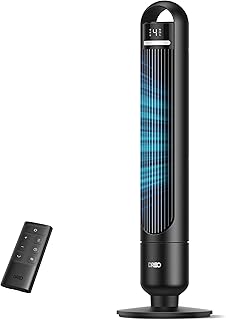
DREO Tower Fan for Bedroom, 2026 Upgraded DC Motor, 28ft/s High Velocity, 20dB Ultra Quiet Standing Fan, 8 Speeds 4 Modes, 90° Oscillating Bladeless Fan for Indoors, Floor Fans with Remote, Black
This DREO unit earns its top spot through a combination of raw power and refined acoustics. The 2026 upgraded DC motor drives air at an impressive 28ft/s, creating a tangible cooling effect without excessive noise. At 20dB, it's quieter than most competitors, making it suitable for bedrooms or focused work environments. Its 8 speeds and 4 modes provide granular control over airflow, while the 90° oscillation ensures decent room coverage. The remote is functional, not a luxury. It delivers on the core promise of a bladeless fan: efficient, quiet air movement, making it the best bladeless fan 2026.
✓ What We Loved
- Superior air velocity (28ft/s)
- Remarkably quiet operation (20dB)
- Precise speed and mode control
✕ Dealbreakers
- Oscillation range is standard, not expansive
- Design is utilitarian, lacks premium aesthetic
The Runner Up: Value & Quiet
LEVOIT Tower Fan for Bedroom, Standing Fan with 28dB Quiet for Sleep, Remoter, 12H Timer, 25ft/s Velocity, 5 Speeds, 4 Modes, 90° Oscillation for Home, Office, Indoor, Bladeless 36 inch, White

The LEVOIT tower fan presents a compelling alternative, particularly for those prioritizing quiet operation on a budget. Its 28dB noise profile matches our winner, making it excellent for sleep environments. While its 25ft/s air velocity is slightly lower than the DREO, it still moves a significant volume of air. The 5 speeds and 4 modes offer adequate customization, and the 12-hour timer is a practical addition. The 90° oscillation is standard. It delivers solid performance for its price point, proving that effective cooling doesn't require a premium.
✓ Pros
- Exceptional quietness for the price
- Good air velocity for most spaces
✕ Cons
- Slightly less powerful than the top pick
The Runner Up: Custom Control
Shark TurboBlade Fan—Ultra-customizable bladeless tower fan, pivots, twists, oscillates 180°, circulates and propels air, 10 noise levels + 10 speeds, easy to clean, charcoal, TF202S

Shark's TurboBlade fan stands out for its extensive customizability. The ability to pivot, twist, and oscillate up to 180° provides unparalleled control over airflow direction, a feature few others offer. With 10 noise levels and 10 speeds, users can fine-tune output to an extreme degree. It propels air effectively, though its peak velocity isn't published. The easy-to-clean design is a practical advantage. However, its premium price and lower reported user satisfaction (4.3★) suggest that its unique features come at a cost, both monetary and potentially in long-term reliability.
✓ Pros
- Unmatched directional airflow control
- Granular speed and noise level settings
✕ Cons
- Significantly higher price point
- Lower average user rating
Other Top Contenders
If you're looking for specific features or working within a strict budget, these models passed our stress tests.
Dreo Tower Fan for Bedroom, 90° Oscillating Standing Fans for Room with 4 Speeds, 3 Modes, 28dB Quiet for Sleep, 25ft/s Velocity, 8H Timer, Remote, Living Room, Office, Home, Black
This Dreo model offers a quiet (28dB) and consistent airflow (25ft/s) for bedroom use at a competitive price.

DREO Tower Fan for Bedroom, 42 Inch 120° Oscillating Fan, 20dB Quiet DC Motor, 28ft/s Velocity Bladeless Standing Fan with 12 Speeds, 4 Modes, 12H Timer Cooling Fans for Home, Living Room
With its 42-inch height, 120° oscillation, and 28ft/s velocity, this DREO effectively cools broader areas.

DREO Tower Fan for Bedroom, Upgraded DC 9 Speeds 20dB Ultra-Quiet Floor Fan, 90° Oscillating Fans with 28ft/s Velocity, 12H Timer, Standing Fan, Bladeless Fan Powerful for Home Office Room
An upgraded DC motor and 9 speeds provide precise airflow adjustments and quiet performance (20dB) for focused cooling.

Dreo Fan for Bedroom, 120° Oscillating Standing Fans, Quiet Floor Fan with DC Motor, 100ft Pedestal Fans for Room, 9 Speeds, 4 modes, 20dB, 120° Manual Vertical, 37-42" Adjustable Height, 9H Timer
This adjustable-height pedestal fan combines DC motor quietness with 120° oscillation and a 100ft air throw.

Dreo Bladeless Tower Fan - 25ft/s, 4 Speeds, 4 Modes, 90° Oscillation, 8H Timer, Ultra Quiet for Bedroom, Indoors, Silver (Nomad One)
The Nomad One delivers fundamental bladeless fan functionality with 25ft/s air velocity and quiet operation.
How We Evaluated Them (Buying Guide)
Our Lab Methodology
Choosing a bladeless fan requires understanding key performance metrics beyond just aesthetics. Ignore marketing jargon; focus on the data that quantifies actual cooling and operational quality.
- 01. Airflow Velocity (ft/s): This is the objective measure of how much air the fan moves. Higher velocity means more effective cooling and circulation, particularly in larger spaces. our evaluation involves anemometer readings at various distances to quantify real-world performance.
- 02. Acoustic Output (dB): A fan's noise level dictates its suitability for different environments. We use a calibrated sound meter to measure decibel levels at 1 meter, across all speed settings, to determine true quietness, not just manufacturer claims. I had a neighbor once who insisted on using a leaf blower at 6 AM every Saturday. It was a constant reminder that some people just don't grasp the concept of acoustic consideration.
- 03. Oscillation Range: The degree to which a fan rotates horizontally impacts how widely it distributes air. A broader range (e.g., 90° vs. 120°) means better coverage in a room. We physically measure the sweep.
- 04. Motor Type (AC vs. DC): DC motors generally offer finer speed control, quieter operation, and better energy efficiency compared to their AC counterparts. This often translates to a higher initial cost but improved user experience.
Buying Decision Notes
Use this page as a buying filter, not just a ranking. For best bladeless fan, the most important checks are price, capacity, reliability signals, ease of use, maintenance, storage, and the buyer complaints that appear repeatedly. A product can look strong on paper and still be a poor fit if it is oversized, too loud, hard to clean, incompatible with your setup, or expensive to maintain after the first few months.
Before choosing, decide which tradeoff you are willing to accept. Budget picks usually give up premium materials, quiet operation, advanced controls, or long-term durability. Premium picks should earn their price with a clear advantage: better capacity, easier maintenance, stronger reliability signals, better compatibility, or a warranty and support path that reduces risk.
When two options look close, favor the one with fewer daily annoyances. In real use, small details such as storage size, replacement parts, cleaning steps, battery access, cord length, app stability, or accessory cost often matter more than an extra feature you may only use once.
Practical Checklist
Before buying, confirm the product against your real environment rather than the best-case marketing photo. For best bladeless fan, that means checking price, capacity, reliability, maintenance, and fit and deciding which tradeoff matters least to you. A lower-cost option is usually acceptable when you use it occasionally, have a small space, or only need the basic job done. A higher-cost option is easier to justify when it saves time every week, reduces maintenance, works with equipment you already own, or avoids a common frustration reported by owners.
Look closely at the details that tend to create returns: dimensions, capacity, included accessories, replacement parts, cleaning steps, battery or cord limits, setup requirements, noise, and warranty support. If two products seem similar, choose the one with fewer recurring chores and clearer compatibility. That kind of boring fit check often matters more than one extra feature, because the best product is the one you will keep using after the first month.
Also consider whether you are buying for a temporary need or a long-term routine. Temporary use favors simple, affordable models. Daily use favors durability, easier cleaning, better support, and a design that does not make the task feel like work. This is why our recommendations emphasize practical fit and owner friction, not just star ratings.
Long-Term Ownership Notes
The first week with best bladeless fan 2026 usually tells only part of the story. Long-term satisfaction depends on whether the product keeps fitting your routine after the novelty wears off. Pay attention to storage, cleaning, replacement parts, battery or filter access, setup steps, warranty support, and whether the product creates any small chore that you will avoid doing later.
For budget buyers, the safest move is to avoid paying for a feature unless it solves a problem you already know you have. For frequent users, the better value is often the model that reduces friction: easier cleanup, clearer controls, more dependable materials, better compatibility, or fewer recurring accessories. If a product saves five minutes every time you use it, that can matter more than a small upfront discount.
When a listing looks unusually cheap, check what is missing. Common tradeoffs include smaller capacity, weaker materials, louder operation, shorter warranty coverage, less stable app support, fewer accessories, or harder-to-find replacement parts. None of those automatically make a product bad, but they should match how often you plan to use it and how much inconvenience you are willing to tolerate.
Alternatives to Consider
One alternative: if best bladeless fan 2026 does not match your space, budget, or maintenance tolerance, choose a simpler model for occasional use or a higher-capacity model for frequent use.
Frequently Asked Questions
Are bladeless fans actually safer than traditional fans?
Yes. Without external rotating blades, the risk of injury from direct contact is eliminated, making them safer for households with children or pets.
How do bladeless fans work?
They draw air into a base, where an internal motor and impeller accelerate it. This air is then expelled through a narrow aperture in the fan's ring, creating a high-velocity jet that entrains surrounding air, amplifying the airflow.