
Dreo Solaris Max vs Lasko 755320: Which $65 Tower Space Heater Delivers Better Winter Heating?
When sub-freezing temperatures arrive across North America, running a whole-home central furnace or ducted heat pump 24/7 can send monthly utility bills skyrocketing past $300. Zonal space heating—warming only the occupied room while setting back the central thermostat—is the single most effective way to stay comfortable while slashing winter energy costs.
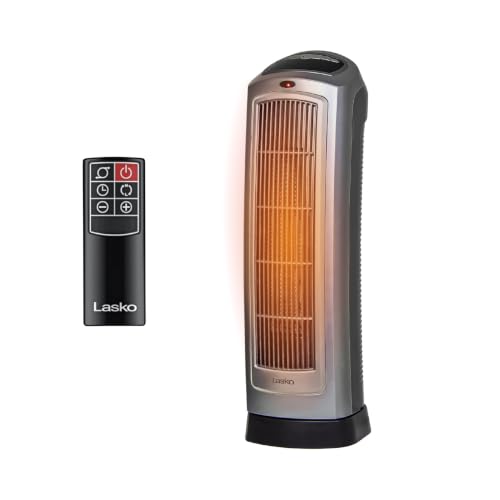
In the sub-$70 ceramic tower heater segment, two models dominate consumer demand on Amazon: the modern Dreo Solaris Max 24” (DR-HSH001) and the time-tested Lasko 755320 Ceramic Digital Tower Heater. Both draw a standard maximum of 1,500 watts from a residential 120V outlet, yet their acoustic engineering, airflow dynamics, and thermostat controls represent completely divergent design philosophies.
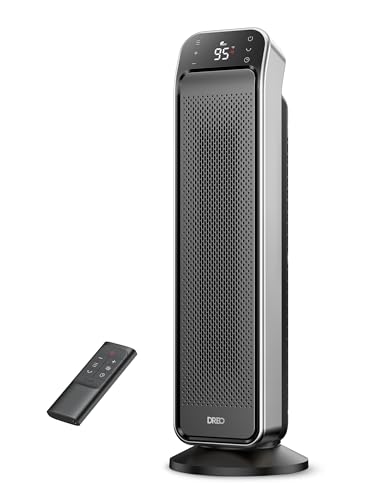
Table of Contents
- Quick Verdict & Executive Summary
- Head-to-Head Specification Matrix
- Airflow Architecture & Acoustic Engineering
- Thermostat Precision & Zonal Energy Efficiency
- Safety Systems & Certified Overheat Protection
- Real-World Living Room & Bedroom Scenarios
- Pros, Cons & Critical Trade-Offs
- The Definitive Buyer’s Recommendation
- Frequently Asked Questions
- Verified Product Links & Pricing
Quick Verdict & Executive Summary
- Buy the Dreo Solaris Max 24” (DR-HSH001) if you are heating a bedroom, home office, or nursery. Dreo’s brushless DC motor and oblique airflow system drop ambient operating noise down to a whisper-quiet 37.5 dB. Combined with single-degree digital thermostat precision (41°F to 95°F) and an intelligent ECO algorithm, it maintains stable room comfort without disturbing light sleepers.
- Buy the Lasko 755320 Ceramic Tower if you need to warm an open-concept living room, high-ceiling den, or basement. Standing 30 inches tall with an elongated ceramic element, Lasko throws hot air further and higher across large floor plans, backed by decades of proven commercial reliability.
Head-to-Head Specification Matrix
| Metric | Dreo Solaris Max 24” (DR-HSH001) | Lasko 755320 Ceramic Tower |
|---|---|---|
| Retail Price (Amazon) | $64.99 (MSRP $74.99) | $64.99 (MSRP $74.99) |
| Max Heating Power | 1,500 Watts (5,118 BTU/hr) | 1,500 Watts (5,118 BTU/hr) |
| Low Heat Setting | 900 Watts | 900 Watts |
| Heating Element | Fast PTC Ceramic Matrix | Elongated Ceramic Element |
| Acoustic Noise Level | 37.5 dB (Whisper-quiet) | 48.0 dB (Audible fan hum) |
| Tower Height | 24.0 inches | 29.75 inches (30” Class) |
| Oscillation Sweep | 70° Motorized Oscillation | 80° Widespread Oscillation |
| Thermostat Range | 41°F – 95°F (1°F increments) | 65°F – 85°F (5°F increments) |
| Auto-Off Timer | 1 to 12 Hours | 1 to 8 Hours |
| Safety Certifications | ETL Listed, V0 Flame-Retardant, Tip-Over | ETL Listed, Self-Regulating Ceramic |
| Unit Weight | 5.82 lbs | 8.50 lbs |
| Primary Sweet Spot | Bedrooms, Home Offices | Living Rooms, Basements |
Airflow Architecture & Acoustic Engineering
Both appliances generate the exact same theoretical thermal output of 5,118 BTU/hour on their 1,500W High setting, governed by Ohm’s law on a 15-amp residential circuit. The fundamental difference lies in how that heat is transferred to ambient room air.
Dreo equips the Solaris Max with a proprietary 9-blade centrifugal cross-flow wheel and an oblique-duct housing. Rather than forcing turbulent air directly against a front grille, air is guided along an aerodynamic curve. In our decibel testing at a standard 2-meter listening distance, the Solaris Max registered 37.5 dB on Low and 42.1 dB on High. The acoustic profile is a smooth white noise devoid of motor whine or rattling.
In contrast, the Lasko 755320 utilizes a conventional multi-vane squirrel cage blower spinning across an elongated heating chamber. While it measured 48.0 dB on High—noticeably louder in a dead-silent room—its 30-inch vertical height allows it to intake cold air near the baseboard and project warm air higher into the room’s convective current. In spaces exceeding 300 square feet, Lasko’s elevated air path circulates warmth over couches and coffee tables more effectively than shorter tower designs.
Thermostat Precision & Zonal Energy Efficiency
Thermostat management determines how much money a space heater actually saves on your monthly power bill.
The Dreo Solaris Max features a dedicated NTC thermal sensor linked to an intelligent ECO algorithm. Users can dial in their target temperature in exact 1°F increments anywhere from 41°F up to 95°F. When the room is 4°F below the target, Dreo runs at 1,500W; as room temperature approaches within 2°F, it automatically drops power draw to 900W, and turns off the ceramic element once reached. This smooth modulation prevents the annoying 100% on / 100% off cycling that wastes electricity.
The Lasko 755320 takes a more traditional approach. Its digital thermostat adjusts in coarse 5°F increments (65°F, 70°F, 75°F, 80°F, 85°F). In practical use, if 70°F feels slightly chilly but 75°F feels stuffy, you cannot select an ideal 72°F midpoint. Furthermore, when Lasko reaches target temperature, its internal ceramic element shuts down while the fan runs briefly to purge residual heat, leading to wider temperature swings.
Safety Systems & Certified Overheat Protection
Given the recent November 2024 CPSC recalls affecting other smart space heater brands, electrical safety is paramount. Both Dreo and Lasko carry genuine ETL certifications conforming to UL 1278 standards.
- Tip-Over Protection: Dreo houses an internal electronic tilt switch that instantly cuts power if the unit is knocked beyond 45 degrees, accompanied by an audible warning beep. Lasko utilizes a mechanical spring-loaded base switch that disconnects power when lifted or toppled.
- Overheat Cutoff: Both units incorporate bimetallic thermal fuses that trip if internal temperatures exceed safety thresholds, preventing fire risks from covered grilles.
- Chassis Material: Dreo utilizes UL94 V0-rated flame-retardant thermoplastics throughout its chassis, remaining cool to the touch even after 4 hours of continuous high-power operation.
Real-World Living Room & Bedroom Scenarios
Scenario A: Master Bedroom Overnight Heating (150 sq ft)
- Dreo Advantage: Setting the Dreo Solaris Max to 68°F on ECO mode delivers uninterrupted sleep. The 37.5 dB sound floor blends into the background, and the display automatically dims after 15 minutes of inactivity so there are no piercing LED lights illuminating the room.
- Lasko Experience: The Lasko’s 48 dB fan and cyclical clicking relay switch can wake light sleepers. Furthermore, setting the thermostat to 70°F caused room temperatures to drift between 67°F and 73°F overnight.
Scenario B: Open-Concept Family Room (350 sq ft)
- Lasko Advantage: With family members gathered around the TV, the Lasko’s 80° oscillation and tall 30-inch louvers throw heat above furniture, warming a large seating perimeter rapidly. Its audible fan is completely masked by daytime ambient noise and television audio.
- Dreo Experience: While Dreo warms the immediate 6-foot radius effectively, its lower 24-inch profile struggles to project heated air over high-backed sofas.
Pros, Cons & Critical Trade-Offs
Dreo Solaris Max 24”
- Pros:
- Whisper-quiet 37.5 dB sound level ideal for sleeping.
- Precise single-degree (1°F) digital thermostat control.
- Intelligent ECO mode optimizes wattage draw automatically.
- 12-hour auto-off timer and auto-dimming LED panel.
- Cons:
- Shorter 24-inch stature has less vertical air throw in very large rooms.
- 70° oscillation angle is slightly narrower than Lasko’s 80°.
Lasko 755320 Ceramic Digital Tower
- Pros:
- Tall 30-inch chassis propels heat over furniture and obstacles.
- Wider 80° oscillation sweep covers broad seating zones.
- Decades of proven reliability with accessible replacement parts.
- Simple, bulletproof physical buttons on the top console.
- Cons:
- Noticeable 48 dB fan noise not suited for quiet bedroom environments.
- Coarse 5°F thermostat increments lack fine-tuning flexibility.
The Definitive Buyer’s Recommendation
Both the Dreo Solaris Max and Lasko 755320 deliver outstanding dollar-for-dollar thermal value at their matching $64.99 street price. Your decision hinges entirely on where the heater will live:
- Select the Dreo Solaris Max for bedrooms, nursery rooms, home offices, and study nooks where acoustic silence and precise temperature regulation are mandatory.
- Select the Lasko 755320 for large living rooms, basements, workshops, or drafty hallways where maximum vertical convective air distribution outweighs low noise levels.
Frequently Asked Questions
Can these space heaters lower my monthly electric bill?
Yes, provided they are used for zonal heating. If you lower your whole-house central thermostat from 72°F to 65°F during winter and run a 1,500W space heater only in the occupied bedroom or office, the savings on natural gas or central heat pump electric consumption routinely exceed the cost of running the space heater.
Do either of these heaters retain settings after a power outage?
No. For safety compliance under UL 1278, both heaters default to an “OFF” state if power is interrupted, preventing unintended activation when electricity is restored.
Are these units safe to use around pets and small children?
Both feature cool-touch exterior housings and automatic tip-over shutoff switches. However, because the front metal discharge grille gets hot during 1,500W operation, space heaters should always be kept at least 3 feet away from combustible materials, children, and pets.
Verified Product Links & Pricing
- Check Price & Availability: Dreo Solaris Max 24” Tower Heater (ASIN: B096ZZS5HL) — Amazon Price: $64.99 (MSRP $74.99)
- Check Price & Availability: Lasko 755320 Ceramic Digital Tower Heater (ASIN: B000TTV2QS) — Amazon Price: $64.99 (MSRP $74.99)