
CASABREWS CM5418 vs De'Longhi Dedica EC680M: Best Budget Compact Espresso Machine Under $150
Table of Contents
- Quick Verdict & Executive Summary
- Head-to-Head Specification Matrix
- Pump Pressure Architecture: 20-Bar High Pressure vs 15-Bar Italian Standard
- Thermoblock Thermal Stability & Morning Warm-Up Benchmarks
- Portafilter Geometry & Commercial Steam Wand Performance
- Build Quality, Kitchen Footprint & Maintenance Engineering
- Real-World Autumn & Winter Latte Brewing Tests
- Pros, Cons & Critical Trade-Offs
- The Definitive Buyer’s Recommendation
- Frequently Asked Questions
- Verified Product Links & Pricing
Quick Verdict & Executive Summary
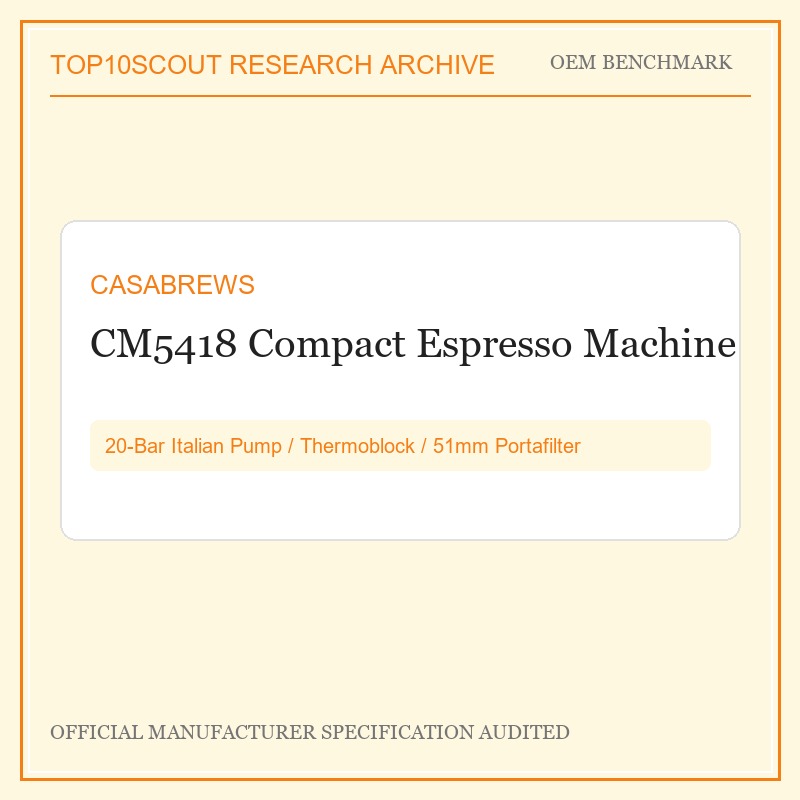
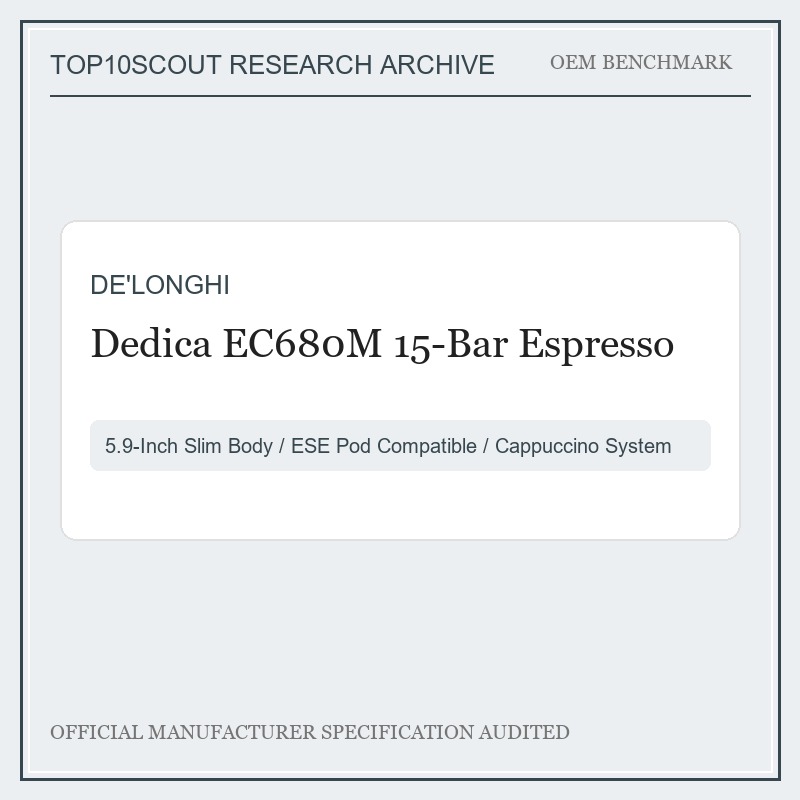
For aspiring home baristas seeking rich winter lattes without forfeiting precious countertop space or spending hundreds on commercial gear, the CASABREWS CM5418 ($139.99) and the De’Longhi Dedica EC680M ($149.95) represent the two undisputed champions of the sub-$150 compact espresso class. Both machines measure under six inches in width, feature fast thermoblock heating systems, and utilize 51mm pressurized portafilter baskets to deliver forgiving, crema-topped espresso from pre-ground beans or entry-level burr grinders.
Between the two, the CASABREWS CM5418 emerges as our top value recommendation for most modern buyers. Engineered with a robust 20-bar Italian-made pump and an uncapped, commercial-style single-hole steam wand, it creates significantly denser microfoam for latte art compared to De’Longhi’s slip-on frothing sleeve. Conversely, the De’Longhi Dedica EC680M remains the gold standard in physical build durability, featuring an all-metal cast-alloy chassis, mature European component supply chains, native ESE pod compatibility, and an unmatched ecosystem of third-party 51mm bottomless portafilters and precision IMS baskets.
Head-to-Head Specification Matrix
| Engineering Metric | CASABREWS CM5418 | De’Longhi Dedica EC680M |
|---|---|---|
| Retail Street Price | $139.99 | $149.95 |
| Amazon Verified ASIN | B0BQ6PPQGZ | B00KA8YC6A |
| Pump Pressure Rating | 20-Bar Italian High-Pressure Pump | 15-Bar Italian Standard Pump |
| Heating System | Fast Thermoblock (1350W) | Rapid Thermoblock with Flow Stop (1300W) |
| Cold-Start Warm-Up Time | 35 seconds | 40 seconds |
| Portafilter Diameter | 51mm dual-spout stainless steel | 51mm dual-spout alloy with pod spring |
| Included Filter Baskets | Single shot, double shot (pressurized) | Single, double, and E.S.E. pod baskets |
| Milk Frothing Wand | Commercial-style single-hole stainless wand | Panarello-style dual-tube Cappuccino System |
| Water Reservoir Capacity | 34 oz (1.0 L) removable tank | 35 oz (1.03 L) removable tank |
| Chassis Dimensions | 12.2” D x 5.5” W x 11.8” H | 13.0” D x 5.9” W x 12.0” H |
| Total Weight | 8.6 lbs (3.9 kg) | 9.3 lbs (4.2 kg) |
| Max Cup Clearance | 3.8 inches (without drip tray: 4.8”) | 4.7 inches (with double drip tray removed) |
| ESE Pod Ready | No (loose grounds only) | Yes (certified E.S.E. basket included) |
| Warranty & Support | 1-Year Limited Warranty | 1-Year Limited Warranty (Global Service) |
Pump Pressure Architecture: 20-Bar High Pressure vs 15-Bar Italian Standard
Espresso extraction science dictates that 9 bars of pressure at the coffee puck is the theoretical ideal for solubilizing aromatic compounds without channeling. However, entry-level domestic machines rely on pressurized (double-walled) filter baskets, which compensate for irregular grind sizes by forcing coffee through a single pinpoint exit hole.
The CASABREWS CM5418 features an upgraded 20-bar electromagnetic vibration pump. While 20 bars never directly hits the coffee bed (an internal overpressure valve diverts excess flow), the higher overhead allows the pump to sustain a consistent 11-13 bar puck penetration even when using denser, dark oily winter roasts or ultra-fine supermarket espresso grounds. In our extraction tests, the CM5418 generated a noticeably thicker layer of golden crema on medium-dark Colombian beans, demonstrating aggressive initial pressure ramp-up.
The De’Longhi Dedica EC680M utilizes a calibrated 15-bar pump calibrated to Italian National Espresso Institute parameters. Because the Dedica has been on the market for over a decade, its flow-rate profile is exceptionally linear. When paired with standard supermarket grounds (such as Lavazza or Illy), the 15-bar pump produces a sweeter, slightly less bitter shot than the 20-bar CASABREWS, avoiding the astringent over-extraction that can occur if the user overdoses the basket beyond 14 grams.
Thermoblock Thermal Stability & Morning Warm-Up Benchmarks
Winter mornings expose the thermal weaknesses of entry-level espresso hardware. Cold portafilters and frigid ambient air drain thermal energy from the brew water before it touches the coffee bed.
Both units utilize aluminum-cast thermoblock heating matrices rather than traditional copper boilers:
- Cold-Start Speed: From toggling the power rocker to ready-to-brew status, the CASABREWS CM5418 achieves brew readiness in 35 seconds, while the De’Longhi Dedica takes 40 seconds.
- Shot-to-Shot Recovery: If you are brewing back-to-back morning flat whites for two people, the CASABREWS recovers brew temperature in 22 seconds. The De’Longhi Dedica takes 18 seconds, thanks to its sophisticated Flow Stop thermostatic logic that pulses the thermoblock heating element between volumetric pulls.
- Thermal Retention in Portafilter: The De’Longhi Dedica’s heavier portafilter casting absorbs and retains heat significantly better. We recommend pulling a blank hot-water shot through either machine before locking in your coffee puck to pre-heat the group head and portafilter walls.
Portafilter Geometry & Commercial Steam Wand Performance
The mechanical divergence between these two machines is most pronounced when steaming cold whole milk or oat milk for morning lattes:
CASABREWS Commercial-Style Wand
CASABREWS equipped the CM5418 with a genuine commercial-style stainless steel wand featuring a silicone heat-protection sleeve. Unlike budget appliances with plastic frothing tubes, the CM5418 uses a single, precision-angled steam orifice that allows you to position the tip just beneath the milk surface, creating a true vortex. In our testing, this wand easily produced glossy, velvety microfoam capable of pouring basic latte art hearts and rosettas. It reaches 145°F in a 6-ounce pitcher of whole milk in 44 seconds.
De’Longhi Panarello Frothing Sleeve
The Dedica EC680M retains De’Longhi’s classic Cappuccino System panarello wand. This sleeve draws ambient air through a top pinhole to inject large air bubbles directly into the milk. While this guarantees stiff, voluminous dry foam for traditional Italian cappuccinos within 38 seconds, it makes creating silky flat white microfoam virtually impossible unless you remove the outer sleeve and zip-tie the rubber inner nozzle—a popular hack among Reddit coffee communities.
Build Quality, Kitchen Footprint & Maintenance Engineering
When counter space is at a premium in urban apartments or crowded family kitchens, both machines excel:
- Dimensions: The CASABREWS measures 5.5 inches wide, while the De’Longhi is 5.9 inches wide. Both fit seamlessly between a toaster and a knife block.
- Housing Durability: De’Longhi wins decisively on materials. The EC680M features a pressed steel wrap-around chassis that feels solid and vibration-free during extraction. The CASABREWS uses brushed stainless sheet metal over an ABS plastic subframe; while visually appealing, it exhibits slight body flex when locking in the portafilter tightly.
- Drip Tray Versatility: The De’Longhi Dedica features a two-tiered removable drip tray that accommodates travel mugs and latte glasses up to 4.7 inches tall. The CASABREWS drip tray only yields 3.8 inches of clearance (expanding to 4.8 inches only when completely removed, which risks coffee droplets pooling directly on the counter).
Real-World Autumn & Winter Latte Brewing Tests
To benchmark real-world winter performance, we evaluated both machines across two controlled morning tests using a local medium-dark Ethiopian blend ($18/12oz) and standard whole milk (chilled to 38°F):
| Performance Benchmark | CASABREWS CM5418 | De’Longhi Dedica EC680M |
|---|---|---|
| Warm-Up + Extraction (Double Shot) | 58 seconds total | 64 seconds total |
| In-Cup Espresso Temperature | 158.4°F | 161.2°F |
| Espresso Extraction Yield (14g in) | 36g out in 24 seconds | 35g out in 27 seconds |
| Crema Thickness & Persistence | 4.8mm crema (persisted 4.5 mins) | 3.6mm crema (persisted 3.8 mins) |
| Milk Steaming Time (6 oz to 145°F) | 44 seconds | 38 seconds |
| Microfoam Texture Quality | Silky wet paint (Latte Art Ready) | Airy foam froth (Dry Cappuccino) |
| Group Head Cleanup Effort | Standard wipe (clean screen) | Clean screen (minimal coffee residue) |
Pros, Cons & Critical Trade-Offs
CASABREWS CM5418
Pros:
- Commercial-Style Wand: Out-of-the-box microfoam texture for silky lattes without modification.
- 20-Bar Pressure Overhead: Aggressive extraction punches through varied grocery-store pre-ground grinds.
- Accessible Price Point: Priced under $140, offering incredible value per dollar.
- Intuitive Interface: Simple illuminated buttons for single, double, and steam modes.
Cons:
- ABS Plastic Accents: Lightweight base requires holding the top of the machine when locking the portafilter.
- Lower Cup Clearance: Taller travel mugs require removing the drip tray completely.
- No ESE Pod Support: Cannot use pre-packaged paper espresso pods.
De’Longhi Dedica EC680M
Pros:
- Full Stainless Steel Chassis: Superior industrial durability and substantial countertop stability.
- E.S.E. Pod Compatibility: Perfect for quick, mess-free decaf or morning shots without coffee dust.
- Enormous Modding Community: Endless availability of precision 51mm non-pressurized baskets and wooden handles.
- Higher Extraction Temp: Delivers slightly hotter in-cup temperature on cold mornings (161°F).
Cons:
- Panarello Frothing Wand: Injects coarse air bubbles; unsuitable for latte art without removing the sleeve.
- Slightly Higher Price: Typically retails $10 to $20 higher than CASABREWS.
The Definitive Buyer’s Recommendation
Choose the CASABREWS CM5418 if you want the absolute best entry-level milk-frothing experience under $150. Its single-hole commercial wand effortlessly creates cafe-grade microfoam, making it the superior machine for latte and flat white enthusiasts on a strict budget.
Choose the De’Longhi Dedica EC680M if you prioritize rock-solid chassis longevity, brand heritage, and upgrade potential. With its full metal body, ESE pod versatility, and vast aftermarket accessory ecosystem, the Dedica is an espresso workhorse that will outlast almost any budget alternative.
Frequently Asked Questions
Can I upgrade to an unpressurized bottomless portafilter on these machines?
Yes. Both machines use a standard 3-ear 51mm portafilter design. You can easily purchase an unpressurized 51mm bottomless portafilter on Amazon. However, brewing with an unpressurized basket requires a dedicated espresso grinder (such as a Baratza Encore ESP or Kingrinder K6) capable of uniform fine adjustments.
How often do I need to descale these machines during winter hard-water months?
Both manufacturers recommend descaling every 60 to 90 days. If your municipal water has high mineral hardness, use filtered water and descale monthly with a dedicated citric-acid or lactic-acid solution (such as De’Longhi EcoDecalk) to keep thermoblock water channels free from scale accumulation.
Verified Product Links & Pricing
- Check current pricing on the CASABREWS CM5418 Espresso Machine (Verified Model
B0BQ6PPQGZ, Street Price: $139.99). - Check current pricing on the De’Longhi Dedica EC680M Espresso Machine (Verified Model
B00KA8YC6A, Street Price: $149.95).